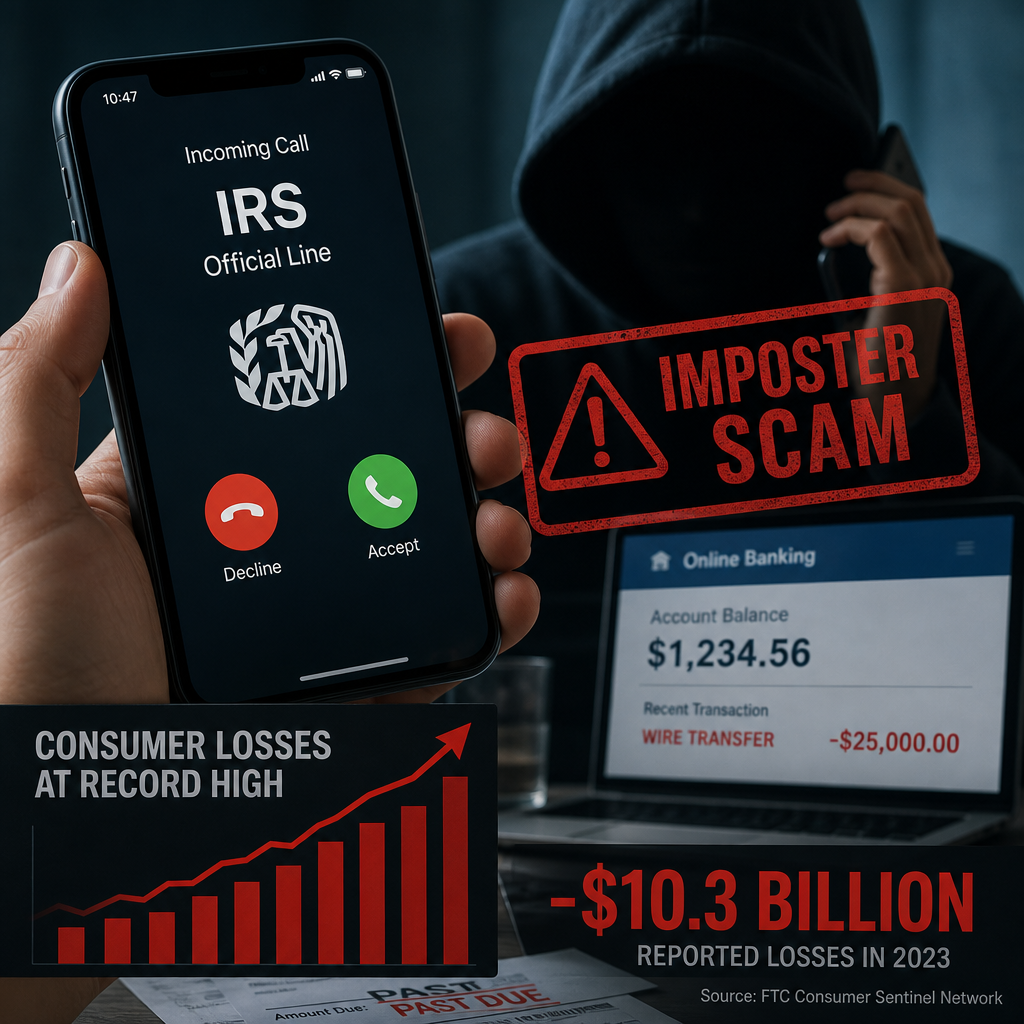
Imposter Scams Continue to Drive Record Consumer Losses
Imposter scams continue to generate record consumer losses by tricking people into trusting a fake authority figure, urgent message, or loved one in need. Learning the warning signs and pausing to verify before you act can help you avoid costly fraud and protect your personal information.
By: Peter on August 3, 2026
Anúncios
Imposter scams continue to generate record consumer losses because they prey on a simple but powerful emotion: trust. A scammer pretends to be someone legitimate, such as a bank employee, government agent, tech support representative, delivery service, or even a loved one in trouble, and then pressures the target to act quickly. The result can be devastating financial loss, identity theft, and emotional stress.
Anúncios
These scams keep evolving, but their core strategy stays the same. They create urgency, exploit fear, and push people to make a fast decision before they can verify the situation. The good news is that consumers can protect themselves by learning the warning signs, slowing down, and using a few practical habits that make deception much harder.
What Makes Imposter Scams So Effective?
Imposter scams work because they imitate people and institutions we already know and trust. Scammers often sound convincing, use official-looking emails or caller ID spoofing, and cite real details that make their story seem believable.
Common tactics scammers use
Urgency: “Act now or your account will be closed.”
Fear: “Your Social Security number has been compromised.”
Authority: “I’m from the IRS, police, or your bank.”
Secrecy: “Don’t tell anyone, or you could make things worse.”
Payment pressure: “Pay by wire transfer, gift card, cryptocurrency, or cash app.”
These tactics are designed to short-circuit careful thinking. Instead of checking facts, the victim reacts emotionally. That is why imposter scams continue to generate record consumer losses: the scam often succeeds before the target has time to pause.
Anúncios
Common Types of Imposter Scams
Imposter fraud shows up in many forms. Some versions are old-fashioned, while others use modern technology like text messages, spoofed phone numbers, and AI-generated voices.
Government imposter scams
Scammers pretend to be from agencies such as the IRS, Social Security Administration, Medicare, or local law enforcement. They may claim you owe money, missed paperwork, or need to verify personal information immediately.
A real government agency usually does not demand payment through gift cards or threaten arrest over the phone in the way scammers do. If someone contacts you unexpectedly, verify the request through the agency’s official website or published phone number.
Bank and credit card imposter scams
In these scams, the caller says your account has been hacked or your card has been used fraudulently. They then try to “help” by asking you to confirm account details, share a one-time code, or move money to a “safe” account.
This is a major red flag. Banks do not need you to transfer money to protect it. If you get such a call, hang up and contact your bank using the number on your statement or card.
Tech support imposter scams
A pop-up warning, fake virus alert, or phone call may claim your computer has been infected. The scammer then asks for remote access, payment, or your login credentials.
These scams often start with alarming messages like:
“Your device is locked.”
“Call immediately for support.”
“Your account has been suspended.”
Legitimate tech companies do not typically call out of the blue to warn you about a virus on your device. If in doubt, close the message and contact the company directly through its official support page.
Delivery and package scams
Text messages claiming a package is delayed, undeliverable, or missing information are increasingly common. The message usually includes a link that leads to a fake website designed to steal personal or payment information.
If you are waiting for a delivery, check the tracking number on the retailer’s or carrier’s official site rather than clicking a link in a message.
Family or loved-one impersonation scams
Some scammers impersonate a relative in distress, often a grandchild or child who supposedly needs bail money, medical help, or emergency travel funds. They may use emotional language and ask the victim to keep the situation secret.
These scams can be especially effective because the victim wants to help quickly. Always verify through a trusted phone number or another family member before sending money.
Why Consumer Losses Keep Rising
There are several reasons imposter scams continue to generate record consumer losses.
Technology makes scams easier to scale
Scammers can send thousands of texts or make automated calls at very low cost. Caller ID spoofing lets them appear to be a trusted organization. Phishing websites can be created quickly and taken down if flagged, only to reappear under a different name.
Fraudsters adapt quickly
Once consumers learn to recognize one scam, criminals change the script. They may switch from phone calls to text messages, or from fake bank alerts to fake tax notices. They also follow current events, such as tax season, natural disasters, or major shipping delays.
People are busy and distracted
Most people do not expect to be targeted by a scam in the middle of a workday, while caring for family, or during a stressful personal situation. Scammers exploit that distraction and pressure people to make decisions before they fully think things through.
Victims often feel embarrassed
Many people hesitate to report a scam because they feel ashamed or blame themselves. That silence can hide the true scale of the problem and gives scammers more room to keep operating.
Warning Signs You May Be Dealing with an Imposter Scam
Learning the red flags is one of the best defenses. If something feels off, slow down.
Red flags to watch for
Unsolicited contact
Someone reaches out unexpectedly and claims to be from a trusted organization.
Immediate pressure
You are told to act now, or else.
Requests for unusual payment
Gift cards, wire transfers, cryptocurrency, and cash apps are common scam payment methods.
Requests for private information
Social Security numbers, passwords, PINs, or one-time verification codes should never be shared casually.
Threats or emotional manipulation
The caller tries to scare you, guilt you, or rush you into compliance.
Messages with links or attachments
These can lead to phishing pages or malware.
Poor grammar or odd formatting
Not always present, but often a clue in scam emails or texts.
If any one of these appears, treat the message as suspicious until you verify it independently.
How to Protect Yourself from Imposter Scams
The best protection is a simple routine that helps you pause and verify before you respond. That habit can stop many scams cold.
Use the pause-and-check rule
Whenever you receive a surprising call, text, or email:
Stop before clicking anything.
Do not trust the displayed caller ID alone.
Look up the company or agency’s official contact information.
Call back using a known, trusted number.
Ask a trusted person to review the message if you feel pressured.
Never share verification codes
One-time codes sent by text, email, or authenticator apps are meant to confirm your identity. If a scammer gets that code, they may gain access to your accounts.
A legitimate bank, government office, or tech support agent should not ask you to read back a code they just sent.
Create a family verification plan
Families can reduce risk by agreeing on a verification method in advance. For example:
Use a code word for emergency calls.
Confirm requests for money through a second communication channel.
Call a known number if a relative claims to be in trouble.
This is especially helpful for older adults and college students, who are frequent targets of impersonation fraud.
Strengthen your accounts
Practical account security reduces the damage if a scam succeeds.
Consider:
Using unique passwords for every important account
Enabling multi-factor authentication where available
Monitoring bank and credit card statements regularly
Setting up account alerts for logins or transactions
Keeping device software and antivirus tools updated
Be careful with public information
Scammers often gather details from social media, public records, and data breaches to make their stories more convincing. Limit what you share publicly, especially:
Full birthdates
Travel plans
Family relationships
Account screenshots
Security question answers
What to Do If You Suspect an Imposter Scam
If you think you may be dealing with an imposter scam, act quickly but calmly.
Immediate steps to take
Stop contact
Do not keep talking with the caller or replying to the message.
Verify independently
Contact the organization using an official source, not the information provided in the suspicious message.
Do not send money
If you have not paid yet, you may be able to avoid losses entirely.
Contact your bank or payment provider
If money was sent, ask whether the transaction can be stopped or reversed.
Change passwords
If you shared login details or clicked a suspicious link, secure your accounts right away.
Report the scam
Reporting helps protect others and may assist investigators.
Even if recovery is not possible, reporting can help build a case and reduce future harm.
How Businesses and Families Can Help Reduce Harm
Stopping imposter scams is not just an individual responsibility. Employers, family members, and community organizations can help people recognize fraud before it spreads.
For businesses
Employers can reduce losses by training staff to:
Verify payment requests through internal procedures
Spot suspicious vendor impersonation
Avoid sharing sensitive information over unverified channels
Report phishing attempts immediately
For families and caregivers
Families can help by:
Talking openly about scam tactics
Reviewing how to verify money requests
Helping older adults set up account alerts and safer payment controls
Encouraging a no-shame attitude toward reporting suspicious contact
For communities
Libraries, senior centers, schools, and faith communities can play a major role by sharing scam alerts and offering digital literacy resources. The more people understand how imposter fraud works, the harder it becomes for scammers to succeed.
Real-World Lesson: Verify Before You Trust
Consider a common scenario. A person receives a text saying their bank account has been locked and they need to call a number immediately. The message looks official, and the person is worried about losing access to money. Instead of clicking the link, they open the bank’s app or call the number on the back of the card. The bank confirms that the text was fake.
That small pause can save thousands of dollars and a major headache. The lesson is simple: if a message creates panic, treat the panic itself as a warning sign.
Frequently Asked Questions
1. What is an imposter scam?
An imposter scam is a fraud in which a scammer pretends to be a trusted person or organization, such as a bank, government agency, tech support team, or family member. The goal is usually to steal money, personal information, or access to accounts.
2. Why do imposter scams continue to generate record consumer losses?
They succeed because they use urgency, fear, and trust. Scammers also exploit caller ID spoofing, fake websites, text messages, and other tools to seem legitimate. Many victims respond quickly before verifying the request.
3. What are the most common payment methods requested by scammers?
Scammers often ask for payment through gift cards, wire transfers, cryptocurrency, payment apps, or cash. These methods are difficult to trace and often difficult to recover, which is why they are popular with fraudsters.
4. How can I tell if a call from my bank is fake?
A real bank call should not pressure you to move money into a “safe” account or ask for your password or one-time code. If the call seems suspicious, hang up and call the bank using the official number on your card or statement.
5. What should I do if I gave a scammer personal information?
Change your passwords, alert your bank or credit card issuer, and place fraud alerts if needed. If you shared sensitive data such as your Social Security number, monitor your accounts closely and consider additional identity protection steps through official channels.
Imposter scams continue to generate record consumer losses because they exploit trust faster than most people can verify a request. Whether the scammer poses as a bank employee, government official, tech support agent, or family member, the method is usually the same: create urgency, pressure the target, and demand action before there is time to think.
The strongest defense is not complicated. Pause when something feels off. Verify contact information through official channels. Never share verification codes or move money to “protect” it. Build simple habits at home, at work, and with family members so everyone knows how to respond to suspicious messages.
Staying safe from imposter scams does not require perfect technical knowledge. It requires a healthy skepticism, a reliable verification routine, and the willingness to slow down before reacting. If you make that pause a habit, you dramatically reduce the odds of becoming the next victim.
Peter B holds a degree in Journalism and has 5 years of experience covering U.S. economic policy, labor markets, and financial news. He writes data-driven news content on topics like inflation, interest rates, and employment trends.