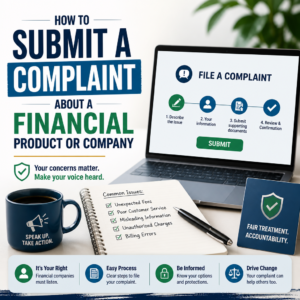
How to Submit a Complaint About a Financial Product or Company
If you’re facing a financial complaint, knowing how to document the problem and send it to the right place can make all the difference. This guide shows you how to get organized, follow up effectively, and escalate your issue when a company doesn’t respond fairly.
By: Mary Mitchell on August 3, 2026
Dealing with a banking issue, credit card dispute, loan problem, or investment concern can be stressful. When customer service doesn’t resolve the issue, knowing how to submit a complaint about a financial product or company can help you move forward with confidence. A well-organized complaint gives the company a fair chance to respond and creates a clear record if you need to escalate the matter later.
Whether you’re dealing with a missed refund, unexpected fees, a misleading offer, identity theft fallout, or a denied claim, the key is to document the problem, submit it to the right place, and follow up strategically. In many cases, consumers can resolve issues without going to court—especially when they use the company’s official complaint process and external regulators where appropriate.
What Counts as a Complaint About a Financial Product or Company?
A complaint can be any formal statement that a financial business failed to meet its obligations, communicated inaccurately, charged incorrectly, or treated you unfairly. Financial products and companies include:
Banks and credit unions
Credit card issuers
Mortgage lenders and servicers
Auto loan providers
Debt collectors
Check cashing or money transfer services
Brokerage firms and investment advisers
Insurance companies
Student loan servicers
Fintech apps and online payment platforms
Common complaint topics include:
Unauthorized charges or transactions
Billing errors or surprise fees
Loan servicing mistakes
Account access problems
Debt collection harassment
Credit reporting errors
Misleading terms or marketing
Failed transfers or delayed payments
Poor claims handling by insurers
Fraud-related account issues
If a company has already had a reasonable chance to fix the issue and hasn’t, it may be time to escalate.
Step 1: Gather the Facts Before You Complain
A strong complaint starts with good records. Before you contact the company or a regulator, collect the details that support your case.
What to collect
Account numbers
Dates and times of incidents
Copies of statements or receipts
Screenshots of online activity or app messages
Emails, letters, and chat transcripts
Names of representatives you spoke with
Notes about what was promised
Any relevant contract, loan agreement, or disclosure
Write a simple timeline
A timeline makes your complaint easier to understand. For example:
You noticed a $79 fee on your credit card statement.
You called customer service on May 3 and were told it would be reversed.
The fee remained on your next statement.
You called again on May 14 and were transferred twice.
The company has not corrected the charge.
This kind of timeline helps show what happened and what you already did to fix it.
Step 2: Try the Company’s Internal Complaint Process First
Most financial companies have an internal complaint process. Start there unless the issue is urgent or involves fraud that needs immediate action.
How to contact the company
Look for one or more of these options:
Customer service phone number
Secure message center
Online complaint form
Mailing address for disputes or complaints
Dedicated escalation or executive support team
When you contact the company, be clear and concise. State:
What happened
When it happened
Why you believe it’s wrong
What resolution you want
For example:
“I’m disputing a $125 overdraft fee charged on June 2. The transaction was pending when my balance was checked, and I believe the fee was assessed in error. Please review the transaction history and refund the fee.”
Ask for a case number
Always ask for:
A complaint or reference number
The name of the representative
The expected response time
This creates a paper trail and makes follow-up easier.
Step 3: Put Your Complaint in Writing
Even if you call first, send a written complaint as well. Written complaints are easier to track and harder to dismiss.
What to include in your complaint letter or email
Your full name and contact information
Account number or policy number
A short description of the issue
Dates and relevant facts
Copies of supporting documents
The outcome you want
A deadline for response, if appropriate
Keep your tone professional. Avoid insults or emotional language. A calm, fact-based complaint is usually more effective.
Sample structure
Opening statement
Briefly say you are filing a complaint about a specific product or service.
Facts
Explain what happened in chronological order.
Impact
State how the issue affected you financially or operationally.
Requested resolution
Request a refund, correction, cancellation, account review, or written explanation.
Attachments
List any documents you included.
Step 4: Escalate If the Company Does Not Fix the Problem
If the company ignores your complaint, gives a vague answer, or refuses to correct a clear error, you may need to escalate. The right path depends on the type of financial product involved.
How to Submit a Complaint About a Financial Product or Company to a Regulator
This is where many consumers get traction. If your issue involves a bank, credit union, credit card, mortgage, debt collection, student loan, or many other consumer financial products, you can file with a government regulator or consumer protection agency.
Common complaint channels
Consumer Financial Protection Bureau (CFPB) for many consumer financial products
Federal Trade Commission (FTC) for fraud or deceptive business practices
Federal bank regulators such as the FDIC, OCC, or Federal Reserve, depending on the institution
State insurance department for insurance complaints
State attorney general or consumer protection office for broader consumer issues
FINRA or the relevant securities regulator for brokerage and investment issues
Each agency has different authority, so it’s important to file in the right place.
When to use a regulator
Consider filing a complaint with a regulator if:
The company won’t respond
You’ve already tried to resolve the issue internally
The company gave you an inconsistent or incorrect answer
You suspect a pattern of unfair treatment
The issue involves fraud, identity theft, or major financial harm
How to file effectively
Use the agency’s official complaint portal or mailing instructions. Include:
A clear summary of the problem
Dates and amounts
Names of people you spoke with
Copies of your documentation
The company’s response, if any
The resolution you want
The more complete your complaint, the easier it is for the agency to review and route it.
Step 5: Know the Different Types of Financial Complaint Paths
Not every complaint goes to the same place. Knowing where to file can save time.
Banking and credit card complaints
For checking accounts, savings accounts, debit cards, or credit cards, start with the institution and then use the CFPB or the relevant federal banking regulator if needed.
Mortgage and loan complaints
For mortgage servicing issues, payment posting errors, escrow disputes, or loan modification problems, the CFPB is often a strong option. If the lender is state-chartered or otherwise regulated locally, your state agency may also help.
Debt collection complaints
If a collector is calling too often, using false statements, or attempting to collect an incorrect debt, report the problem to the CFPB and the FTC. You may also contact your state attorney general.
Credit reporting complaints
If a credit report contains inaccurate information, dispute it with the credit bureau and with the company that furnished the information. Keep copies of both disputes.
Insurance complaints
For denied claims, delays, or policy disputes, contact your state insurance department. Insurers are typically regulated at the state level.
Investment and brokerage complaints
If your issue involves a brokerage account, financial adviser, or securities recommendation, file with FINRA or the appropriate securities regulator.
What to Expect After You Submit a Complaint
After you submit a complaint, the company or agency may request additional information. They may also investigate, forward the issue, or ask the company to respond.
Typical outcomes can include
Refunds or fee reversals
Account corrections
Chargebacks or transaction reviews
Written explanations
Policy changes
Credit report updates
Account closure or service cancellation
Not every complaint leads to a full win, but a clear complaint often improves your chances of getting attention and documentation.
Keep tracking everything
After you file:
Save confirmation numbers
Monitor email and mail
Continue documenting phone calls
Check whether the account has been corrected
Review future statements and reports
If the company says it fixed the issue, verify that it actually did.
Tips for Writing a Strong Complaint
A good complaint is short, specific, and easy to verify.
Do this
Stick to facts
Use dates and dollar amounts
Explain the resolution you want
Attach supporting documents
Stay polite and professional
Keep copies of everything
Avoid this
Long emotional explanations
Threats or profanity
Vague statements like “they ripped me off”
Sending original documents
Filing without first reviewing the facts
A complaint is not a rant. It’s a record that helps others assess what happened.
When You May Need Legal Help
Some financial complaints are straightforward. Others involve large losses, fraud, or complex contract terms. Consider speaking with an attorney or consumer law clinic if:
The amount of money is significant
You suspect fraud or identity theft
The company is threatening legal action
Your complaint involves foreclosure or repossession
You are facing repeated collection harassment
The dispute involves securities losses or investment misconduct
You may also be able to get help from a nonprofit credit counselor, legal aid office, or state consumer protection program.
Frequently Asked Questions
1. What is the best way to submit a complaint about a financial product or company?
The best approach is to start with the company’s internal complaint process, then escalate to the appropriate regulator if the issue is not resolved. Put your complaint in writing, include documentation, and keep copies of everything you send.
2. Should I call first or file in writing?
Calling first can help you understand the company’s process and get a case number, but always follow up in writing. Written complaints create a paper trail and reduce confusion later.
3. How long does it take for a company to respond to a complaint?
Response times vary by company and regulator. Some issues may be handled quickly, while others take weeks. If the company gives you a response deadline, note it and follow up if you don’t hear back.
4. What if the company denies my complaint?
If the company denies your complaint, review its explanation carefully and compare it with your records. If you still believe the issue is unresolved, escalate to a regulator, your state agency, or an attorney if necessary.
5. Can I complain about a financial company even if I don’t have every document?
Yes. You can still file a complaint with the information you have. That said, supporting documents like statements, emails, and screenshots can strengthen your case and help speed up the review.
Knowing how to submit a complaint about a financial product or company can make a difficult situation feel much more manageable. The process works best when you stay organized, document the problem carefully, and choose the right complaint path for the type of financial product involved. Start with the company’s internal process, put your concerns in writing, and escalate to the appropriate regulator if needed.
A strong complaint is specific, factual, and backed by records. That approach not only increases your chances of getting a response, but it also helps create a clear timeline if the issue becomes more serious. Whether you’re dealing with a billing error, loan servicing mistake, credit dispute, insurance problem, or suspected fraud, taking action early can protect your money and your peace of mind.
If you’re facing a financial problem now, don’t wait for it to disappear on its own. Gather your documents, write down the facts, and submit your complaint to the right place. A careful, well-supported complaint can be the first step toward a fair resolution.
Mary S, CFP®, is a Certified Financial Planner with over 12 years of experience in personal finance, retirement planning, and wealth management. She writes educational content that helps readers understand financial concepts and make informed decisions based on reliable information.