How to Manage Credit Card Interest, Payments, and Fees
Learn how credit card interest works so you can avoid costly surprises and keep your payments and fees under control. With a few smart habits, you can use credit cards more confidently and save money month after month.
By: Mary Mitchell on August 3, 2026
Anúncios
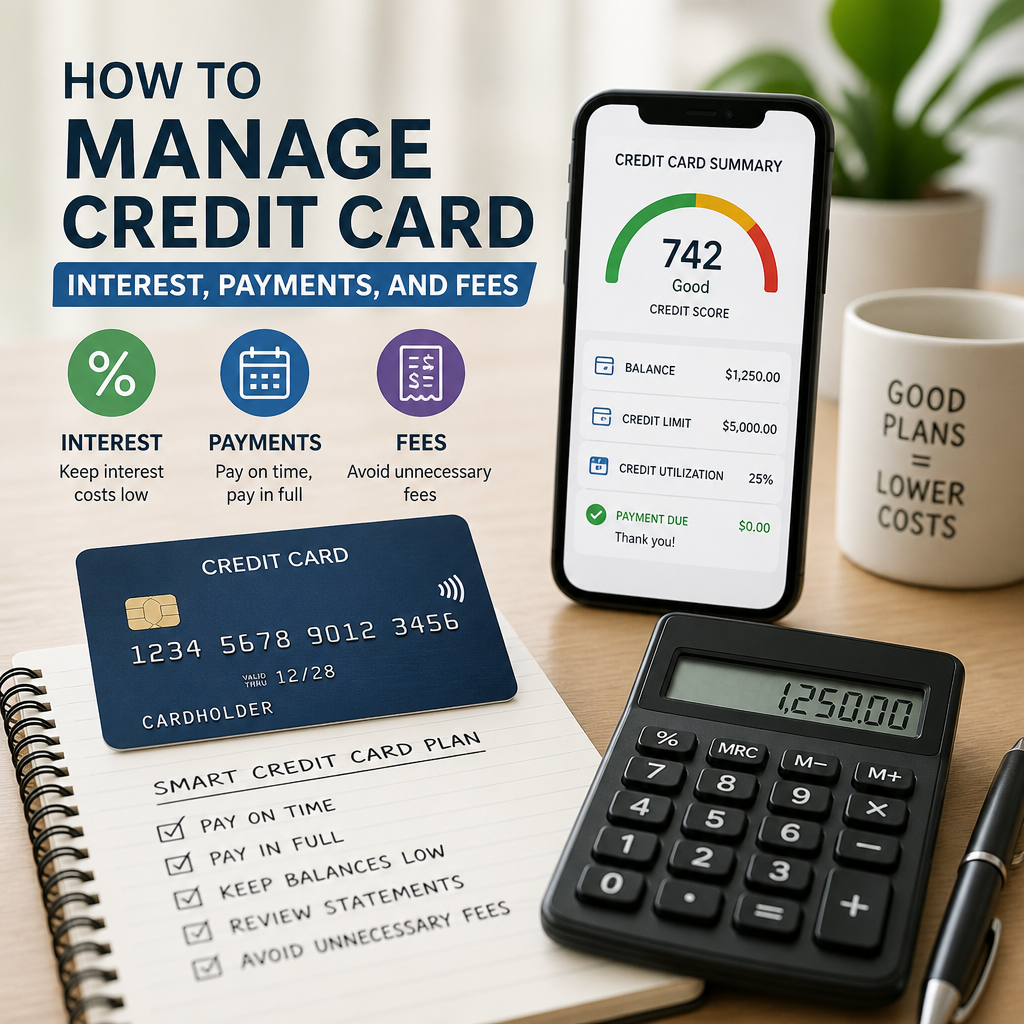
Credit cards can be useful tools for building credit, covering expenses, and earning rewards—but only if you understand how to manage credit card interest, payments, and account fees. Without a plan, even a small balance can grow quickly, and avoidable charges can chip away at your budget month after month.
Anúncios
The good news is that credit card costs are manageable once you know how they work. By learning how interest is calculated, how payments are applied, and which fees to watch for, you can use credit cards more strategically and keep more money in your pocket.
How Credit Card Interest Works
Credit card interest is the cost of borrowing money when you carry a balance from one billing cycle to the next. If you pay your statement balance in full by the due date, you usually avoid interest on new purchases. If not, interest may start accumulating on unpaid amounts.
The Role of APR
Your card’s annual percentage rate (APR) tells you how much interest you may pay over a year. Many cards have different APRs for:
Anúncios
Purchases
Balance transfers
Cash advances
Penalty situations, such as late payments
A lower APR can reduce your borrowing cost, but APR alone does not tell the whole story. How you use the card matters just as much.
Why Interest Can Add Up Fast
Credit card interest is typically calculated daily, based on your average daily balance. That means even small balances can become expensive if they sit unpaid for too long.
For example, if you make several purchases and only pay part of the bill, the remaining balance may keep generating interest until it is fully repaid. This is why carrying debt on a card can become costly over time.
How to Avoid Paying Interest
To reduce or eliminate interest charges:
Pay the statement balance in full each month
Make payments before the due date
Avoid cash advances unless necessary
Use promotional APR offers carefully
Track your spending so you do not rely on credit for everyday essentials
If you cannot pay in full, pay as much as you can above the minimum. Even extra payments can reduce interest over time.
Managing Credit Card Payments the Smart Way
Payment strategy affects both your interest charges and your credit health. Paying on time protects your credit score, while paying more than the minimum helps you reduce debt faster.
Minimum Payment vs. Statement Balance
Your minimum payment is the smallest amount you must pay to keep the account current. It is usually not enough to make meaningful progress on debt.
Your statement balance is the amount you owe for the billing cycle. Paying this amount in full generally helps you avoid interest on new purchases.
Here’s the key difference:
Minimum payment: Prevents late fees and delinquency
Statement balance: Helps you avoid interest
More than the minimum: Helps you pay off debt faster
Set Up Reliable Payment Habits
The easiest way to manage payments is to build a system you can repeat every month. Consider these habits:
Turn on autopay for at least the minimum payment
Set calendar reminders a few days before the due date
Review each statement for errors or unfamiliar charges
Pay twice a month if that matches your paycheck schedule
Keep a small cash buffer in checking so payments do not bounce
Autopay can be especially helpful because it lowers the risk of late payments. Still, you should check your statements regularly so you catch problems early.
Choose a Debt Repayment Strategy
If you carry balances on one or more cards, a structured payoff plan can help.
1. Avalanche Method
With the avalanche method, you focus on the card with the highest APR first while making minimum payments on the others. Once the most expensive balance is paid off, you move to the next highest APR.
This method can save money on interest over time.
2. Snowball Method
With the snowball method, you pay off the smallest balance first. This approach can create quick wins and help build momentum.
This method may be useful if motivation is your biggest challenge.
3. Fixed Payoff Plan
If you prefer simplicity, set a fixed monthly amount above the minimum and keep paying it consistently. Even modest extra payments can make a difference.
Understanding Common Credit Card Fees
Interest is only one part of the cost. Many cards also include fees that can be avoided or minimized with careful management.
Late Payment Fees
A late fee may apply if you miss the due date. Late payments can also trigger a penalty APR on some accounts, making the card much more expensive to carry.
To avoid late fees:
Use autopay or reminders
Pay early when possible
Confirm that payments have actually posted
Keep enough money in your account for the payment to clear
Annual Fees
Some cards charge an annual fee for access to rewards, travel perks, or premium benefits. An annual fee is not necessarily bad, but the card should provide enough value to justify the cost.
Ask yourself:
Do I use the rewards or benefits enough?
Could a no-annual-fee card meet my needs?
Am I keeping the card only out of habit?
If the value no longer makes sense, consider downgrading or closing the card only after reviewing how it may affect your credit.
Cash Advance Fees
A cash advance lets you borrow cash against your credit line, but it usually comes with a fee and a higher APR. Interest often starts immediately, with no grace period.
Because of the cost, cash advances should generally be a last resort.
Balance Transfer Fees
A balance transfer can help you move debt to a card with a lower promotional APR. However, these offers often come with a transfer fee, usually calculated as a percentage of the amount moved.
A balance transfer may be worthwhile if:
The promotional period is long enough
The transfer fee is lower than the interest you would otherwise pay
You have a realistic payoff plan before the promotional rate ends
Foreign Transaction Fees
If you travel or shop from international merchants, check whether your card charges a foreign transaction fee. Some cards charge a percentage on each purchase made in another currency or through an overseas bank.
A travel-friendly card can help avoid those extra costs.
Overlimit and Returned Payment Fees
Some cards may charge an overlimit fee if you exceed your credit limit, though protections and rules vary. A returned payment fee may apply if your bank rejects the payment due to insufficient funds or incorrect information.
Both fees are often avoidable with careful account monitoring.
How to Manage Credit Card Interest, Payments, and Account Fees Together
The smartest approach is not to focus on one cost at a time, but to manage the whole card relationship. That means watching your balance, understanding your billing cycle, and reading the terms of your account.
Build a Monthly Credit Card Routine
A simple routine can keep everything under control:
Review your transactions weekly
Check your available credit and statement balance
Note your due date and payment amount
Pay at least the minimum on time
Pay extra when possible
Watch for fees or unusual activity on each statement
This routine works well because it makes credit card management part of your regular finances instead of something you only think about when a bill arrives.
Keep Your Credit Utilization in Check
Your credit utilization ratio compares your credit card balance to your credit limit. High utilization can signal risk to lenders and may hurt your credit score.
To stay on top of utilization:
Keep balances low relative to your limit
Make mid-cycle payments if your balance runs high
Avoid maxing out cards, even temporarily
Request a credit limit increase only if you can manage spending responsibly
A lower utilization ratio can support stronger credit over time.
Read Your Card Agreement
The cardholder agreement explains your APRs, fee schedule, grace period, and payment rules. It is not the most exciting reading, but it is one of the best tools for avoiding surprises.
Look for:
Introductory rates and when they end
Penalty APR triggers
Grace period terms
Fee amounts
How payments are applied to your balance
Knowing these details can help you make better decisions before costs pile up.
Practical Examples of Better Credit Card Management
Sometimes the easiest way to understand credit card interest, payments, and account fees is to see how they show up in real life.
Example 1: Paying Only the Minimum
Suppose you use a card for everyday expenses and carry a balance into the next month. If you pay only the minimum, most of your payment may go toward interest and only a small amount toward the principal balance.
Over time, this can stretch out repayment and increase the total cost of the purchase.
Example 2: Paying the Statement Balance
If you pay the full statement balance by the due date, you typically avoid interest on new purchases. This approach works well for people who use credit cards like debit cards and pay them off regularly.
Example 3: Using a Balance Transfer Wisely
Imagine you move high-interest debt to a card with a lower promotional APR. If you also pay a transfer fee, the move only helps if you can repay enough of the balance before the promotional period ends.
Without a payoff plan, the debt may simply return to a higher rate later.
When to Reevaluate Your Credit Card
Not every card deserves a permanent place in your wallet. Review your accounts periodically to make sure they still fit your goals.
Consider reevaluating if:
The annual fee no longer makes sense
You are paying interest month after month
The rewards do not match your spending habits
A different card offers better terms
You keep missing due dates and need a simpler setup
Sometimes the best move is not to use credit more aggressively, but to simplify your card lineup.
Frequently Asked Questions
1. What is the best way to avoid credit card interest?
The most effective way to avoid credit card interest is to pay your full statement balance by the due date each month. If you cannot pay in full, pay as much as possible above the minimum so the remaining balance decreases faster.
2. Is paying the minimum payment enough?
Paying the minimum payment keeps the account current, but it usually does not reduce your debt quickly. It can also lead to more interest over time. If possible, pay more than the minimum to save money and shorten repayment.
3. Are annual fees worth it?
Annual fees can be worth it if the card’s rewards, travel perks, or protections provide more value than the fee itself. If you do not use the benefits regularly, a no-annual-fee card may be a better fit.
4. What fees should I watch for on a credit card?
Common fees include late payment fees, annual fees, cash advance fees, balance transfer fees, foreign transaction fees, and returned payment fees. Reviewing your cardholder agreement can help you understand which fees apply to your account.
5. Does paying early help manage credit card payments?
Yes. Paying early can help reduce your balance before the due date and may lower your credit utilization. It also gives you extra time to fix problems if a payment does not process correctly.
Learning how to manage credit card interest, payments, and account fees can make a real difference in your financial life. Small choices—like paying on time, avoiding unnecessary cash advances, and reading your statement carefully—can help you reduce costs and stay in control of your budget.
The key is consistency. If you pay attention to your APR, keep your balances manageable, and make a habit of reviewing fees before they become a problem, credit cards can work for you instead of against you. You do not need perfect financial habits to improve your results. You just need a clear system and the discipline to follow it month after month.
Start with one practical step: set up payment reminders, review your latest statement, and check whether your current card still fits your needs. From there, you can build a stronger, more efficient approach to credit card use that protects your money and supports your long-term financial goals.
Mary S, CFP®, is a Certified Financial Planner with over 12 years of experience in personal finance, retirement planning, and wealth management. She writes educational content that helps readers understand financial concepts and make informed decisions based on reliable information.