Debt Collection Rights: What Collectors Can and Cannot Do
If you’re dealing with calls or letters from a collector, understanding your debt collection rights can make the process far less stressful. Learn what collectors can and cannot do so you can protect yourself and respond with confidence.
By: Mary Mitchell on August 3, 2026
Anúncios
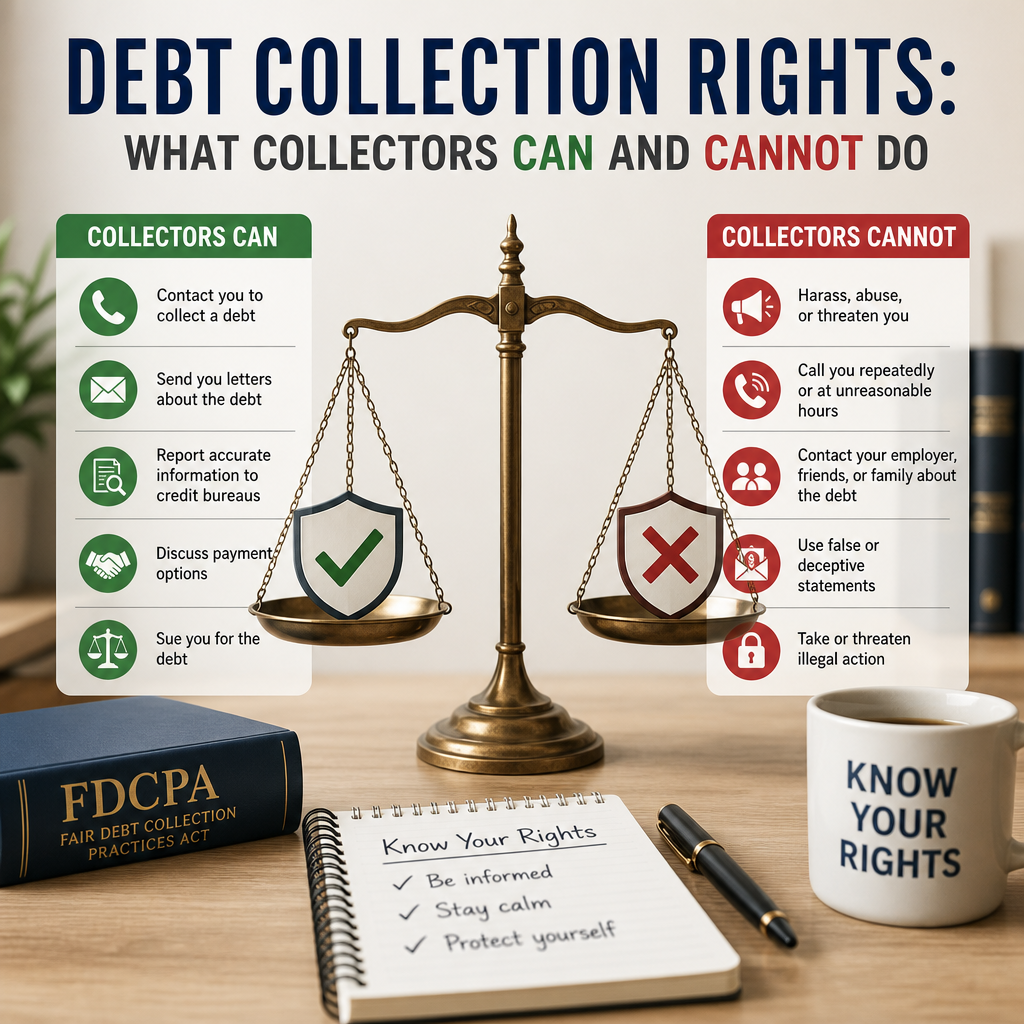
Getting a call or letter about unpaid debt can feel overwhelming, but you do have rights. Understanding debt collection rights can help you respond with confidence, avoid intimidation, and make smarter decisions about what to do next. Debt collectors are allowed to contact consumers to recover legitimate debts, but they are not allowed to harass, lie, threaten, or violate federal and state laws in the process.
If you are dealing with collection calls, emails, or letters, knowing what collectors can and cannot do is the first step toward protecting yourself. In this guide, we’ll break down the rules in plain English, explain how to verify a debt, and show you how to assert your rights if a collector crosses the line.
Anúncios
Debt Collection Rights: The Basics You Should Know
Debt collection is regulated by the Fair Debt Collection Practices Act (FDCPA), a federal law that limits how third-party collectors can behave when collecting consumer debts. In many cases, state laws provide additional protections.
A debt collector is usually someone collecting a debt owed to another company, such as:
Anúncios
A collection agency
A debt buyer
A law firm collecting on behalf of a creditor
The original creditor, like a credit card company or hospital, may also have policies and state-law limits, but the FDCPA mainly applies to third-party collectors.
Your debt collection rights generally include the right to:
Be treated with respect
Request written validation of the debt
Dispute inaccurate debts
Limit certain types of contact
Stop abusive or deceptive collection tactics
What Debt Collectors Can Do
Debt collectors do have legal tools available to them. They can contact you, ask for payment, and pursue legal remedies if the debt is valid and within the statute of limitations.
They Can Contact You About the Debt
Collectors may reach out by phone, mail, email, text, or other permitted methods. However, they must follow rules about when and how often they contact you.
They can generally:
Ask you to pay the debt
Offer payment plans or settlements
Send written notices
Contact your attorney if you have one
Sue you if the debt is enforceable and the legal deadline has not expired
They Can Report Debts to Credit Bureaus
Collectors may report a debt to credit reporting agencies if the information is accurate and reported in compliance with the law. This can affect your credit score, so it’s important to review any collection account carefully.
If you believe the debt is inaccurate, you should dispute it promptly with both the collector and the credit bureaus when appropriate.
They Can File a Lawsuit in Some Cases
A collector can sue to try to collect a debt. If they win, they may seek a court judgment, which could allow additional collection actions depending on state law.
That said, a lawsuit does not automatically mean the collector will win. You have the right to respond, appear in court, and raise defenses such as:
Incorrect balance
Identity errors
Payment already made
Debt too old to sue on
Lack of proper documentation
What Debt Collectors Cannot Do
Many people assume collectors can say or do almost anything to get paid. That is not true. Debt collection rights exist specifically to stop abusive practices.
They Cannot Harass or Abuse You
Collectors cannot use repeated harassment or abuse to pressure you. Examples include:
Calling nonstop
Using obscene or insulting language
Threatening violence
Publicly shaming you
Calling just to annoy or scare you
Even if a debt is valid, harassment is not allowed.
They Cannot Lie or Mislead You
Collectors may not use false statements or deceptive tactics. They cannot:
Pretend to be attorneys or government officials if they are not
Lie about the amount you owe
Falsely claim you will be arrested for not paying a consumer debt
Misrepresent the legal status of the debt
Claim they have legal authority they do not actually have
A collector’s job is to collect money, but honesty is required.
They Cannot Contact You at Unreasonable Times
In most cases, collectors cannot call before 8 a.m. or after 9 p.m. in your time zone unless you agree to it. They also cannot contact you at inconvenient times or places if they know those contacts are inappropriate.
For example, they should not call you at work if you tell them not to.
They Cannot Ignore Your Request to Stop Calling at Work
If you tell a collector that your employer does not allow personal calls, they must stop contacting you at work. This is one of the most practical debt collection rights because workplace calls can create stress and embarrassment.
They Cannot Contact You After You Send a Cease Letter
You have the right to ask a debt collector to stop contacting you. Once they receive a written request to cease communication, they may only contact you in limited situations, such as to confirm they will stop contacting you or to notify you of specific legal action.
A cease letter does not erase the debt, but it can stop most communications.
They Cannot Discuss Your Debt with Third Parties
Collectors are generally not allowed to tell friends, neighbors, coworkers, or family members about your debt. They may contact others only for limited purposes, such as locating you, and even then they must keep the conversation very restricted.
They cannot:
Reveal that you owe money
Embarrass you by discussing your account with others
Use third parties to pressure you
They Cannot Take Money Without Proper Authorization
Collectors generally cannot withdraw money from your bank account or debit card without your permission. If you authorize a payment plan or settlement, read the terms carefully before giving access to any account.
Never share sensitive financial information unless you fully understand and trust the arrangement.
How to Verify a Debt Before Paying
One of the most important debt collection rights is the right to request validation. If you receive a collection notice, do not assume it is accurate.
Ask for Debt Validation in Writing
Collectors must provide certain information about the debt and, when required, verify it if you dispute the debt in writing within the allowed period. A validation request can help confirm:
Who owns the debt
The original creditor
The amount owed
Whether the collector is authorized to collect it
Review the Details Carefully
Once you receive the validation information, compare it against your records. Look for:
Wrong name or account number
Duplicate charges
Incorrect interest or fees
Payments not credited
Debts that belong to someone else
Watch for Debt Buying Errors
Debt buyers often purchase old accounts in bulk, and records may be incomplete. That does not mean every collection is invalid, but it does mean mistakes are common enough that you should check everything carefully.
What to Do If a Collector Breaks the Rules
If a debt collector violates your rights, you have options. Don’t ignore abusive behavior.
Document Everything
Keep a record of every contact:
Dates and times of calls
Names of collectors
Phone numbers used
Voicemails, texts, or emails
Copies of letters
Notes about what was said
Clear documentation can help if you file a complaint or need to defend yourself in court.
Send a Written Dispute or Cease Request
If the debt seems inaccurate, dispute it in writing. If the calls are the problem, send a cease communication letter. Mail important letters by certified mail with return receipt when possible so you have proof they were received.
File a Complaint
You can file complaints with:
The Consumer Financial Protection Bureau
Your state attorney general’s office
The Federal Trade Commission
Your state consumer protection agency, if available
Complaints won’t erase a valid debt, but they can trigger investigation and help stop unlawful behavior.
Consider Legal Help
If you are being sued, threatened, or repeatedly harassed, speak with a consumer rights attorney or legal aid office. Many communities offer free or low-cost help, especially if you have limited income.
Common Mistakes to Avoid When Dealing With Collectors
Even when you know your rights, certain mistakes can make the situation harder.
Do Not Ignore Court Papers
If you are served with a lawsuit, respond immediately. Ignoring a summons can lead to a default judgment, even if the debt is wrong or too old to collect through the courts.
Do Not Admit to a Debt Without Checking the Details
Be careful about what you say on the phone. Admitting the debt without confirming it can sometimes complicate your situation. Ask for written information first.
Do Not Give Out Sensitive Financial Information Too Quickly
Never rush to provide bank account numbers or debit card information. If you want to pay, verify the collector and the debt first.
Do Not Assume the First Offer Is the Best Offer
Collectors may accept less than the full balance, especially on older debts. If you plan to settle, get the agreement in writing before paying.
Practical Example: How a Debt Collection Call Should Go
Here’s a simple example.
A collector calls and says you owe a credit card balance. Instead of paying immediately, you can say:
“Please send me written validation of the debt. I will review it before making any payment.”
That response is calm, clear, and within your rights. If the collector keeps calling before sending information, you can document the calls and consider a written cease request.
If the collector says, “Pay today or you will be arrested,” that is a red flag. Arrest threats for ordinary consumer debt are not allowed. Save the message and report it.
How Debt Collection Rights Work With the Statute of Limitations
The statute of limitations is the legal deadline for filing a lawsuit to collect a debt. It varies by state and by the type of debt.
This matters because:
A collector may still try to contact you after the deadline
In many cases, they may no longer sue to collect
Making a payment or acknowledging the debt may affect the legal timeline in some states
Because the rules differ by state, it’s smart to check the applicable deadline before paying an old debt.
Frequently Asked Questions
1. Can a debt collector call me every day?
Collectors can contact you, but repeated or excessive calling may cross the line into harassment. If calls become excessive, document them and consider sending a written cease communication request.
2. Can a debt collector threaten to have me arrested?
No. Ordinary consumer debt does not lead to arrest just for nonpayment. Threatening arrest over a debt is misleading and may violate the law.
3. Do I have to pay a debt that is sent to collections?
Not always. You should first verify that the debt is accurate, belongs to you, and is still legally enforceable. Some debts may be too old to sue on, while others may contain errors.
4. Can I stop a collector from calling me at work?
Yes. If you tell the collector that your employer does not allow such calls, they must stop contacting you at work. You can also request that they contact you only in writing.
5. What should I do if the collector is contacting the wrong person?
Tell the collector in writing that they have the wrong person and ask them to stop contacting you. Keep records of the communications in case you need to file a complaint.
Understanding debt collection rights can make a stressful situation far more manageable. Collectors are allowed to pursue valid debts, but they must follow clear rules. They cannot harass you, lie to you, contact you at unreasonable times, or share your debt with other people. You also have the right to request validation, dispute errors, and stop unwanted communication in writing.
The key is to stay calm, gather information, and respond strategically. Never assume a collection notice is accurate without checking it. Never ignore a lawsuit. And never let threats or pressure push you into paying before you understand your options.
If you are facing collection activity, start by documenting every contact and requesting written verification. From there, you can decide whether to dispute the debt, negotiate a settlement, or get legal help. The more you know about your rights, the better prepared you are to protect your finances and make informed choices.
Mary S, CFP®, is a Certified Financial Planner with over 12 years of experience in personal finance, retirement planning, and wealth management. She writes educational content that helps readers understand financial concepts and make informed decisions based on reliable information.