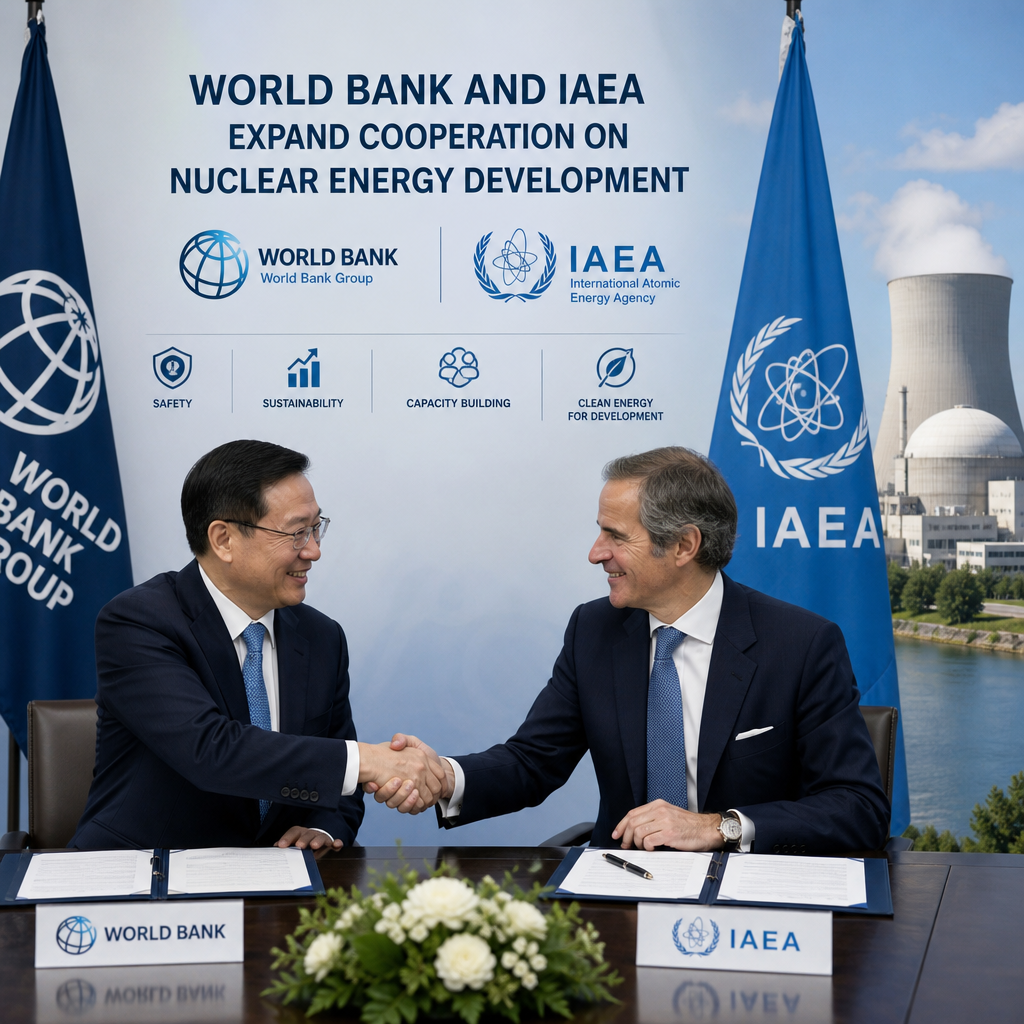
World Bank and IAEA Expand Cooperation on Nuclear Energy Development
The World Bank and IAEA are deepening their partnership to support countries exploring nuclear energy development as part of a cleaner, more secure power mix. By combining financing insight with technical expertise, they aim to help governments make smarter, safer long-term energy decisions.
By: Peter on August 3, 2026
Anúncios
The conversation around nuclear energy development is changing. As countries look for reliable power, lower-carbon electricity, and stronger energy security, international institutions are stepping up to support the process. One of the most important recent developments is the expanding cooperation between the World Bank and the International Atomic Energy Agency (IAEA). Their collaboration signals a renewed interest in helping countries evaluate whether nuclear power can play a practical role in long-term energy planning.
Anúncios
For many governments, nuclear power is not a simple yes-or-no decision. It requires careful assessment of safety, financing, regulation, waste management, public trust, and technical readiness. That is exactly where this cooperation matters. By combining the World Bank’s development expertise with the IAEA’s technical leadership, the two institutions can help countries make more informed choices about nuclear energy development.
This partnership is especially relevant for nations facing fast-growing electricity demand, grid reliability challenges, and climate commitments. The goal is not to push one energy source over another. Instead, it is to create better tools, clearer guidance, and stronger institutional support so countries can decide whether nuclear energy fits into their broader energy strategy.
Why the World Bank and IAEA Partnership Matters for Nuclear Energy Development
The World Bank and the IAEA bring very different strengths to the table. The World Bank focuses on development, investment frameworks, policy planning, and long-term economic sustainability. The IAEA provides global expertise on nuclear safety, safeguards, security, training, and technology assessment.
Anúncios
Together, they can help countries avoid one of the biggest mistakes in energy planning: moving into nuclear power without the institutions, expertise, and regulatory systems needed to manage it responsibly.
A broader view of energy security
Many countries are under pressure to expand electricity access while reducing emissions. In that context, nuclear power can offer:
Reliable baseload generation
Low operational carbon emissions
Energy diversification
Reduced dependence on imported fossil fuels
But nuclear energy development also comes with major responsibilities. A plant is not just an energy asset; it is a long-term national commitment that requires technical maturity and public accountability.
Better decision-making for emerging nuclear countries
For countries considering nuclear power for the first time, the learning curve is steep. Questions often include:
Is the grid ready for large-scale nuclear generation?
Can the country build and maintain a competent regulator?
What financing model is realistic?
How will radioactive waste be managed?
Are there enough trained engineers, operators, and inspectors?
The World Bank-IAEA cooperation can support countries through these questions with a more structured, evidence-based approach.
What Nuclear Energy Development Requires Before a Country Builds a Plant
Nuclear energy development is much more than choosing a reactor design. A successful program depends on a long list of enabling conditions that must be in place before construction begins.
1. Strong institutions and legal frameworks
A country needs laws, agencies, and oversight systems that clearly define responsibilities. This includes:
An independent nuclear regulator
Licensing rules for plants and operators
Emergency preparedness frameworks
Liability and insurance arrangements
Security and safeguards measures
Without this foundation, even the best technology can become a serious liability.
2. Skilled human resources
Nuclear projects require a highly trained workforce. That includes:
Nuclear engineers
Radiation protection specialists
Reactor operators
Safety inspectors
Waste management experts
Emergency response personnel
Building this talent pipeline takes years, not months.
3. Grid and infrastructure readiness
A nuclear plant must connect to a grid that can absorb large, steady power output. Countries must evaluate:
Grid stability
Transmission capacity
Cooling water availability
Transportation infrastructure
Site suitability
This is why nuclear energy development often begins with system studies rather than construction.
4. Financing and project management capacity
Nuclear projects are capital-intensive and complex. Governments must assess:
Upfront construction costs
Long project timelines
Debt and financing risk
Cost overruns
Decommissioning funding
The World Bank’s expertise in project evaluation and economic planning can help countries understand these risks more clearly.
How the IAEA Supports Safe Nuclear Energy Development
The IAEA is the global reference point for peaceful nuclear cooperation, safety standards, and safeguards. Its role in nuclear energy development is to help countries develop programs that are safe, secure, and consistent with international norms.
Technical guidance and safety standards
The IAEA publishes guidance on many parts of the nuclear lifecycle, including:
Site selection
Plant design review
Operational safety
Radiation protection
Emergency preparedness
Waste management
Countries can use these materials to benchmark their own systems and identify gaps.
Capacity building and training
The IAEA helps countries develop human capital through workshops, technical missions, peer reviews, and training programs. This is especially valuable for countries that are exploring nuclear energy for the first time.
Safeguards and nonproliferation
Any nuclear energy program must address the risk of diversion of nuclear materials. The IAEA helps ensure that civilian nuclear programs remain peaceful and transparent through safeguards and monitoring.
How the World Bank Can Contribute to Nuclear Energy Development
Historically, the World Bank has been cautious about financing nuclear energy. Its role in this renewed cooperation is not simply about lending money for reactors. Instead, it is about helping countries build the conditions needed for sound energy decisions.
Economic and policy analysis
The World Bank can help countries compare nuclear power with other energy options based on:
Cost
Reliability
Emissions
System integration
Long-term affordability
This kind of analysis matters because nuclear energy development should fit national goals, not just international trends.
Institutional strengthening
The Bank has deep experience helping countries strengthen:
Public utilities
Energy ministries
Regulatory agencies
Procurement systems
Financial oversight mechanisms
These are all crucial for large infrastructure projects, including nuclear.
Climate and development planning
Many countries now want energy systems that support both growth and decarbonization. Nuclear power may be one option among several, especially for countries that need firm, dispatchable electricity.
The World Bank can help align nuclear energy development with broader priorities such as:
Grid modernization
Industrial development
Universal energy access
Climate resilience
What This Cooperation Could Mean for Countries Considering Nuclear Power
The expanded cooperation between the World Bank and the IAEA could make nuclear energy development more accessible, but also more disciplined. That is a good thing. A country should never begin a nuclear program just because it sounds modern or attractive. It should move forward only when the case is strong and the institutions are ready.
More realistic energy planning
Countries may benefit from clearer roadmaps that answer practical questions:
What problem is nuclear power solving?
Is the demand forecast strong enough?
Can the grid support the project?
Can the country finance construction responsibly?
Are safety and governance systems mature enough?
Better coordination among stakeholders
Nuclear energy development often involves multiple ministries, regulators, utilities, universities, and private partners. Coordination can be difficult. Joint support from the World Bank and IAEA may improve alignment and reduce confusion.
More confidence for investors and lenders
Large infrastructure projects depend on trust. When countries demonstrate that they are following international guidance, building strong institutions, and taking safety seriously, they are more likely to attract support.
Practical Example: A Country Assessing Its First Nuclear Plant
Imagine a middle-income country with rising electricity demand, frequent power shortages, and heavy dependence on imported gas. The government wants to explore nuclear power but lacks experience.
Before any construction begins, the country would need to:
Conduct a national energy assessment
Compare nuclear with renewables, storage, gas, and efficiency measures
Establish or strengthen an independent regulator
Train technical staff
Develop emergency response plans
Identify a suitable site
Determine a financing strategy
Prepare public communication and stakeholder outreach
In this scenario, the IAEA can help with technical readiness and safety standards, while the World Bank can help assess the economic and institutional side of the decision. That combination reduces the risk of rushed or poorly planned nuclear energy development.
Challenges That Still Need Attention
Even with stronger cooperation, nuclear energy development remains complex. Countries should understand the key challenges before committing.
High upfront costs
Nuclear plants require major capital investment. Financing structures must be carefully designed to avoid placing unsustainable burdens on taxpayers or electricity consumers.
Long project timelines
From initial studies to operation, a nuclear project can take many years. Political continuity, institutional discipline, and public confidence are all essential.
Public acceptance
Communities may have concerns about safety, waste, or transparency. Governments need honest communication and meaningful public engagement.
Waste and decommissioning
Spent fuel and radioactive waste require long-term management plans. Decommissioning old plants also costs money and planning.
Supply chain and workforce limitations
A country without a nuclear supply chain must rely on imported technology, services, and fuel arrangements. That creates both opportunities and vulnerabilities.
Why This Cooperation Matters in the Energy Transition
The global energy transition is not happening the same way everywhere. Some countries have strong renewable resources and flexible grids. Others need firm low-carbon power to support industrial growth and reliability. Nuclear energy development can be part of that picture, but only under the right conditions.
The World Bank and IAEA cooperation matters because it encourages a more balanced, realistic approach. It recognizes that energy decisions should be based on local needs, technical readiness, and long-term sustainability rather than broad assumptions.
For some countries, nuclear power may become a central part of the future energy mix. For others, it may remain a long-term option or never become viable. Either way, better information leads to better policy.
Frequently Asked Questions
1. What is the main goal of the World Bank and IAEA cooperation on nuclear energy development?
The main goal is to help countries make better-informed decisions about nuclear power. The World Bank contributes expertise in development planning, financing, and institutional strengthening, while the IAEA provides technical guidance on safety, safeguards, and nuclear program readiness. Together, they can support countries that are evaluating whether nuclear energy fits their long-term energy strategy.
2. Does this cooperation mean the World Bank will start financing nuclear plants directly?
Not necessarily. The broader cooperation is more about technical support, policy guidance, and helping countries assess readiness. While financing may be part of future discussions, the more immediate value lies in improving the quality of decision-making, governance, and planning around nuclear energy development.
3. Why is the IAEA important in nuclear energy development?
The IAEA is the global authority on peaceful nuclear cooperation, safety standards, and safeguards. It helps countries build safe, secure nuclear programs through training, peer review, technical missions, and guidance on everything from reactor safety to waste management and emergency preparedness.
4. What should a country have in place before starting a nuclear power program?
A country should have a strong regulatory framework, trained personnel, a suitable grid, emergency response systems, a financing plan, and a clear strategy for waste and decommissioning. Nuclear energy development requires long-term commitment and institutional maturity, not just a desire for low-carbon power.
5. Can nuclear power help countries meet climate goals?
Yes, nuclear power can help some countries reduce greenhouse gas emissions because it generates electricity with low operational carbon emissions. However, it is only one option among many. Countries should compare it with renewables, storage, grid upgrades, energy efficiency, and other low-carbon solutions before deciding.
The expanded cooperation between the World Bank and the IAEA is an important sign that nuclear energy development is being approached with greater seriousness and realism. For countries weighing nuclear power, the message is clear: success depends on more than technology. It requires strong institutions, skilled people, careful financing, robust safety systems, and long-term planning.
This partnership can help governments ask better questions before making irreversible commitments. It can improve the quality of energy planning, strengthen public confidence, and reduce the risk of costly mistakes. Just as importantly, it can support countries in aligning their energy choices with development goals, reliability needs, and climate commitments.
Nuclear power may not be the right solution for every country, but for some, it can be a valuable part of a diversified clean energy strategy. The key is making the decision with full information and a realistic understanding of the responsibilities involved. As global energy demand continues to grow, thoughtful cooperation like this will matter more than ever.
Peter B holds a degree in Journalism and has 5 years of experience covering U.S. economic policy, labor markets, and financial news. He writes data-driven news content on topics like inflation, interest rates, and employment trends.