Full-Service Community Schools for Academic, Health, and Family Support
Full-service community schools go beyond academics by connecting students and families with the support they need to thrive. From tutoring and counseling to health services and community resources, this model helps remove barriers to learning and builds stronger school communities.
By: Jennifer Collins on August 3, 2026
Anúncios
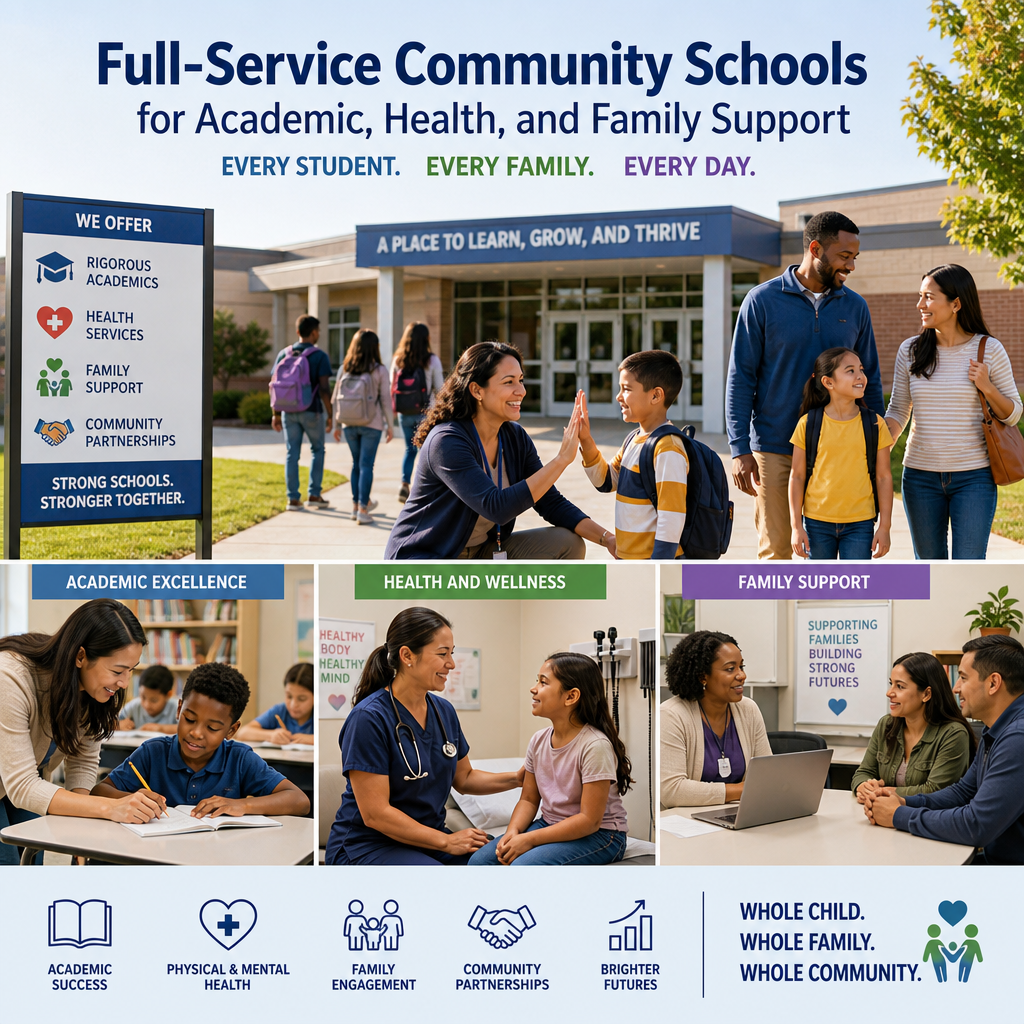
Full-service community schools are changing the way families think about public education. Instead of treating school as only a place for lessons and tests, the full-service community schools model turns the campus into a hub for academic, health, and family support. That means students can access tutoring, counseling, health services, after-school enrichment, and stronger connections to community resources in one place.
This approach matters because learning does not happen in a vacuum. When students face hunger, stress, untreated health issues, or family instability, their academic progress often suffers. Full-service community schools respond by bringing educators, families, health providers, and community partners together around a shared goal: helping children thrive.
Anúncios
What Are Full-Service Community Schools?
A full-service community school is a public school that offers integrated supports designed to meet the needs of students and families beyond the classroom. These schools are usually built around partnerships with local organizations, health clinics, social service agencies, nonprofits, and higher education institutions.
The idea is simple but powerful: if students are healthy, supported, and engaged, they are more likely to succeed academically.
Anúncios
Core features of the model
While every school is different, most full-service community schools include:
Strong academic instruction and enrichment
Mental health and counseling services
Primary care, dental, or vision support
Family engagement programs
Attendance and case management support
After-school and summer learning opportunities
Community partnerships that respond to local needs
This model is not a one-size-fits-all program. It is a framework that schools adapt to fit the needs of their students and neighborhood.
Why Full-Service Community Schools Matter
Students do better when schools address the whole child. A child who cannot see the board, has untreated anxiety, or goes home to food insecurity will have a harder time concentrating and participating in class.
Full-service community schools help reduce those barriers by making support more accessible and coordinated.
Academic benefits
Academic support is still central. These schools often provide:
Reading and math tutoring
Extended learning time
Enrichment in arts, STEM, and leadership
Credit recovery and college readiness support
Attendance interventions
When students receive help early and consistently, they are better positioned to keep up with grade-level expectations.
Health and wellness benefits
Health care access is often a major challenge for families. In a full-service community school, students may be able to get help with:
Immunizations
Routine checkups
Vision and hearing screenings
Mental health counseling
Nutrition support
This can reduce missed school days and help students stay focused in class. It also makes care easier for families who may struggle with transportation, cost, or scheduling.
Family and community support
Families are essential partners in student success. Full-service community schools often provide:
Parenting workshops
Job readiness resources
English language support
Help navigating public benefits
Adult education referrals
These services recognize that supporting caregivers strengthens the child’s learning environment at home.
How Full-Service Community Schools Work
A successful school-based support model depends on coordination. Services cannot operate in silos. Instead, school leaders and partners work together to identify needs, set priorities, and align resources.
1. Needs assessment
Schools usually begin by learning what their students and families need most. This might include surveys, attendance data, academic results, or input from parents and staff.
Common local needs may include:
Chronic absenteeism
Food insecurity
Behavioral health concerns
Housing instability
Language access barriers
2. Partnerships
The school then builds partnerships with trusted organizations. These might include:
Community health centers
Mental health agencies
Universities
Youth development nonprofits
Family service organizations
The quality of these partnerships matters. The best collaborations are built on trust, clear roles, and shared goals.
3. Integrated student supports
Integrated supports connect students to services in a coordinated way. For example, a teacher may notice a student who is frequently tired and struggling to concentrate. The school team could help the family connect with a nurse, counselor, or food assistance resource rather than treating the issue as purely academic.
4. Family and community engagement
Full-service community schools do not simply offer services to families; they involve families in decision-making. That often includes:
Parent advisory councils
Community meetings
Volunteer opportunities
Family resource centers on campus
When families help shape school priorities, services are more likely to be used and valued.
Common Services in Full-Service Community Schools
Because each community has different needs, services can vary widely. Still, many schools include similar supports.
Academic supports
These services focus on classroom success and long-term achievement.
Small-group instruction
Tutoring before or after school
Summer learning programs
College and career counseling
Homework help centers
Health services
Some schools host on-site clinics or regular visiting providers.
Pediatric care
Dental screenings
Vision care
Behavioral health counseling
Health education
Social and emotional support
Students often need help managing stress, relationships, and life changes.
School counselors
Social workers
Trauma-informed support
Peer mentoring
Conflict resolution programs
Family support services
Families may need practical help outside school hours.
Food pantries
Housing referrals
Benefits navigation
Adult literacy classes
Child care referrals
The Role of School Leadership
Strong leadership is one of the biggest factors in making full-service community schools work well. Principals, district leaders, and site coordinators must keep the model focused and sustainable.
What effective leaders do
Effective leaders usually:
Build a shared vision with staff and partners
Use data to guide decisions
Make family voice a priority
Protect time for coordination
Support staff training
Track whether services are making a difference
Without leadership commitment, services can become disconnected or underused. With it, the school can become a true support center for the community.
How These Schools Help Students Long Term
The value of full-service community schools goes beyond one homework assignment or one counseling session. Over time, they can help students build stronger attendance, better engagement, and more stable routines.
Better attendance and participation
Students are more likely to show up when school feels welcoming and supportive. Families are also more likely to reach out when they know help is available on campus.
Stronger school climate
When students feel known and supported, school culture improves. Teachers may see fewer disruptions, and students may feel safer asking for help.
More equitable access to resources
Not every family has the same access to health care, transportation, or enrichment programs. Full-service community schools can help close those gaps by placing services where families already are.
Improved family trust
Families may be more willing to engage with school staff when they see the school addressing real-life challenges, not just academic performance.
Challenges and Considerations
Although the model has many strengths, it also requires careful planning. Schools and districts need to think realistically about staffing, funding, and coordination.
Funding and sustainability
Many programs begin with grants or temporary funding. Long-term success depends on blending funding sources and building partnerships that last.
Coordination demands
When multiple providers work on one campus, communication is essential. Schools need clear systems for referrals, privacy, scheduling, and follow-up.
Avoiding service duplication
If several organizations offer similar services without coordination, resources may be wasted. A shared plan helps ensure that support matches actual needs.
Respecting family privacy and choice
Families should always understand what services are available and how information will be used. Trust grows when schools protect confidentiality and respect consent.
Examples of How the Model Can Work in Real Life
Consider a middle school where attendance has dropped and many students are behind in reading. A full-service community schools approach might include:
A tutoring program after school
A family liaison who helps parents stay connected
A mental health counselor one day a week
A weekend food distribution partnership
A health center that provides screenings
Or imagine an elementary school with high rates of absenteeism caused by untreated asthma and transportation barriers. The school might respond by:
Partnering with a local clinic
Helping families connect with medical care
Offering attendance outreach in multiple languages
Providing workshops for caregivers on managing chronic conditions
These are not quick fixes. But they show how coordinated supports can remove barriers that stand between students and learning.
Who Benefits Most?
The truth is that full-service community schools can benefit many types of students and families. They are especially valuable in communities facing concentrated poverty, limited access to health care, or unmet social needs.
Students benefit from:
More consistent attendance
Better access to care
Stronger academic support
Healthier emotional development
Families benefit from:
Easier access to resources
More direct communication with school staff
Support that respects their time and circumstances
Teachers benefit from:
Stronger student engagement
Better attendance
More support for nonacademic barriers
Communities benefit from:
Stronger school-community relationships
More coordinated use of local services
A public investment that supports children and families together
How to Evaluate a Full-Service Community School
If a district, parent, or community leader wants to know whether the model is working, several signs can help.
Look for these indicators
Higher student attendance
Improved family participation
Increased use of health and counseling services
Better student engagement
Strong referral and follow-up systems
Positive feedback from families and staff
Evaluation should look at both outcomes and experience. Numbers matter, but so do relationships, trust, and access.
Frequently Asked Questions
What is the main purpose of full-service community schools?
The main purpose is to support the whole child by combining academics, health services, and family support in one coordinated school-based model. This helps reduce barriers to learning and gives students a stronger foundation for success.
Are full-service community schools only for high-need neighborhoods?
No. While the model is especially helpful in communities with limited access to services, any school can adapt the approach based on local needs. The key is whether the school can build partnerships and coordinate support effectively.
Do full-service community schools replace parents or family responsibilities?
No. They are designed to support families, not replace them. These schools work best when families are treated as partners and have a voice in how services are planned and delivered.
What kinds of health services can be offered on campus?
Depending on the partnerships and resources available, schools may offer screenings, counseling, primary care referrals, vision checks, dental services, and mental health support. Services vary by location and community need.
How can a school start building a full-service community schools model?
A school usually starts with a needs assessment, then identifies local partners and priorities. From there, the school can create a shared plan, define roles, and begin offering coordinated supports that fit the community.
Full-service community schools offer a practical, people-centered way to help students succeed. By connecting academics with health care, counseling, and family services, these schools address the real obstacles that can stand in the way of learning. They recognize that students do best when their physical, emotional, and social needs are taken seriously, not treated as distractions from education.
For families, this model can make support easier to access and less overwhelming to navigate. For educators, it can create stronger attendance, better engagement, and a more positive school climate. For communities, it can turn schools into trusted hubs where people find resources, relationships, and opportunity.
The strongest full-service community schools are built on partnership, trust, and a clear focus on student success. If you are a parent, educator, or community leader, learning more about this model is a smart next step. The more schools connect learning with real-life support, the more likely students are to thrive in school and beyond.
Jennifer, M.Ed., holds a degree in Higher Education Administration, with
a focus on U.S. college financial aid, admissions policy, and student
support systems. She researches and writes about scholarships, federal
aid programs, and the college planning process to help students and
families make informed, well-supported decisions.