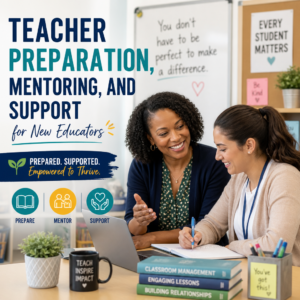
Teacher Preparation, Mentoring, and Support for New Educators
Anúncios
Entering the classroom for the first time is exciting, but it can also feel overwhelming. Strong teacher preparation helps new educators build confidence before they ever greet their students, and ongoing mentoring and support help them grow once the school year begins. When schools invest in all three, they give new teachers a much better chance to thrive—and students benefit too.
High-quality teacher preparation is more than learning lesson planning and classroom management. It also includes understanding child development, building relationships, working with diverse learners, and reflecting on practice. After graduation or certification, new teachers still need guidance. That’s where mentoring, coaching, and school-based support systems play a critical role.
Anúncios
In this article, we’ll explore what effective teacher preparation looks like, why mentoring matters, and how schools can create a better support system for new educators.
Why Teacher Preparation Matters

A new teacher can have strong subject knowledge and still struggle in the classroom without enough preparation. Teacher preparation programs help future educators connect theory to practice so they can make sound decisions from day one.
Anúncios
The foundation of effective teaching
Good preparation helps teachers develop skills in areas such as:
- Lesson planning and curriculum alignment
- Classroom management and student engagement
- Assessment and data use
- Differentiated instruction
- Family communication
- Culturally responsive teaching
- Special education awareness and inclusion
These are not “nice-to-have” skills. They are the everyday tools teachers use to support students, solve problems, and adapt to changing classroom needs.
Classroom experience makes a difference
Student teaching and field experiences are some of the most important parts of teacher preparation. They allow future educators to:
- Observe experienced teachers in action
- Practice leading small and whole-group instruction
- Learn how to respond to real classroom challenges
- Receive feedback before becoming responsible for their own classroom
This hands-on experience often reveals the difference between knowing a strategy in theory and using it effectively with actual students.
What Strong Teacher Preparation Programs Include
Not all teacher preparation programs are the same. The strongest programs combine academic knowledge, practical experience, and support for the realities of teaching.
Coursework that reflects classroom reality
A useful preparation program should go beyond textbooks. Future teachers need learning opportunities that address:
- Developmentally appropriate practices
- Literacy and numeracy instruction
- Behavior support and positive discipline
- English learner strategies
- Trauma-informed teaching
- Technology integration
- Assessment literacy
When coursework reflects real classroom conditions, new teachers enter the profession with a clearer understanding of what to expect.
Mentored clinical practice
Clinical practice, including student teaching or residency models, is one of the most powerful parts of teacher preparation. During this time, candidates learn under the supervision of experienced educators. The best programs offer:
- Extended time in classrooms
- Regular feedback from mentors
- Gradual release of responsibility
- Opportunities to work with diverse student populations
This structure helps future teachers build confidence while still having support available.
Reflection and self-assessment
Effective teacher preparation also teaches educators how to reflect on their own practice. Reflection helps teachers ask important questions such as:
- What worked well in this lesson?
- Which students were most engaged?
- Where did I lose momentum?
- How can I adjust my approach tomorrow?
Teachers who develop reflective habits early are better prepared to improve continuously throughout their careers.
Why New Teachers Need Mentoring
Even the best teacher preparation cannot fully prepare someone for every challenge of a real classroom. New teachers face heavy workloads, fast-paced responsibilities, and emotional pressure. Mentoring provides the bridge between preparation and long-term success.
Mentoring builds confidence
A mentor gives new educators a trusted person to turn to for advice, reassurance, and practical help. This matters because first-year teachers often question whether they are doing enough, reaching every student, or managing their time well.
A mentor can help by:
- Reviewing lesson plans
- Offering classroom management suggestions
- Helping with parent communication
- Explaining school procedures and culture
- Listening without judgment
Sometimes the most valuable support is simply knowing that someone experienced understands the challenge.
Mentors help reduce isolation
Many new teachers feel alone, especially if they are the only new hire in a grade level or subject area. Mentoring creates a connection and a sense of belonging. That connection can make the difference between staying in the profession and leaving early.
When schools prioritize mentoring, they show new teachers that growth is expected and support is available.
Mentoring supports student learning
When teachers improve, students benefit. A mentor can help a new educator solve problems more quickly, make instructional decisions, and improve classroom routines. That can lead to:
- More consistent instruction
- Stronger student engagement
- Better behavior support
- Improved communication with families
In other words, mentoring is not just for the teacher—it’s also for the students.
What Effective Mentoring Looks Like
Not every mentoring relationship is helpful. A truly effective model requires structure, trust, and time.
The best mentors are chosen carefully
A strong mentor is not just a veteran teacher. The best mentors usually have:
- Strong instructional skills
- Good communication habits
- Patience and empathy
- A nonjudgmental attitude
- A willingness to coach, not just advise
Mentors should know how to give constructive feedback and support problem-solving without taking over.
Mentoring should be regular, not occasional
A quick check-in once a month is not enough for most new teachers. Effective mentoring includes consistent contact, especially during the first year. Common support structures include:
- Weekly meetings
- Classroom observations
- Co-planning sessions
- Goal-setting conversations
- Follow-up reflections after lessons
Regular support helps new teachers respond to issues early instead of waiting until stress builds up.
Feedback should be specific and useful
Generic praise is encouraging, but specific feedback is what helps teachers improve. For example, instead of saying, “That lesson went well,” a mentor might say:
- “Your directions were clear, and students transitioned quickly.”
- “The small-group discussion worked because you gave students sentence starters.”
- “Next time, you might pause after asking a question to give more students time to respond.”
This kind of feedback helps new educators understand exactly what to repeat or adjust.
School-Based Support Beyond Mentoring
Mentoring is essential, but it works best as part of a broader support system. Schools that support new educators well usually combine mentoring with other forms of guidance.
Induction programs
An induction program helps new teachers understand school expectations, policies, and professional responsibilities. It may include:
- Orientation sessions
- Training on school systems and procedures
- Guidance on grading and reporting
- Support with classroom setup
- Introductions to key staff members
A thoughtful induction process reduces confusion and helps new teachers get off to a stronger start.
Instructional coaching
Instructional coaching gives teachers targeted support focused on teaching practice. Unlike evaluation, coaching is usually collaborative and growth-oriented. Coaches may help with:
- Lesson design
- Student discourse
- Differentiation
- Classroom routines
- Assessment strategies
Instructional coaching can be especially useful when new teachers need support with a specific challenge.
Collaborative planning time
New teachers often spend too much time working alone. Schools can help by building in time for grade-level or department collaboration. This gives new educators a chance to:
- Share resources
- Ask questions
- Compare strategies
- Align lessons
- Learn from colleagues
Collaboration strengthens both individual teachers and the school culture.
Wellness and workload support
New teachers may hesitate to admit when they are overwhelmed. School leaders can support them by paying attention to workload, scheduling, and emotional wellness. Helpful practices include:
- Limiting unnecessary extra duties
- Protecting planning time
- Clarifying priorities
- Encouraging work-life boundaries
- Connecting teachers with wellness resources
Support should be practical, not just inspirational.
How School Leaders Can Strengthen Teacher Preparation and Support
Principals, district leaders, and mentor coordinators all play a role in helping new teachers succeed.
Build a connected pathway from preparation to practice
Schools and educator preparation programs should work together more closely. When they align expectations, new teachers experience a smoother transition. This can include:
- Shared language around instructional practices
- Collaboration on student teaching placements
- Feedback from schools to preparation programs
- Joint training sessions for mentors and candidates
A connected pathway helps future teachers learn what schools actually need.
Train mentors and coaches
Experienced teachers do not automatically know how to mentor well. They need training in:
- Adult learning
- Feedback delivery
- Active listening
- Goal-setting
- Cultural responsiveness
When mentors are trained, they are better equipped to support new educators in meaningful ways.
Protect time for support
Support systems fail when no one has time to use them. School leaders should protect time for mentoring, coaching, and collaboration. Without that, even the best intentions can disappear in the rush of daily demands.
Monitor progress and adjust
New teachers’ needs change over time. A support plan should be flexible. Leaders can check in regularly to ask:
- What support is helping most?
- Where are the biggest pressure points?
- What additional resources are needed?
- Is the mentor relationship working well?
Listening to new educators helps schools improve their support systems over time.
Common Challenges New Educators Face
Understanding the realities of the first years of teaching helps schools provide better support.
Managing classroom behavior
Many new teachers struggle with behavior management, especially when they are still learning routines and building authority. They may need help with:
- Clear expectations
- Consistent consequences
- Positive reinforcement
- De-escalation strategies
- Relationship-building
Balancing instruction and paperwork
Teachers do much more than teach. Grading, reporting, meetings, and communication can overwhelm beginners. Strong support systems help teachers prioritize and manage tasks efficiently.
Reaching diverse learners
New educators must meet the needs of students with different learning styles, language backgrounds, and support needs. Preparation and mentoring should include practical strategies for differentiation and inclusion.
Building confidence
First-year teachers often feel they should already know everything. They don’t. Growth takes time. A healthy school culture reminds new educators that asking questions and making adjustments are part of the job.
Practical Ways New Teachers Can Seek Support
New educators do not have to wait passively for help. They can take active steps to build a stronger support network.
Ask specific questions
Instead of saying, “I’m struggling,” try:
- “How can I improve transitions between activities?”
- “What is one way to better engage students during independent work?”
- “How do you handle late assignments consistently?”
Specific questions make it easier for mentors and colleagues to respond with practical advice.
Keep a reflection journal
A simple notebook or digital document can help new teachers track patterns, note what worked, and identify questions for later. This habit strengthens self-awareness and supports professional growth.
Observe other teachers
Watching skilled educators can provide valuable insights into pacing, tone, routines, and student interaction. New teachers should focus on what they can learn from classroom observation, then adapt strategies to fit their own teaching style.
Use available resources
Many schools, districts, and professional organizations offer lesson banks, behavior guides, and training materials. New teachers should not try to reinvent everything on their own.
Frequently Asked Questions
What is the purpose of teacher preparation?
Teacher preparation helps future educators gain the knowledge, skills, and experience they need to teach effectively. It typically includes coursework, field experience, and supervised practice. A strong program prepares teachers for planning, instruction, classroom management, assessment, and working with diverse students.
Why is mentoring important for new teachers?
Mentoring gives new teachers consistent guidance from an experienced educator. It helps them build confidence, solve problems, and adjust to the demands of the classroom. Mentoring can also reduce feelings of isolation and improve teacher retention.
What should a good mentor teacher do?
A good mentor teacher listens, observes, gives specific feedback, and supports growth without being controlling. They should help with lesson planning, classroom routines, communication, and professional reflection. Effective mentors also respect the new teacher’s independence while offering steady support.
How long should mentoring last for a new educator?
The most helpful mentoring usually lasts through at least the first year, and sometimes longer. Support should be more intensive at the beginning and then gradually shift as the teacher becomes more confident and independent. The exact timeline depends on the teacher’s needs and the school’s structure.
What can schools do to support first-year teachers?
Schools can support first-year teachers by providing orientation, assigning trained mentors, offering coaching, protecting planning time, and encouraging collaboration. They should also monitor workload and emotional wellness so new educators do not become overwhelmed too quickly.
Official Resources
- U.S. Department of Education
- Institute of Education Sciences
- What Works Clearinghouse
- Learning Policy Institute
- National Center for Teacher Residencies
Conclusion
Effective teacher preparation, mentoring, and support for new educators are not separate pieces—they work together as a system. Preparation gives teachers the knowledge and practice they need before stepping into the classroom. Mentoring helps them apply that knowledge in real time. Ongoing school-based support keeps them growing, solving problems, and staying connected to their purpose.
When schools treat new teachers as professionals who deserve structured guidance, everyone benefits. Students receive more consistent instruction. Teachers feel more confident and capable. Schools build stronger teams and improve retention over time.
If your goal is to strengthen teaching and learning, start by looking closely at how new educators are prepared and supported. Small improvements—better mentoring, more collaboration, clearer feedback—can create lasting results. Investing in new teachers is ultimately an investment in the future of every classroom they lead.