Charter School Programs: Educational Options for American Families
Choosing the right school is one of the most important decisions American families make. For many parents, charter school programs offer a flexible and appealing alternative to traditional public schools. These schools are publicly funded but operate with more independence, which can create unique learning environments, specialized curricula, and different approaches to instruction.
If you are exploring educational choices for your child, understanding how charter school programs work can help you make a more informed decision. In this guide, we’ll break down what charter schools are, how they differ from other options, what families should consider, and how to find a program that fits your child’s needs.
What Are Charter School Programs?
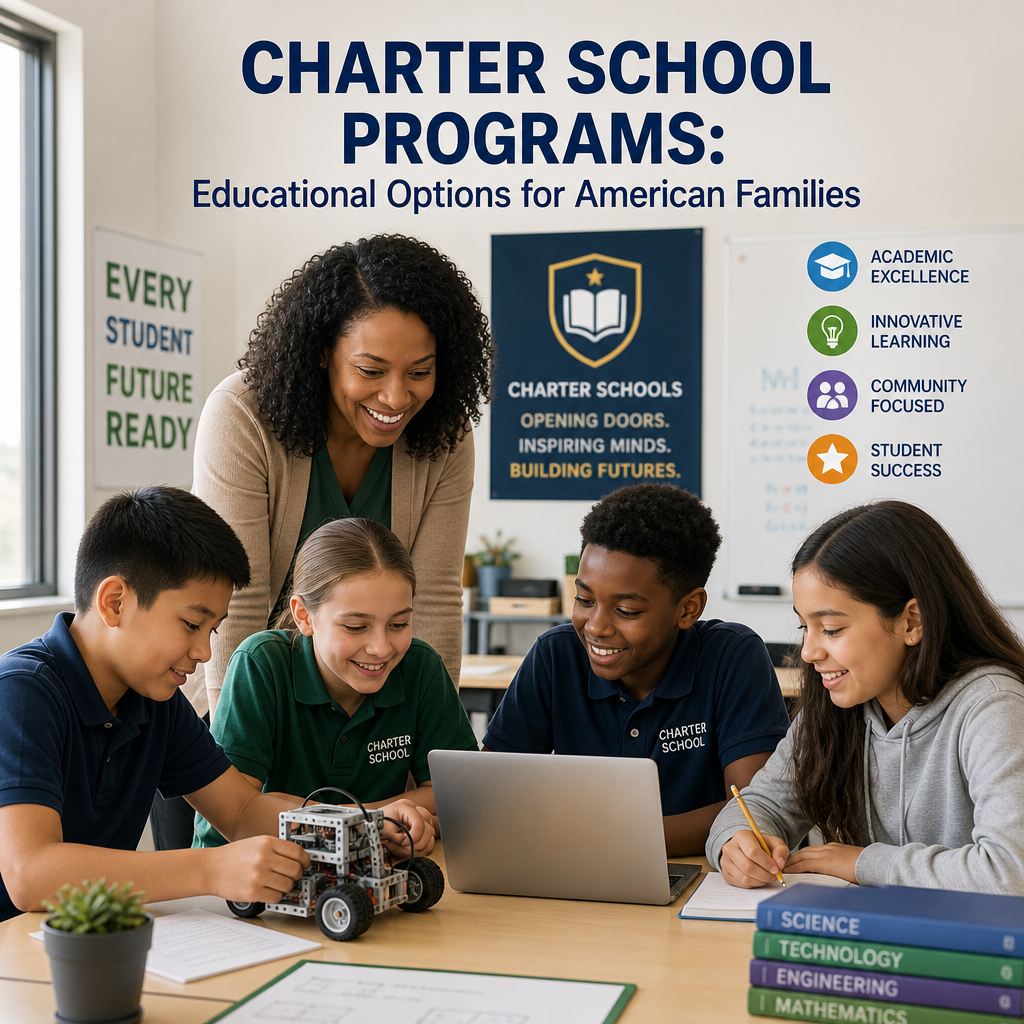
Charter school programs are publicly funded schools that operate under a charter, or performance contract, approved by an authorizer such as a school district, state board, or university in some states. In exchange for more flexibility in how they are run, charter schools are expected to meet specific academic and operational goals.
Unlike private schools, charter schools do not charge tuition. They are part of the public education system, which means they are generally open to all students, subject to enrollment rules and seat availability.
How Charter Schools Differ from Traditional Public Schools
Traditional public schools are usually governed directly by local school districts and must follow district-wide policies. Charter schools, by contrast, often have more freedom in areas such as:
- Curriculum design
- Staffing decisions
- School calendar and daily schedule
- Instructional methods
- School culture and discipline policies
This flexibility allows charter school programs to focus on specific educational models, such as STEM, arts integration, dual-language instruction, college prep, or project-based learning.
What Families Can Expect
Depending on the school, charter school programs may offer:
- Smaller class sizes
- Specialized themes or academic focus
- Extended school days or school years
- More family involvement
- Different teaching styles than neighborhood schools
That said, not every charter school is the same. Some follow a highly structured model, while others emphasize creativity and student-driven learning. Families should review each school individually instead of assuming all charter schools operate alike.
How Charter School Programs Work
At the core of charter school programs is accountability. Schools must show they are meeting the terms of their charter, which may include student achievement goals, financial standards, and compliance with state laws.
Enrollment and Admissions
Most charter schools use open enrollment. If more students apply than there are seats, schools often hold a lottery. This process is intended to create fair access and prevent selective admissions practices.
Important things to know about enrollment:
- Charter schools cannot usually require entrance exams.
- They may have grade-level or residency requirements depending on state law.
- Applications often need to be submitted by a deadline.
- A lottery may be used if demand exceeds capacity.
Families should apply early, especially in popular schools or specialized programs.
Funding and Oversight
Charter schools receive public funding, typically on a per-student basis. They may also receive grants or donations, but the school remains accountable to its authorizer and, in many cases, state education agencies.
Oversight helps ensure that charter school programs:
- Use public funds responsibly
- Follow legal and safety requirements
- Meet academic performance expectations
- Renew or lose their charter based on results
Because of this structure, quality can vary. Some charter schools achieve impressive outcomes, while others may struggle. Careful research matters.
Benefits of Charter School Programs for Families
Many families are drawn to charter school programs because they can offer a better match for a child’s learning style, interests, or needs. The benefits are not the same in every school, but several common advantages stand out.
1. More Educational Variety
One of the biggest strengths of charter school programs is choice. Families may find schools that focus on:
- Science, technology, engineering, and math
- Performing or visual arts
- Montessori methods
- Language immersion
- Career and technical education
- College readiness
- Character education
This variety can be especially helpful for students who thrive in a particular learning environment.
2. Innovation and Flexibility
Because charter schools have more independence, they can try new instructional strategies more easily than many district schools. For example, a school might use:
- Team-based learning
- Personalized learning software
- Block scheduling
- Cross-disciplinary projects
- Longer reading and math periods
This flexibility can lead to more engaging classrooms and better alignment with student needs.
3. Strong School Culture
Some charter school programs build a very clear school identity. Families may appreciate the emphasis on:
- Discipline and structure
- Academic rigor
- Leadership skills
- Community service
- Parent involvement
A strong culture can help students feel connected and supported.
4. Public Access Without Tuition
Because charter schools are public schools, they offer an important option for families seeking something different without the cost of private education. This makes them accessible to many households that want alternatives to traditional district schools.
Potential Drawbacks to Consider
While charter school programs can be a strong fit for some families, they are not automatically better than other public schools. It helps to understand the possible trade-offs.
Transportation May Be Limited
Some charter schools do not offer bus service or provide only limited transportation. That can make logistics harder for working parents or families without reliable transportation.
Space Can Be Limited
Because enrollment depends on available seats, not every child who applies will be admitted. Waiting lists are common in popular schools.
Quality Varies
Charter schools are not all alike. Some are well established and consistently strong; others may have high teacher turnover or uneven academic results. Families should look closely at:
- Graduation rates, where applicable
- Student growth and test scores
- Teacher qualifications
- Parent reviews and school climate
- Special education services
Student Services May Differ
Some charter school programs do an excellent job serving diverse learners, while others may have limited resources. Parents of children with disabilities, English learners, or students needing additional support should ask specific questions about services, staffing, and accommodations.
How to Evaluate Charter School Programs
Choosing a school should not come down to a single brochure or website. A thoughtful evaluation process can help you find the right fit.
Start With Your Child’s Needs
Every child learns differently. Before comparing schools, consider:
- Does your child need structure or flexibility?
- Does your child enjoy hands-on learning?
- Is academic acceleration important?
- Would a specialized theme keep your child engaged?
- Does your child need support with reading, behavior, or language development?
The best charter school programs are the ones that align with the child, not just the family’s general preference for a school type.
Ask the Right Questions
When visiting or researching schools, ask questions such as:
- What is the school’s mission?
- How is student progress measured?
- What is the teacher turnover rate?
- How does the school support struggling students?
- What special education and language services are available?
- How are discipline and attendance handled?
- How are families kept informed?
These questions can help you understand how the school functions day to day.
Visit the School if Possible
A school visit can tell you a lot. Pay attention to:
- How teachers interact with students
- Whether classrooms feel organized and welcoming
- How students respond to staff
- The quality of student work displayed
- Whether the school culture feels calm and purposeful
If you can, attend an open house or parent information session. Talking with current families can also be valuable.
Charter School
Programs and Special Student Needs
One common concern for parents is whether charter school programs can meet the needs of students who require extra support or a more customized environment.
Students With Disabilities
Charter schools must follow federal and state laws related to students with disabilities. That includes providing appropriate services through individualized education programs, or IEPs, when required.
Parents should ask:
- Does the school have special education staff on-site?
- How are accommodations delivered in classrooms?
- Can the school meet my child’s specific needs?
- How does the school work with related service providers?
The answer may vary by school, so families should not assume all charter schools have the same capacity.
English Learners
Many charter school programs serve multilingual students well, especially those with bilingual or language immersion models. If your child is learning English, ask about:
- ESL or bilingual instruction
- Teacher certifications
- Family communication in home languages
- Progress monitoring for language development
Gifted and Advanced Learners
Some charter schools are designed to challenge advanced students with accelerated pacing or enrichment opportunities. Others may not offer a formal gifted program but still provide project-based or individualized instruction that keeps students engaged.
Charter School Programs vs. Other School Choices
Families often compare charter school programs with neighborhood public schools, magnet schools, and private schools. Each option has strengths.
Charter Schools
Best for families looking for:
- Public funding without tuition
- Unique school models
- More flexibility and innovation
- A specific academic or thematic focus
Traditional Public Schools
Best for families looking for:
- Neighborhood-based access
- Broadly established programs
- Local district support services
- Transportation and special education resources already in place
Magnet Schools
Best for families interested in:
- Specialized programs within a district
- Lottery-based admission
- Strong focus areas like arts, STEM, or languages
Private Schools
Best for families who want:
- Tuition-based independent education
- Smaller school communities
- Religious or specific philosophical instruction
The right choice depends on what matters most to your family: convenience, academic focus, school culture, services, or affordability.
Tips for Parents Exploring Charter School Programs
If you are considering charter school programs, a little preparation goes a long way.
Use a Simple Checklist
Before applying, review:
- Application deadlines
- Lottery procedures
- Transportation options
- Grade levels served
- Academic focus
- Special education services
- Before- and after-school care
- Uniform or behavior expectations
Compare More Than One School
Even if one charter school looks appealing, compare several options. Different schools may vary widely in teaching style, resources, and student experience.
Look at Outcomes, Not Just Promises
Marketing materials often highlight mission statements and exciting programs. Those matter, but also look for evidence that the school delivers on its goals. Consider school report cards, public performance data, and feedback from current families.
Stay Engaged After Enrollment
Parental involvement can make a real difference. Attend conferences, review homework expectations, and stay in communication with teachers. Families who stay informed often have a better understanding of how well the school is serving their child.
Frequently Asked Questions
What is the main purpose of charter school programs?
The main purpose of charter school programs is to give families a public school option that offers more flexibility in how education is delivered. Charter schools can use different teaching models, school themes, or schedules while still being accountable for student outcomes.
Are charter schools free to attend?
Yes. Charter schools are public schools, so they do not charge tuition. However, some schools may request optional donations or charge fees for certain activities, uniforms, or materials. Families should ask about any extra costs before enrolling.
Do charter schools have to accept every student?
Not always. Charter schools typically use open enrollment, but if more students apply than there are seats, they may hold a lottery. They also may have limits based on grade level or geographic rules established by state law.
Can charter schools provide special education services?
Yes. Charter schools must follow applicable federal and state laws for students with disabilities. The level of support can vary, though, so parents should ask detailed questions about staffing, services, and accommodations before enrolling.
How do I know if a charter school is a good fit for my child?
Start by considering your child’s learning style, needs, and interests. Then visit schools, review academic data, ask about support services, and talk to current families. A good fit usually means the school’s mission, structure, and culture match your child’s needs.
Official Resources
- U.S. Department of Education: Charter Schools Program
- National Center for Education Statistics (NCES)
- U.S. Department of Education: School Choice
- National Alliance for Public Charter Schools
- Federal Student Aid Information on Public School Options
Conclusion
Charter school programs give American families a meaningful public school option with more variety, flexibility, and specialization than many traditional school settings. For some children, that means a stronger academic match, a more engaging classroom experience, or a school culture that helps them thrive. For others, a neighborhood public school or magnet program may be the better choice. The key is not choosing a school based on labels alone, but on how well it serves your child’s needs.
As you compare schools, focus on practical factors: the curriculum, support services, transportation, school climate, and enrollment process. Visit when possible, ask direct questions, and look beyond the marketing language. A thoughtful search can help you find a learning environment where your child feels challenged, supported, and ready to grow.
Whether you are just beginning your research or narrowing down your options, understanding charter school programs is an important step toward making a confident, informed decision for your family.