How Compound Interest Helps Savings and Investments Grow
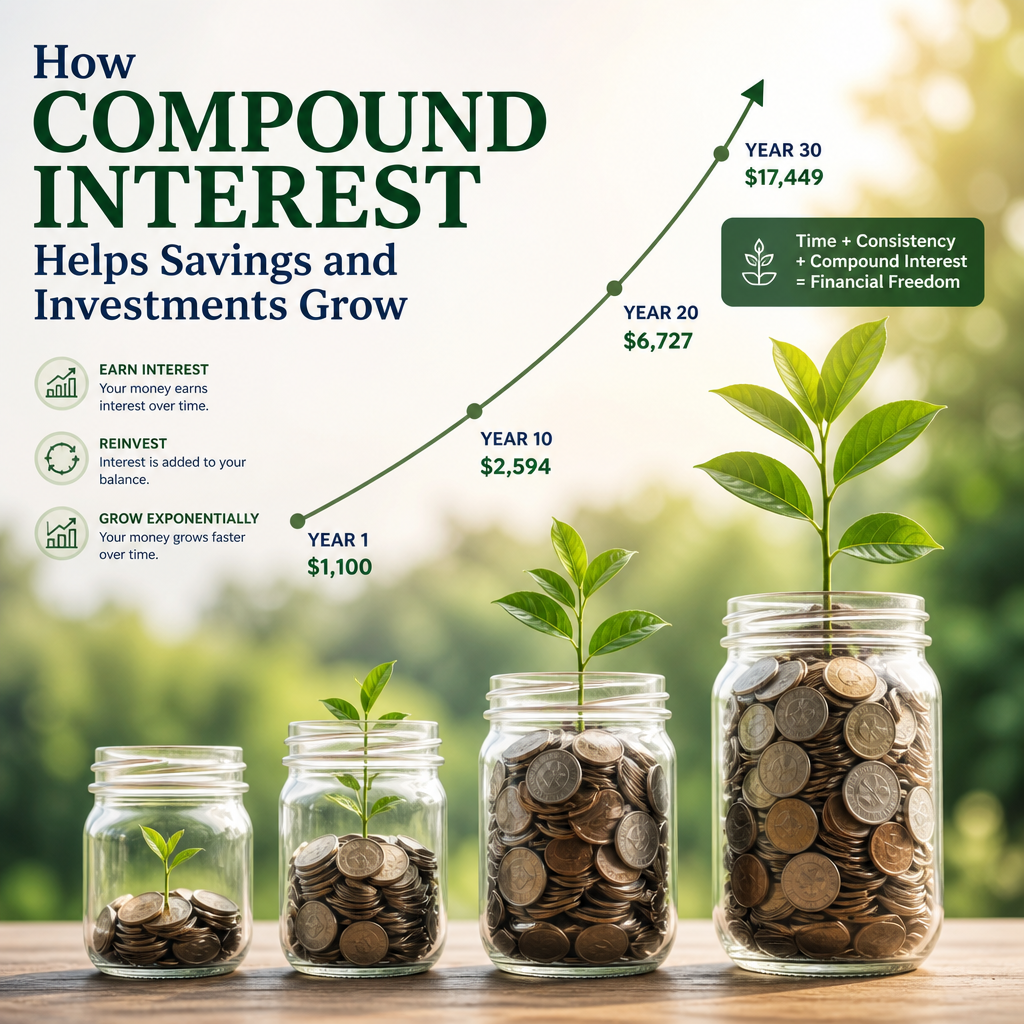
Compound interest can turn steady savings into meaningful long-term growth by earning returns on both your original money and the interest it has already made. The earlier you start, the more powerful this snowball effect becomes for your savings and investments.
By: Mary Mitchell on August 3, 2026
Anúncios
Compound interest is one of the most powerful forces in personal finance. Whether you’re building an emergency fund, saving for a home, or investing for retirement, understanding how compound interest helps savings and investments grow can make a real difference in your long-term results. Unlike simple interest, which only earns on the original amount you put in, compound interest allows your money to earn returns on both your initial deposit and the interest already accumulated.
That “interest on interest” effect may sound small at first, but over time it can become a major advantage. The earlier you start, the more time compounding has to work in your favor. In this guide, we’ll break down how compound interest works, why it matters, and practical ways to use it to strengthen your financial future.
Anúncios
What Is Compound Interest?
Compound interest is the process of earning interest on your principal plus previously earned interest. In simple terms, your money begins to grow faster because each interest payment becomes part of the balance that earns future returns.
Simple interest vs. compound interest
Here’s the basic difference:
Anúncios
Simple interest is calculated only on the original amount you deposit or invest.
Compound interest is calculated on the original amount and on the interest that has already been added.
For example, if you place money in a savings account that compounds monthly, each month’s interest gets added to the balance. Next month, interest is calculated on that slightly larger amount. Over time, the growth can accelerate.
Why compounding matters
The real power of compounding comes from time. A small amount saved consistently can grow much more than many people expect, especially if it earns a steady return for years. That’s why financial planners often emphasize starting early, even if the amount you can invest at first is modest.
How Compound Interest Helps Savings and Investments Grow
The phrase how compound interest helps savings and investments grow is more than a financial concept—it’s a practical strategy for building wealth. Compound interest can help in both low-risk savings accounts and long-term investments, though the way it works in each setting may differ.
In savings accounts
Many savings accounts, money market accounts, and certificates of deposit use compound interest. Your deposit earns interest, and that interest is added to your balance at regular intervals, such as daily, monthly, or quarterly.
This can benefit savers in several ways:
Your balance grows without requiring extra deposits.
Interest earnings increase as the account balance rises.
Long-term savings goals become easier to reach.
Even if a savings account has a relatively modest interest rate, compounding still adds value over time. It’s especially useful for goals where preserving principal matters more than chasing higher returns.
In investments
Compound interest also plays a major role in investing, especially when returns are reinvested. For example:
Dividends from stocks can be reinvested to buy more shares.
Bond interest can be reinvested into new bonds or funds.
Mutual funds and index funds can grow through capital gains and reinvested distributions.
When earnings are reinvested, they can generate their own future earnings. This creates a growth cycle that can significantly increase the value of a portfolio over the long run.
The Key Factors That Drive Compound Growth
Several variables affect how much compound interest can benefit your savings or investments. Understanding these factors can help you make smarter decisions.
1. Time
Time is the most important ingredient in compounding. The longer your money stays invested or saved, the more opportunities it has to grow.
Even small contributions can become meaningful when given enough years. This is why starting early often matters more than starting with a large amount later.
2. Interest rate or return
A higher rate of return can lead to faster growth. Savings accounts usually offer lower rates than investments, but they also typically carry less risk. Investments can offer higher potential returns, though they can also fluctuate in value.
3. Frequency of compounding
How often interest is added matters. Compounding can happen:
Annually
Quarterly
Monthly
Daily
The more frequently interest compounds, the faster your balance can grow, assuming the same rate. That’s because your interest is added back into the account more often.
4. Regular contributions
Adding money consistently can make compounding even more powerful. Monthly contributions to a savings account, IRA, 401(k), or brokerage account can create a strong growth pattern over time.
A practical habit is to automate deposits so you invest or save before you have a chance to spend the money elsewhere.
A Simple Example of Compound Interest
Imagine you deposit $5,000 into an account earning 5% annual interest, compounded yearly.
After year one, you earn $250 in interest.
Your new balance becomes $5,250.
In year two, you earn interest on $5,250, not just the original $5,000.
The interest amount rises slightly each year because the balance keeps growing.
If you leave the money untouched for many years, the difference between simple and compound interest becomes much more noticeable.
Now imagine you contribute regularly. Even smaller deposits, when combined with compounding, can build momentum. That is one reason retirement accounts and long-term savings plans are so effective when funded consistently.
Why Starting Early Makes a Big Difference
One of the most important lessons about compound interest is that time can be more valuable than timing. The sooner you begin saving or investing, the more compounding can work for you.
Example: early starter vs. late starter
Consider two people:
Person A starts investing earlier and contributes for a longer period.
Person B starts later but contributes the same monthly amount.
Even if Person B contributes more aggressively later, Person A often ends up ahead because the money had more years to compound.
This doesn’t mean it’s ever too late to begin. It simply means that the earlier you start, the less effort you may need later to reach your goal.
Ways to Use Compound Interest in Your Financial Plan
Compound interest can support many financial goals. Here are some of the most effective ways to put it to work.
Build an emergency fund
An emergency fund should be safe, accessible, and easy to grow. A high-yield savings account can help your cash earn more while staying available for unexpected expenses.
Save for retirement
Retirement accounts are among the best places to benefit from compound growth. When you contribute regularly and reinvest earnings, you give your savings time to expand over decades.
Popular retirement accounts include:
401(k)s
Traditional IRAs
Roth IRAs
Employer-sponsored plans
Reinvest investment earnings
If you own dividend-paying stocks or funds, reinvesting distributions can strengthen compound growth. Many brokerage platforms offer automatic dividend reinvestment plans, which help keep your money working.
Use automatic contributions
Automation is one of the easiest ways to stay consistent. You can set up automatic transfers from checking into savings or investments every payday.
This approach helps you:
Stay disciplined
Avoid missed contributions
Benefit from dollar-cost averaging in investing
Compound Interest and Debt: The Other Side of the Equation
Compound interest can help you grow wealth, but it can also make debt more expensive. Credit cards and some loans use interest structures that work against you if balances remain unpaid.
When you carry a revolving balance, interest charges can build on top of prior charges, making repayment harder over time. That’s why understanding compound interest is useful not just for saving and investing, but also for managing debt.
How to protect yourself
To reduce the impact of compounding interest on debt:
Pay credit card balances in full whenever possible.
Make more than the minimum payment on high-interest debt.
Avoid unnecessary borrowing.
Compare loan terms before signing.
The same principle that grows your money in savings can also grow your obligations if you’re not careful.
Practical Tips to Maximize Compound Growth
If you want to make compound interest work harder for you, focus on habits that increase both consistency and time.
Start with what you can afford
You do not need a large sum to begin. Small, regular contributions matter more than waiting for the “perfect” amount.
Choose accounts with favorable terms
Look for options that offer:
Competitive interest rates
Low fees
Automatic reinvestment
No or low minimum balance requirements
Fees can quietly reduce the benefits of compounding, so it pays to compare options carefully.
Keep money invested or saved longer
The fewer withdrawals you make, the more time your balance has to grow. Try to avoid touching long-term investments unless you have a specific reason.
Reinvest earnings when possible
Whether it’s dividends, interest, or capital gains distributions, reinvesting helps you maintain the compounding cycle.
Increase contributions over time
If your income rises, consider raising your monthly savings or investment amount. Even a small increase can have a meaningful effect over the years.
Common Misconceptions About Compound Interest
Many people understand that compound interest is useful, but a few myths can lead to unrealistic expectations.
“It makes money grow overnight”
Compounding is powerful, but it is not magic. Real growth takes time and consistency.
“Only wealthy people benefit from it”
Anyone can benefit from compound interest. In fact, people with smaller balances may gain even more from developing strong saving habits early.
“It only matters for investing”
Compound interest matters in savings accounts, retirement plans, bonds, and debt. It affects both wealth-building and borrowing.
“Higher return always means better”
Higher returns can be attractive, but they often come with higher risk. The right strategy depends on your goals, timeline, and comfort with volatility.
Frequently Asked Questions
What is the main advantage of compound interest?
The main advantage of compound interest is that it allows your money to earn returns on both your original contribution and the interest it has already generated. Over time, this can accelerate growth and make long-term saving or investing much more effective.
How does compound interest help savings accounts grow?
In a savings account, interest is added to your balance at regular intervals. After that, future interest is calculated on the larger balance. This creates gradual growth over time, even if you are not making additional deposits.
Is compound interest better than simple interest?
Compound interest is usually more powerful than simple interest because it builds on prior earnings. Simple interest only applies to the original principal, which means growth is slower over the long term.
How often should I contribute to benefit from compounding?
Regular contributions help a lot. Many people contribute weekly, biweekly, or monthly. The most important factor is consistency. Automatic transfers can make it easier to stay on track without relying on memory.
Does compounding work on debt too?
Yes. Compound interest can also increase the cost of debt, especially with credit cards and other revolving balances. If you do not pay off the balance, interest can accumulate and make repayment more difficult over time.
Understanding how compound interest helps savings and investments grow can give you a major advantage in managing your money. It explains why time, consistency, and reinvestment matter so much in personal finance. The earlier you begin, the more opportunity your money has to build on itself. That applies whether you are keeping cash in a savings account, contributing to a retirement plan, or reinvesting investment earnings for the long term.
The good news is that you do not need a perfect financial situation to get started. Small deposits, steady contributions, and a focus on low fees and long-term discipline can create meaningful results over time. Just as importantly, knowing how compounding works can help you avoid costly debt and make smarter borrowing decisions.
If you want your money to work harder, start by making compounding part of your financial strategy. Open the right account, automate your contributions, and give your savings or investments time to grow. With patience and consistency, compound interest can become one of your strongest tools for building financial security.
Mary S, CFP®, is a Certified Financial Planner with over 12 years of experience in personal finance, retirement planning, and wealth management. She writes educational content that helps readers understand financial concepts and make informed decisions based on reliable information.