What Happens to Debt After a Family Member Dies?
Anúncios
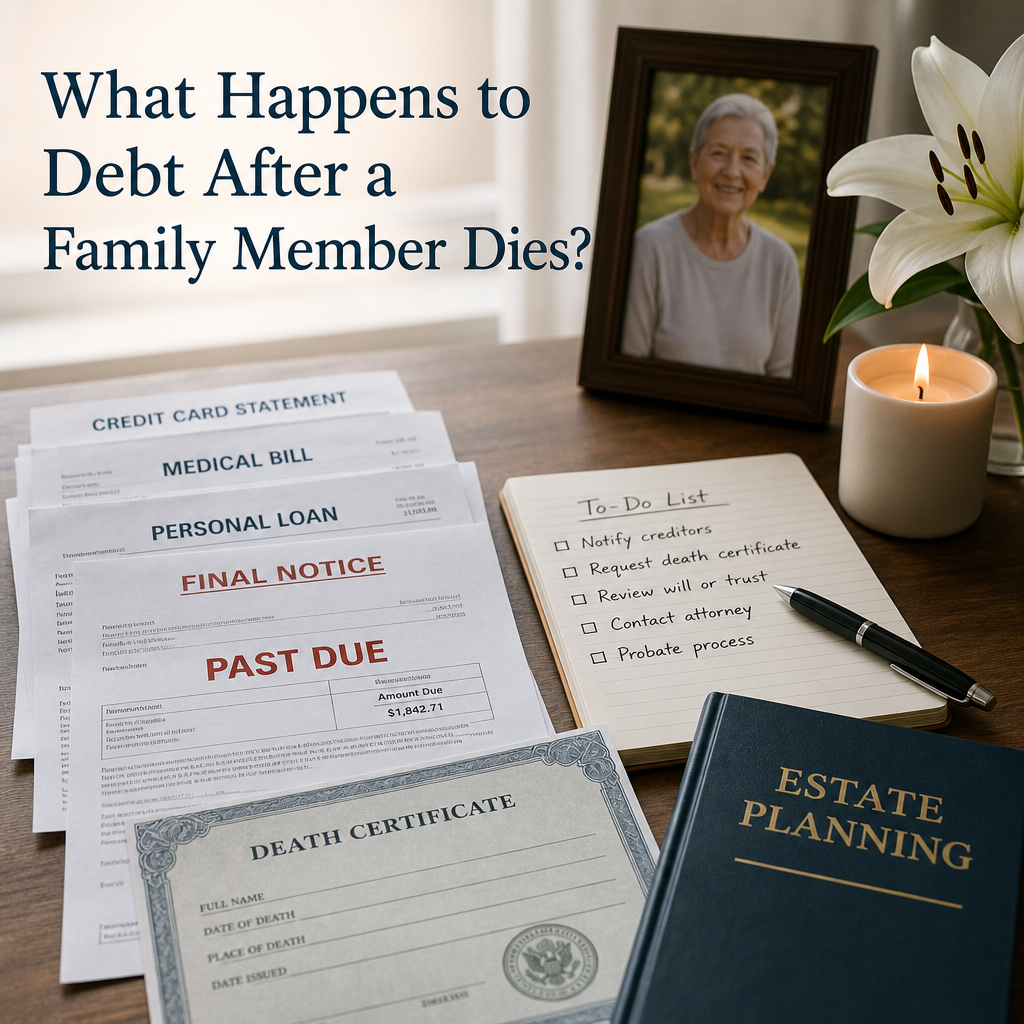
When a loved one passes away, families often face grief, paperwork, and urgent financial questions all at once. One of the most common concerns is what happens to debt after a family member dies. The answer is not always simple, but in many cases, the debt does not automatically become the responsibility of relatives.
Anúncios
Instead, debt is usually handled through the deceased person’s estate. Some debts may be paid from assets left behind, while others may be forgiven, discharged, or handled differently depending on the type of debt and where you live. Understanding the basics can help you avoid mistakes, protect your finances, and focus on what matters most during a difficult time.
What Happens to Debt After a Family Member Dies?
In general, debt after death becomes part of the deceased person’s estate. The estate is the legal process that gathers assets, pays debts, and distributes whatever remains to heirs or beneficiaries.
The basic rule
Most debts are paid from the estate before inheritance is distributed. That means:
Anúncios
- The deceased person’s assets may be used to pay creditors
- Family members usually do not have to pay the debt personally
- If the estate has no money, some debts may go unpaid
This is why it’s important to know whether you are dealing with:
- a debt tied to the estate
- a debt you co-signed
- a debt for which you are a joint account holder
- a debt connected to shared property or community property laws
What creditors can and cannot do
Creditors can file claims against the estate in probate. They generally cannot simply demand payment from adult children, siblings, or other relatives unless those people are legally responsible for the debt.
However, there are exceptions. If you signed for the debt, used a joint account, or live in a state with community property rules, you may have some responsibility.
Which Debts Are Usually Paid First?
Not all debts are treated equally. When an estate goes through probate, state law usually determines the order of payment.
Common debts paid by the estate
These often include:
- Funeral and burial expenses
- Probate court costs
- Secured debts, such as mortgages or car loans
- Medical bills
- Credit card balances
- Personal loans
- Unpaid taxes
Secured vs. unsecured debt
Understanding the difference helps explain what happens next.
Secured debt is backed by collateral, such as:
- a house
- a car
- other valuable property
If the estate cannot keep making payments, the lender may have the right to repossess or foreclose on the property.
Unsecured debt is not tied to collateral, such as:
- most credit cards
- medical bills
- personal loans without collateral
These debts are typically paid from the estate only if enough money remains after higher-priority expenses are covered.
Do Family Members Have to Pay the Debt?
Usually, no. A family member’s death does not automatically transfer debt to surviving relatives. This is one of the biggest misconceptions people have when they ask what happens to debt after a family member dies.
When relatives are not responsible
You generally are not responsible for a deceased relative’s debt if:
- you did not co-sign the loan
- you are not a joint account holder
- you did not agree in writing to assume the debt
- state law does not make you liable
This includes situations where creditors contact you and imply that you “should” pay. They may ask, but that does not mean you must.
When relatives may be responsible
You may be responsible if you are:
- A co-signer: You agreed to repay the debt if the borrower could not
- A joint account holder: You both share legal responsibility for the account
- A spouse in a community property state: Some debts may be treated as shared under state law
- A personal representative who mismanages the estate: You can be liable if you improperly distribute assets before debts are settled
If you are unsure about your role, it helps to review the account paperwork and state law or speak with an estate attorney.
What Happens to Different Types of Debt?
Some debts are handled in unique ways after death. The type of account often determines what happens next.
Mortgage debt
If the deceased person owned a home with a mortgage, the loan usually does not disappear. The estate, co-borrower, or heir who inherits the property may need to keep making payments.
If payments stop, the lender may foreclose. In some cases, heirs sell the home and use the proceeds to pay off the mortgage.
Car loans
Car loans are secured by the vehicle. If the estate cannot continue the loan payments, the lender may repossess the car.
If a family member wants to keep the car, they may need to assume the loan or refinance it, depending on the lender’s rules.
Credit card debt
Credit card balances are usually unsecured debt. Creditors may file claims against the estate, but relatives generally do not have to pay unless they are joint account holders or co-signers.
Medical bills
Medical debt is also usually handled through the estate. In some cases, insurance, Medicare, Medicaid, or other coverage may reduce the amount owed. The remaining balance may be treated as an unsecured claim.
Student loans
Student loans can be more complicated.
- Federal student loans are generally discharged after the borrower dies
- Private student loans depend on the loan contract and state law
If you are a co-signer on a private student loan, you may still be responsible.
Taxes
Tax debt does not vanish at death. The estate may need to file final tax returns and pay any outstanding federal or state taxes. If the estate is large or the tax situation is complex, professional help is often worth it.

What Happens If the Estate Has No Money?
Sometimes there are more debts than assets. This is called an insolvent estate.
In an insolvent estate
When there is not enough money to cover everything, debts are generally paid in order of priority under state law. Lower-priority debts may go unpaid.
For example:
- Funeral and probate costs
- Secured debts
- Taxes and administrative expenses
- Unsecured debts
If the estate runs out of funds before a creditor is paid, the unpaid balance may be written off.
What heirs should know
If the estate has no assets, creditors may be limited in what they can collect. That said, heirs should still avoid:
- paying bills out of their own money without understanding liability
- distributing property too soon
- using estate funds for personal expenses
What About Joint Accounts and Co-Signed Loans?
This is where debt after death can become personal very quickly.
Joint accounts
If you are a true joint account holder, you usually remain responsible for the full debt after the other person dies. This is common with:
- joint credit cards
- joint bank loans
- shared mortgage loans
Co-signed loans
A co-signer promises to repay the loan if the borrower cannot. After death, the lender may look to the co-signer for payment.
This is a major reason co-signing should be considered carefully before agreeing to it.
Can Creditors Contact You After a Death?
Yes, creditors may contact the family, executor, or personal representative to ask about the estate. But they must follow debt collection laws.
What you can do
If you are contacted:
- Ask for written proof of the debt
- Do not admit personal responsibility unless you know it is yours
- Keep records of all communications
- Direct creditors to the estate’s personal representative if one has been appointed
Beware of pressure tactics
Some collectors may act as though family members are automatically liable. That is not usually true. If you are uncertain, get legal guidance before making any payment.
How Probate Affects Debt
Probate is the legal process that handles a deceased person’s estate. Not every estate goes through full probate, but many do.
Why probate matters
Probate helps:
- identify assets
- notify creditors
- resolve claims
- distribute remaining property
If there is a will, the executor named in the will usually manages the estate. If there is no will, the court appoints an administrator.
Creditor deadlines
Many states require creditors to make claims within a certain period after notice is published or sent. If they miss the deadline, they may lose the ability to collect from the estate.
This is one reason it is important to open probate properly when necessary and follow state rules.
Practical Steps to Take After a Loved One Dies
Knowing what happens to debt after a family member dies is only part of the picture. The next step is handling the process carefully.
1. Gather financial records
Look for:
- loan statements
- credit card bills
- mortgage documents
- tax notices
- bank statements
- insurance policies
2. Request multiple copies of the death certificate
Many institutions will require a certified copy before they discuss accounts or make changes.
3. Notify relevant organizations
Contact:
- banks
- lenders
- credit card issuers
- the Social Security Administration
- employers
- insurance companies
- the post office, if needed
4. Open or manage the estate properly
If probate is required, make sure the estate has a legal representative in place before paying debts from estate funds.
5. Do not pay debt from personal funds unless you are sure
This is a common mistake. Paying a relative’s bill from your own money can create confusion, especially if the estate should have handled it instead.
6. Get legal help when needed
An estate attorney can help if:
- there are multiple debts
- property is at risk
- creditors are aggressive
- you are unsure whether you are personally liable
Common Myths About Debt After Death
It helps to clear up a few misunderstandings.
Myth 1: Children inherit all debt
False. In most cases, children do not inherit debt simply because a parent dies.
Myth 2: Creditors can take everything
Not necessarily. Creditors can only collect according to law, and estate assets may be protected depending on exemptions and ownership rules.
Myth 3: You must pay a parent’s credit cards
Usually false unless you co-signed, are a joint holder, or otherwise agreed to the debt.
Myth 4: Debt disappears automatically
Not always. Debt may still be owed by the estate, even if relatives are not personally responsible.
Frequently Asked Questions
1. What happens to debt after a family member dies if there is no will?
If there is no will, the estate usually goes through intestate probate, where state law determines who manages the estate and how assets and debts are handled. Creditors are still paid from estate assets according to legal priority. If the estate has no funds, some debts may remain unpaid.
2. Am I responsible for my deceased parent’s credit card debt?
Usually no, unless you were a co-signer, a joint account holder, or otherwise legally responsible. Creditors may contact you, but that does not automatically make the debt yours. The estate is typically responsible for paying valid claims.
3. Do funeral expenses come before other debts?
In many states, funeral and burial expenses have a high priority in probate. They are often paid before unsecured debts like credit cards. The exact order depends on state law, so the estate representative should follow the local rules.
4. What happens if the estate cannot pay all debts?
If the estate is insolvent, debts are paid in the legal order of priority until the money runs out. Lower-priority creditors may receive partial payment or nothing at all. In most cases, family members are not required to cover the remaining balance personally.
5. Can a creditor take life insurance money to pay debt?
Usually, life insurance proceeds go directly to the named beneficiary and do not pass through probate. That often means creditors cannot claim those funds. However, exceptions can exist if the estate is the beneficiary or if state law creates a special rule. Review the policy and local law carefully.
Official Resources
- Consumer Financial Protection Bureau – When someone dies, what happens to their debt?
- Federal Trade Commission – Debt and Deceased Relatives
- Internal Revenue Service – Deceased Taxpayer
- USA.gov – Death of a Loved One
- Legal Information Institute – Probate
Conclusion
Understanding what happens to debt after a family member dies can take some of the uncertainty out of an already painful time. In most cases, debt belongs to the estate, not to surviving relatives. That means creditors are generally paid from the deceased person’s assets, and only certain people—such as co-signers, joint account holders, or spouses in some situations—may be personally responsible.
The key is to move carefully. Identify the debts, protect estate assets, avoid making payments from your own money unless you know you must, and follow the probate process if one applies. If there are mortgages, car loans, tax debts, or unclear legal obligations, getting accurate information early can save time, money, and stress.
While no one wants to deal with financial paperwork during grief, a clear understanding of the rules can prevent costly mistakes. If you are currently handling a loved one’s estate, take it one step at a time and use trusted legal and financial resources to guide your decisions.