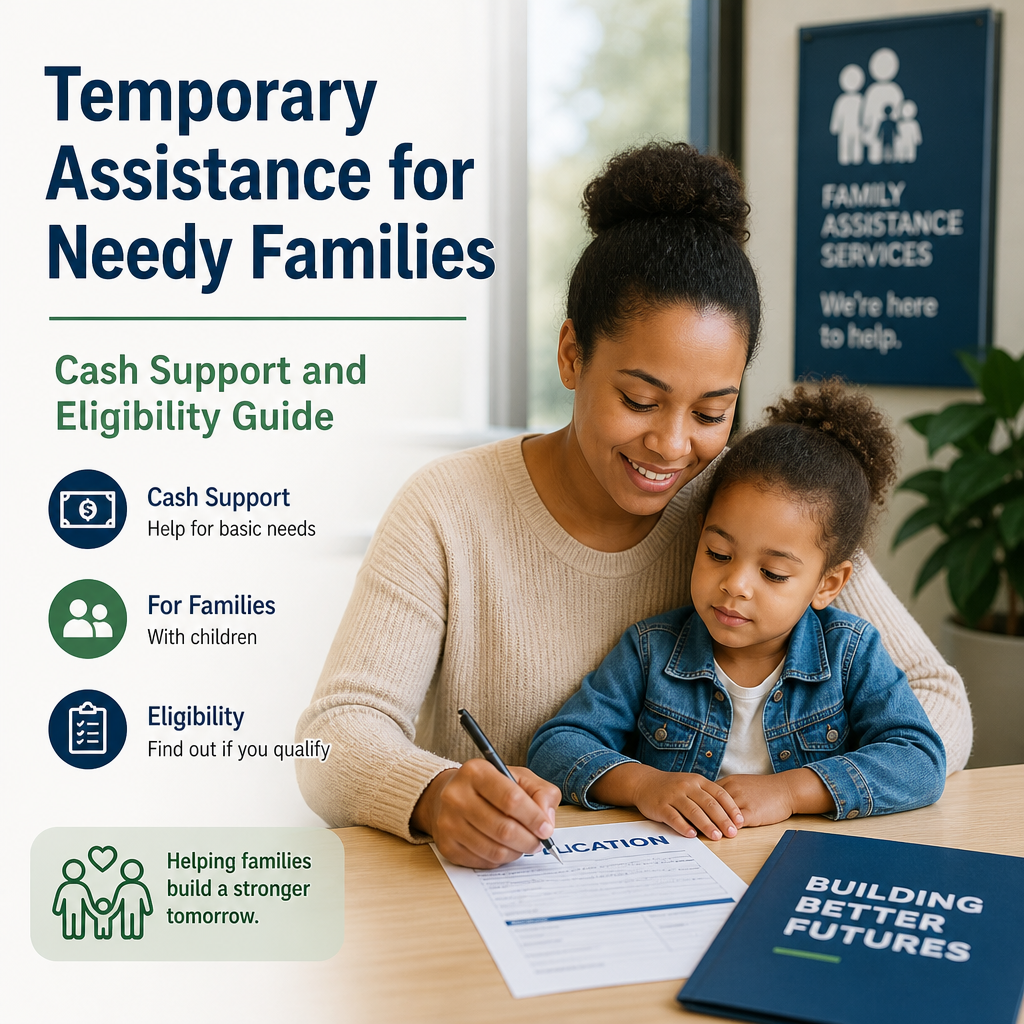
Temporary Assistance for Needy Families: Cash Support and Eligibility Guide
Temporary Assistance for Needy Families, or TANF, can help low-income families cover basic needs with short-term cash support and related services. Because each state sets its own rules, understanding eligibility and benefits is the first step to getting help.
By: Emily Adams on August 3, 2026
Anúncios
When families face job loss, housing instability, or an unexpected crisis, Temporary Assistance for Needy Families can provide a critical safety net. Often called TANF, this federal program helps states deliver cash support and related services to low-income families with children. While the details vary by state, the goal is consistent: help families meet basic needs while they work toward stability and self-sufficiency.
Understanding Temporary Assistance for Needy Families can feel confusing at first because each state sets its own rules, benefit levels, and application steps. Still, the core idea is straightforward. TANF is meant to offer short-term cash assistance and support services to families that qualify based on income, household size, immigration status rules, and other factors.
Anúncios
What Is Temporary Assistance for Needy Families?
Temporary Assistance for Needy Families is a federal block grant program that gives states funding to design their own assistance programs for families with children. Congress created TANF in 1996 to replace Aid to Families with Dependent Children (AFDC). Since then, states have had broad flexibility in how they use TANF funds, which is why programs can look different depending on where you live.
In general, TANF may help with:
Anúncios
Monthly cash assistance
Child care support
Job preparation and training
Transportation assistance
Case management and work-related services
Emergency help in some states
Because states administer the program, one state may offer a higher monthly benefit or different work requirements than another. That’s why checking your local Department of Human Services, social services office, or state benefits site is essential.
TANF vs. Other Public Benefits
TANF is not the same as SNAP, Medicaid, or housing assistance. It is usually a cash assistance program aimed at families with children, while other programs cover food, medical care, or rent support. Many households receive more than one type of benefit at the same time.
How Temporary Assistance for Needy Families Works
At its core, TANF is designed to help families in two ways: by providing immediate support and by encouraging long-term self-sufficiency. States often combine cash aid with work-focused services, meaning recipients may need to participate in approved job activities to continue receiving assistance.
Common Features of TANF Programs
Although rules vary, many state TANF programs include these features:
Income and resource tests to determine financial need
Child-related eligibility rules, since the program serves families with children
Work requirements for adults who can participate
Time limits on how long a family can receive cash assistance
Case plans that outline employment, education, or training goals
Some states also offer diversion payments or emergency assistance to keep families from needing longer-term TANF benefits.
Temporary Assistance for Needy Families Eligibility
Temporary Assistance for Needy Families eligibility depends on a mix of federal guidelines and state-specific rules. That means two families with similar incomes might qualify in one state and not in another.
Basic Eligibility Factors
Most states consider these factors when reviewing a TANF application:
Household composition: The family usually must include a child under 18, or in some cases a pregnant person or caregiver relative
Income: Household income must fall below a state-set limit
Assets/resources: Some states review bank accounts, vehicles, or other resources
Citizenship or immigration status: Applicants typically must be U.S. citizens or qualified non-citizens under program rules
Residency: The family must live in the state where they apply
Cooperation with child support: Some states require cooperation with child support enforcement when applicable
Who May Qualify
TANF often serves:
Single parents with limited income
Two-parent households facing financial hardship
Grandparents or relatives raising children
Families affected by unemployment, illness, or domestic violence
Pregnant individuals in certain states, depending on program rules
Who May Not Qualify
A family may be denied if:
Income is above the state limit
The family does not meet residency rules
Required documents are missing
A household member is not eligible under immigration or citizenship rules
The family does not meet work participation requirements, where applicable
Because states differ, it’s possible to be over the limit for cash assistance but still qualify for other services or referrals.
Temporary Assistance for Needy Families Cash Support
The most well-known part of Temporary Assistance for Needy Families is the monthly cash payment. This money is usually loaded onto an electronic benefits card or issued through another state-approved method. Families can use it for everyday essentials such as:
Groceries
Utilities
Clothing
Transportation
Household items
Rent or emergency bills, depending on state rules
The amount varies widely by state and household size. Some states use a flat formula, while others adjust benefits based on income and family structure. Since TANF is intended as temporary support, the benefit amount is often modest and may not cover all living expenses.
Example of How Cash Assistance Can Help
Imagine a parent who recently lost a job and is looking for new work. Child care and transportation costs may make it hard to accept interviews or training. TANF cash support can help cover basic bills while the parent gets back on their feet and follows an employment plan.
That kind of short-term assistance can be the difference between stable housing and a crisis.
Work Requirements and Participation Rules
One of the defining features of TANF is its focus on work and work-related activities. In many states, adults receiving assistance must take part in approved activities unless they qualify for an exemption.
Common Work Activities
Approved activities may include:
Unsubsidized employment
On-the-job training
Job search or job readiness training
Vocational education
Community service
Work experience programs
Education connected to employment goals
Exemptions and Exceptions
Some adults may be temporarily exempt from work requirements, such as those who:
Care for a very young child
Have a disability or serious medical condition
Are domestic violence survivors with safety concerns
Lack child care or face other approved barriers
Rules differ across states, so applicants should ask how work requirements apply to their household.
Time Limits on TANF Benefits
TANF is called “temporary” for a reason. Many states limit how long a family can receive cash assistance. The federal law also sets a general lifetime cap for federally funded assistance, though states may use some funds differently and may have additional state-specific rules.
This means TANF is usually meant to bridge a gap, not provide permanent income support. If a family nears a time limit, caseworkers may help identify next steps such as:
Job placement services
Child care assistance
Housing referrals
Food assistance
Workforce training
Disability or SSI screening if appropriate
Families should never wait until benefits are about to end to ask about options. Early planning can reduce disruptions.
How to Apply for Temporary Assistance for Needy Families
Applying for Temporary Assistance for Needy Families usually starts with your state or county social services office. Many states now allow online applications, while others still require a paper form, phone screening, or in-person interview.
Typical Application Steps
Gather documents
You may need proof of identity, income, address, household members, citizenship or immigration status, and expenses.
Submit the application
Apply online, by mail, in person, or through a local office.
Complete an interview
Some states require a phone or office interview to verify details.
Provide any missing information
Caseworkers may request pay stubs, school records, birth certificates, or utility bills.
Wait for a decision
Processing times vary by state and application volume.
Helpful Documents to Prepare
Photo ID
Social Security numbers, if available
Birth certificates for children
Pay stubs or unemployment records
Lease or utility bill
Child care or medical expense records
Bank statements, if requested
Keeping copies of everything can help if your application is delayed or if the agency asks follow-up questions.
Tips for Strengthening Your Application
A complete and accurate application can save time. Small errors often lead to delays, not denials.
Practical Tips
Report all household income honestly
List every child and adult living in the home
Respond quickly to requests for documents
Keep proof of submission and correspondence
Ask whether your state offers emergency or expedited processing
Review your notice carefully if benefits are denied or reduced
If you disagree with a decision, most states offer an appeal process. Deadlines for appeals can be short, so act quickly.
How TANF Fits into a Family Stability Plan
TANF works best when it is part of a broader plan. Cash assistance alone may not solve every problem, but it can create breathing room while a family stabilizes.
Support Services That May Help
Child care subsidies
SNAP for food support
Medicaid or CHIP for health coverage
Workforce development programs
Housing counseling
Legal aid for custody or benefits issues
Domestic violence resources
Families often get the best results when they combine TANF with these other supports rather than relying on one program alone.
Common Misunderstandings About TANF
Many people misunderstand how Temporary Assistance for Needy Families works. Clearing up these myths can help families decide whether to apply.
Myth 1: TANF is only for unemployed parents
Not true. Some working families still qualify if their income is low enough.
Myth 2: TANF cash support can only be used for one thing
Cash assistance is generally flexible, though states may place limited restrictions in some cases.
Myth 3: Applying takes too long to be worth it
Even if the process takes time, the support can make a meaningful difference, especially when combined with other programs.
Myth 4: TANF is the same in every state
It is not. State rules, benefit levels, and work requirements vary significantly.
When to Seek Help
If you are unsure whether you qualify, it may help to speak with:
A local benefits office
A legal aid organization
A nonprofit family resource center
A workforce counselor
A community action agency
These organizations can often help you understand Temporary Assistance for Needy Families eligibility, complete forms, and avoid common application mistakes.
Frequently Asked Questions
1. What is Temporary Assistance for Needy Families used for?
Temporary Assistance for Needy Families provides cash support and related services to low-income families with children. Families commonly use the funds for essentials like food, clothing, rent, transportation, and utilities, depending on state rules.
2. How do I know if I qualify for TANF?
Eligibility depends on your state, household income, family size, residency, and other factors such as citizenship or immigration status. Most states also require that the household include a child. The best way to confirm eligibility is to check your state’s human services website or contact a local office.
3. Can I get TANF if I am working?
Yes, possibly. Some working families qualify if their income falls below the state limit. TANF is not only for people who are unemployed; it is for families with very limited income and resources.
4. How long can I receive TANF benefits?
TANF is temporary, so time limits apply. Many states have a lifetime limit for cash assistance, and some also have shorter state-specific limits. Because these rules vary, you should ask your local agency how the time limit applies to your household.
5. What should I do if my TANF application is denied?
Read the denial notice carefully and look for the reason. You may be able to submit missing documents, correct an error, or file an appeal within a set deadline. Legal aid or a benefits counselor can often help you understand your options.
Temporary Assistance for Needy Families remains an important support program for households trying to cover basic needs during a difficult season. While the program is often described in broad terms, the real story is more practical: TANF can help eligible families pay essential bills, connect to work services, and build a path toward greater stability.
The most important thing to remember is that TANF rules vary by state. That means eligibility, benefit amounts, work requirements, and time limits are not the same everywhere. If you think your family may qualify, it is worth checking your state’s guidelines, gathering your documents, and applying as soon as possible. Even if TANF is only one part of your broader support plan, it can provide meaningful relief when money is tight and the future feels uncertain.
Taking the next step starts with information. Review your state’s requirements, ask questions if anything is unclear, and explore related programs that may help your household beyond cash assistance. The sooner you understand your options, the sooner you can make a plan that supports your family’s needs.
Emily A, holds a Master's degree in Public Administration (MPA) and has over 7 years of experience researching federal and state assistance programs. She writes educational content focused on government benefits, public policy, and community resources, using information from official agencies to help readers understand available programs and eligibility requirements.