Unemployment Benefits Eligibility and Application Steps After Job Loss
Anúncios
Losing a job can shake your finances, your routine, and your confidence all at once. In that stressful moment, unemployment benefits can provide a crucial financial bridge while you look for your next opportunity. But many people are unsure whether they qualify, how much they may receive, or how to apply without making mistakes that delay payment.
This guide explains unemployment benefits in clear, practical terms. You’ll learn the basic eligibility requirements, the application steps, what documents to gather, and how to avoid common issues that can slow your claim. Because unemployment rules vary by state, it’s important to check your local agency’s website for the most current details. Still, the core process is similar across the U.S., and understanding it early can make a difficult time more manageable.
Anúncios
What Are Unemployment Benefits?
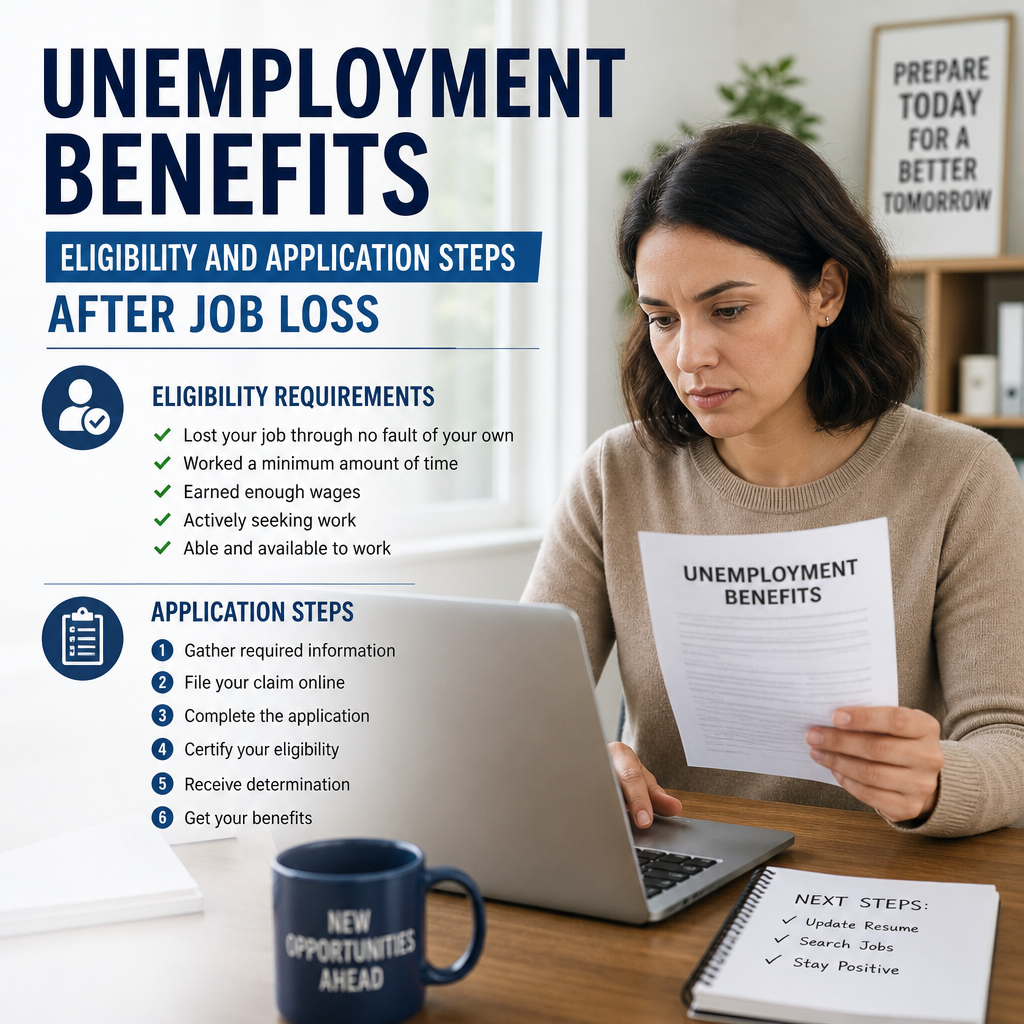
Unemployment benefits are temporary payments offered to eligible workers who lose their jobs through no fault of their own. They are usually funded by state unemployment insurance programs and administered by state agencies.
These benefits are designed to help cover basic expenses while you search for new work. They are not meant to replace your full paycheck, but they can help with essentials such as:
Anúncios
- Rent or mortgage payments
- Groceries
- Utilities
- Transportation
- Job search expenses
In most cases, you must meet specific eligibility rules, file a claim promptly, and continue to certify that you are still unemployed and available for work.
Who Qualifies for Unemployment Benefits?
Eligibility rules differ by state, but most unemployment systems look at a few common factors.
1. You lost your job for an eligible reason
Generally, you must be unemployed through no fault of your own. That usually includes situations such as:
- Layoffs
- Position eliminations
- Company downsizing
- Reduced hours in some cases
You may not qualify if you quit without a valid reason or were fired for serious misconduct. However, the definition of “good cause” or “misconduct” can vary by state, and some separations are not as simple as they first seem.
2. You earned enough wages during the base period
Most states use a “base period,” which is a set timeframe used to determine whether you have enough recent work history and wages to qualify.
Common factors include:
- Total wages earned
- Wages earned in specific quarters
- Length of prior employment
If you recently changed jobs, worked part-time, or had irregular earnings, the agency will still review your work history to determine whether you meet the earnings requirement.
3. You are able and available to work
To receive unemployment benefits, you usually must be:
- Physically able to work
- Available to accept suitable work
- Actively seeking employment
If you cannot work because of illness, disability, or caregiving duties, you may not qualify under standard unemployment rules.
4. You are actively looking for work
Most states require ongoing job search activity. This often means applying for jobs, contacting employers, or participating in approved reemployment activities.
Keep a simple record of your efforts. That can include:
- Employer names
- Dates of applications
- Follow-up calls or emails
- Career center visits
- Job fairs attended
5. You meet state-specific rules
Some states require additional steps, such as:
- Registering with the state job bank
- Attending orientation
- Completing work search verification
- Accepting suitable job offers
Because the rules are state-run, two people in different states may have different eligibility outcomes even if their job loss circumstances are similar.
When You May Not Qualify
You might not receive unemployment benefits if:
- You voluntarily quit without a qualifying reason
- You were terminated for misconduct
- You refuse suitable work without good cause
- You are not available to work
- You do not meet wage requirements
- You fail to file weekly or biweekly certifications
That said, if you’re unsure whether your situation disqualifies you, it is often still worth applying. Agencies review the facts of each claim, and a separation that seems disqualifying at first may still be eligible under state rules.
How to Apply for Unemployment Benefits
Applying for unemployment benefits is usually straightforward, but accuracy matters. A small mistake can delay approval or payment.
Step 1: Gather your information first
Before you start the application, collect the basic information the state agency will ask for.
You may need:
- Your Social Security number
- Driver’s license or state ID number
- Mailing address and phone number
- Email address
- Employer names and addresses from the last 12–18 months
- Dates you worked for each employer
- Reason for job separation
- Bank account information for direct deposit, if available
If you worked in more than one state or had multiple jobs, having those details ready will save time.
Step 2: File your initial claim
Most states allow you to apply online. Some also offer phone or in-person filing options.
When completing the application:
- Answer every question honestly
- Double-check dates and employer names
- Explain your separation clearly and briefly
- Submit the claim as soon as possible after job loss
Waiting too long to file can affect when benefits begin. In many states, benefits are not retroactive to your last day of work, so filing promptly matters.
Step 3: Wait for the agency to review your claim
After filing, the state agency will review your work history and separation details. In some cases, they may contact you or your former employer for additional information.
This review can take time, especially if:
- Your employer contests the claim
- Your wages were reported in another state
- Your work history is complicated
- The agency needs more documentation
Be sure to respond quickly if the agency sends you a request.
Step 4: Complete weekly or biweekly certifications
Once your claim is active, you usually must certify for benefits on a regular schedule. This step confirms that you remain unemployed or underemployed and still meet eligibility rules.
Typical certification questions may ask whether you:
- Worked during the week
- Earned any income
- Refused any work
- Were available for work
- Completed job search activities
Missing a certification deadline can delay or interrupt payment, even if your claim is otherwise valid.
Step 5: Keep your job search records
If your state requires work search activity, document everything. A simple spreadsheet or notebook can be enough.
Track:
- Company name
- Job title
- Application date
- Contact person
- Follow-up action
- Outcome
This record can help if your state requests proof later.

Common Reasons Claims Are Delayed
Even eligible applicants sometimes wait longer than expected. Common delays include:
Incomplete applications
If you skip a question or enter inconsistent information, the agency may need to contact you before moving forward.
Employer disputes
Former employers can sometimes challenge the reason for separation or the wages reported.
Identity verification issues
Some applicants must verify identity before benefits can be paid. This is especially important if the application is filed online.
Missing certifications
If you forget to certify on time, payment may stop until you file the required weekly or biweekly report.
Bank account or payment setup problems
Direct deposit errors or prepaid debit card issues can also slow access to funds.
What Counts as a Suitable Job?
When receiving unemployment benefits, you may be required to accept suitable work. That usually means a job that matches your skills, pay expectations, and work history, although what counts as “suitable” may change over time the longer you remain unemployed.
Factors often considered include:
- Your previous wage level
- Your experience and training
- Local labor market conditions
- Travel distance and commute
- Job safety and working conditions
If you refuse an offer, the agency may ask why. Keep detailed notes if you believe the offer was not suitable.
How Unemployment Benefits Affect Other Income
You may still be able to work part-time while receiving unemployment benefits, but your payment could be reduced depending on your earnings and state rules.
You should report:
- Part-time wages
- Severance pay
- Vacation pay
- Holiday pay
- Pension income, in some cases
Each state handles these sources differently. Failing to report income can create overpayments, which may have to be repaid later.
Practical Tips to Strengthen Your Claim
A smooth unemployment claim often comes down to organization and timing. These habits can help:
- File as soon as possible after losing your job
- Read every question carefully before submitting
- Save copies of your confirmation page and letters
- Check your mail, email, and state account regularly
- Respond quickly to requests for more information
- Keep your job search log current
- Report any income honestly and on time
If you recently lost your job because your employer closed, laid people off, or reduced your hours, you may have a stronger case than if you resigned voluntarily. Still, filing is the only way to know for sure.
What to Do If Your Claim Is Denied
A denial is not necessarily the end of the road. Many states give you the right to appeal.
If your claim is denied:
- Read the determination letter carefully.
- Note the deadline to appeal.
- Gather documents that support your case.
- Submit your appeal on time.
- Prepare to explain your separation clearly.
Your appeal may be reviewed through a hearing or administrative process. If you can show that you lost your job through no fault of your own or that the agency misunderstood your situation, the decision may be reversed.
Frequently Asked Questions
How long does it take to receive unemployment benefits after applying?
Timing varies by state and by the complexity of your claim. Some people receive a decision within a few weeks, while others wait longer if the state needs more information or if an employer disputes the separation. Filing promptly and responding quickly to requests can help reduce delays.
Can I get unemployment benefits if I quit my job?
Sometimes, but not always. If you quit for a qualifying reason, such as unsafe working conditions, significant harassment, or another reason recognized by your state, you may still be eligible. If you quit for personal preference or without a valid cause, you usually will not qualify.
Do I have to keep looking for work while collecting benefits?
Yes, in most states you must actively search for work and remain available to accept suitable employment. The number of required job contacts and the type of proof you need can vary, so check your state’s unemployment agency rules carefully.
Can I receive unemployment benefits if I work part-time?
Possibly. Many states allow part-time workers to receive reduced unemployment benefits if their earnings fall below a certain threshold. You must report all income accurately, and your weekly payment may be adjusted based on what you earn.
What happens if my employer contests my claim?
If your employer disputes your claim, the agency will usually review both sides before deciding. You may be asked for more information or invited to a hearing. Keep records of your job separation, emails, termination notice, and any other documents that help support your case.
Official Resources
- U.S. Department of Labor: Unemployment Insurance
- CareerOneStop: Unemployment Benefits Finder
- Benefits.gov: Unemployment Insurance Benefits
- USA.gov: Unemployment Benefits
- National Association of State Workforce Agencies
Conclusion
Understanding unemployment benefits can make a difficult transition feel more manageable. If you recently lost your job, the most important steps are to check your state’s eligibility rules, file your claim quickly, and keep your information accurate and complete. From work history requirements to weekly certifications, each part of the process plays a role in whether your claim is approved and paid on time.
The good news is that unemployment systems are designed to support workers during periods of involuntary job loss. By gathering your documents, tracking your job search, and responding promptly to agency requests, you can reduce delays and protect your benefits. If your claim is denied, don’t assume the decision is final—appeals exist for a reason.
A job loss can feel overwhelming, but you do not have to navigate it blindly. Take one step at a time, stay organized, and use official state resources to confirm the rules that apply to you. The sooner you act, the sooner you can create a more stable path forward.