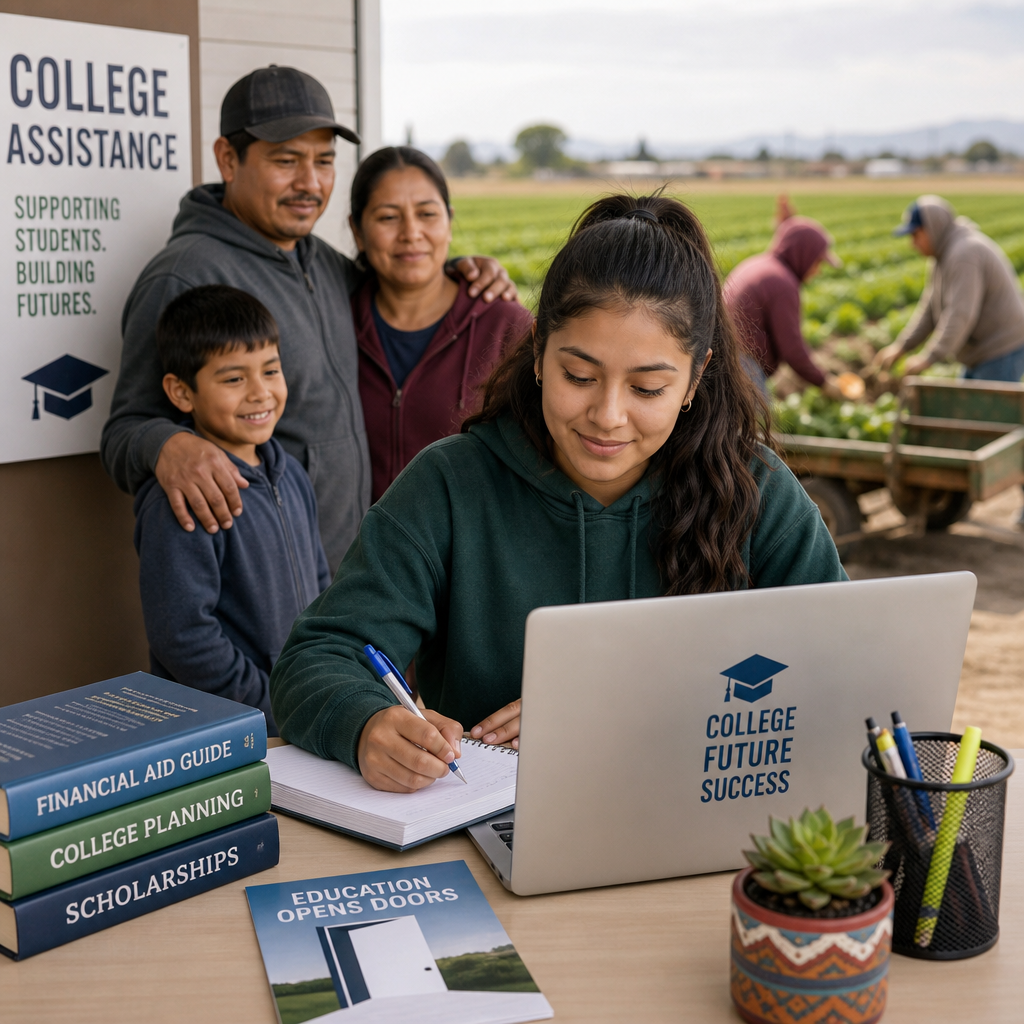
College Assistance for Students from Migrant Farmworker Families
College assistance for students from migrant farmworker families can make higher education feel possible by connecting students with scholarships, mentoring, and financial aid guidance. With the right support, these hardworking students can overcome barriers and move confidently toward college success.
By: Jennifer Collins on August 3, 2026
Anúncios
For many students from migrant farmworker families, the path to college comes with unique challenges that go far beyond academics. Frequent moves, financial strain, language barriers, limited access to college counseling, and family work responsibilities can all make higher education feel out of reach. The good news is that college assistance for students from migrant farmworker families exists in many forms, from scholarships and mentoring to academic support and financial aid guidance.
If you are a student, parent, educator, or community advocate, understanding these resources can make a real difference. With the right support, students from migrant farmworker backgrounds can apply to college, stay enrolled, and graduate with confidence.
Anúncios
Why College Assistance Matters for Migrant Farmworker Families
Students from migrant farmworker families often bring resilience, responsibility, and strong problem-solving skills to school. Still, they may face barriers that other students do not.
Common challenges students may face
Changing schools multiple times
Missing credits because of interrupted schooling
Limited internet access or transportation
Family income that makes college seem unaffordable
Difficulty completing FAFSA and scholarship applications
Balancing school with work or caregiving duties
Navigating systems in a language that may not be their first
College assistance helps reduce these barriers. It can open doors to admissions support, financial aid, academic advising, and peer networks that improve both access and persistence.
Anúncios
Why early support matters
The earlier a student learns about college options, the better prepared they are to:
Build a strong high school course plan
Prepare for entrance exams if needed
Gather documents for financial aid
Research scholarships and support programs
Connect with mentors and advisors
Even one caring educator or counselor can help a student see college as a realistic goal rather than a distant dream.
Understanding College Assistance for Students From Migrant Farmworker Families
College assistance for students from migrant farmworker families includes any program, service, or resource that helps students enter and succeed in higher education. This support may come from schools, state agencies, nonprofit organizations, colleges, and government programs.
Common types of assistance
Academic support
Tutoring, credit recovery, English language support, and study skills workshops can help students stay on track academically.
Financial support
Scholarships, grants, work-study, emergency funds, and help completing financial aid forms can make college more affordable.
Admissions guidance
College application help, essay support, and deadline reminders can simplify the process.
Mentorship
Mentors can help students understand college culture, plan coursework, and stay motivated.
Transition support
Programs that help students move from high school to college often include summer bridge programs, orientation, and campus navigation support.
Key Barriers and How Assistance Helps
To understand why these resources matter, it helps to look at the most common barriers students face and how targeted support addresses them.
Financial barriers
Many migrant farmworker families work hard under unstable income conditions. College may seem too expensive, especially when families are also managing housing, food, transportation, and healthcare costs.
How assistance helps:
Connects students to need-based grants
Identifies scholarships for farmworker families and first-generation students
Provides FAFSA and state aid completion support
Helps students understand tuition, fees, and living expenses
Academic interruptions
Students who move often may experience gaps in instruction or mismatched graduation requirements between states or districts.
How assistance helps:
Offers credit evaluation and recovery
Provides tutoring in math, reading, and writing
Supports summer learning and catch-up programs
Helps students strengthen college readiness skills
Language and communication barriers
Some students and parents may prefer Spanish or another language, while college systems often use complex English-only forms and policies.
How assistance helps:
Provides bilingual counselors and translated materials
Explains applications and financial aid in plain language
Creates a more welcoming environment for families
Lack of college knowledge
Students may not know how to choose a college, compare offers, or understand admission requirements.
How assistance helps:
Breaks down the college planning process into manageable steps
Introduces students to campus visits and virtual tours
Explains majors, career pathways, and support services
Where to Find College Assistance
Students from migrant farmworker families can often find support in several places. The best option depends on the student’s age, location, academic goals, and financial need.
High school counseling offices
School counselors can be a first point of contact for:
Course planning
FAFSA support
Scholarship searches
College application timelines
Recommendation letters
Some schools also have migrant education liaisons or family outreach staff who understand the unique needs of these students.
Migrant education programs
Migrant Education Programs, often funded through federal and state systems, may provide services such as:
Academic tutoring
Graduation planning
Summer programs
Family engagement support
College and career readiness activities
These programs can be especially helpful for students who move frequently across school districts or state lines.
College access organizations
Nonprofits and community organizations often run college readiness programs for first-generation, low-income, and migrant youth. They may offer:
Personal advising
Scholarship coaching
FAFSA workshops
Application support
Peer mentorship
College financial aid offices
Once students apply, college financial aid offices can help explain the aid package and answer questions about grants, loans, and work-study. Students should not hesitate to ask for clarification.
TRIO and similar support programs
Federal programs such as TRIO provide academic and support services to students who qualify based on income, family background, or educational need. These programs can help with:
College preparation
Retention support
Transfer planning
Advising and tutoring
Scholarships and Financial Aid Options
Funding is often the biggest concern, but many students from migrant farmworker families qualify for multiple forms of aid.
Start with the FAFSA
The Free Application for Federal Student Aid (FAFSA) is the gateway to federal grants, many state aid programs, and some institutional scholarships. Students should complete it as early as possible.
FAFSA tips
Gather tax and income documents in advance
Use the legal name exactly as it appears on official records
Ask a counselor or financial aid advisor for help if the form feels overwhelming
Submit before state and school deadlines
Search for scholarships
Students should look for scholarships designed for:
Migrant students
Farmworker families
First-generation students
Hispanic or Latino students, if applicable
Students with financial need
Students pursuing certain majors or careers
Good scholarship applications often require:
A short essay
A transcript
Letters of recommendation
Proof of eligibility
Consider state and institutional aid
Many states and colleges offer grants or tuition assistance for residents or students with specific backgrounds. Some colleges also provide emergency aid for unexpected costs like textbooks, food, transportation, or housing.
Explore work-study and part-time work
Federal work-study can help students earn money while enrolled. Part-time campus jobs may also fit better with class schedules than outside work.
Building a Strong College Plan
A clear plan can help students avoid feeling overwhelmed. The process does not have to be perfect; it just needs to be started early and revisited often.
Step 1: Identify goals
Ask basic questions such as:
What subjects do I enjoy?
Do I want a certificate, two-year degree, or four-year degree?
Do I want to stay close to home or attend school farther away?
What career paths interest me?
Step 2: Match goals with support
Look for colleges and programs that offer:
Academic support centers
Bilingual services
Affordable housing options
Transfer pathways
First-year experience programs
Emergency financial assistance
Step 3: Stay organized
Use a notebook, calendar, or phone app to track:
Application deadlines
Scholarship due dates
FAFSA deadlines
Testing dates
Campus visit times
Required documents
Step 4: Build a support team
A support team might include:
A school counselor
A teacher
A migrant education coordinator
A family member
A college mentor
A community advocate
This team can help students stay encouraged and keep moving forward.
What Families Can Do to Support College Goals
Families play a powerful role in helping students pursue college, even if they did not attend college themselves.
Practical ways families can help
Encourage students to stay in school and ask questions
Attend bilingual college nights and financial aid workshops
Help gather records and documents
Support time for homework and application work
Discuss realistic college and career plans
Celebrate small milestones, like submitting an application
Respecting family priorities
Many migrant farmworker families depend on student contributions at home. A strong college plan should respect family responsibilities while also helping students build a future. That may mean looking for local colleges, online coursework, or programs with flexible scheduling.
How Colleges Can Better Serve These Students
Colleges that want to serve migrant farmworker students well should make support easy to find and easy to use.
Helpful college practices include
Bilingual admissions and financial aid staff
Clear communication in plain language
Transfer-friendly policies
Dedicated first-generation student services
On-campus food pantries and emergency grants
Flexible advising hours
Outreach to high schools and community groups
When colleges design services around student realities, they improve access and retention.
Tips for Students Applying to College
If you are a student from a migrant farmworker family, keep these practical tips in mind:
Start early. Deadlines come quickly.
Ask for help. You do not need to do everything alone.
Apply to multiple schools. More options can mean more aid offers.
Save copies of everything. Keep transcripts, essays, and forms together.
Read every financial aid letter carefully. Compare grants, loans, and work-study.
Visit campus if possible. If not, attend a virtual information session.
Follow up. If something is unclear, call or email admissions or financial aid.
Frequently Asked Questions
1. What is the best first step for students from migrant farmworker families who want to go to college?
The best first step is to meet with a school counselor, migrant education staff member, or college access advisor. They can help students understand what classes to take, which deadlines matter, and what financial aid options may be available. Starting early reduces stress later.
2. Are there scholarships specifically for migrant farmworker students?
Yes. Some scholarships are designed specifically for students from migrant or farmworker backgrounds, while others are open to first-generation or low-income students. Students should search local, state, and national scholarship databases and ask counselors about programs they may qualify for.
3. Can students get help filling out the FAFSA if their parents are unfamiliar with the process?
Yes. Many schools, nonprofit organizations, and college financial aid offices provide FAFSA completion help. Bilingual support is often available. Students and parents can bring income documents and questions to a workshop or appointment for step-by-step help.
4. What if a student’s education has been interrupted because the family moved for work?
Students should still apply to college and explain their background when appropriate. Many colleges understand interrupted schooling and offer support such as placement help, tutoring, credit review, and transition programs. Migrant education programs can also help students recover credits and plan their next steps.
5. How can parents support college plans if they did not attend college themselves?
Parents can support college plans by encouraging students, attending school meetings, helping gather documents, and asking questions about costs and deadlines. Emotional support matters too. Families do not need to know every detail to be powerful advocates for their children.
College can feel out of reach for students from migrant farmworker families, but it does not have to stay that way. With the right college assistance for students from migrant farmworker families, young people can overcome financial barriers, recover from interrupted schooling, and find a path that fits both their goals and their family realities.
The most effective support is practical, personal, and timely. It includes help with FAFSA, scholarships, admissions, mentoring, academic preparation, and transition services. It also means building trust with families and making college systems easier to navigate.
Whether you are a student preparing applications, a parent hoping to support your child, or an educator looking for resources, the message is simple: help exists, and it can make a lasting difference. Start with one step, connect with one trusted advisor, and keep moving forward. A college future is possible, and the right support can help turn that possibility into a reality.
Jennifer, M.Ed., holds a degree in Higher Education Administration, with
a focus on U.S. college financial aid, admissions policy, and student
support systems. She researches and writes about scholarships, federal
aid programs, and the college planning process to help students and
families make informed, well-supported decisions.