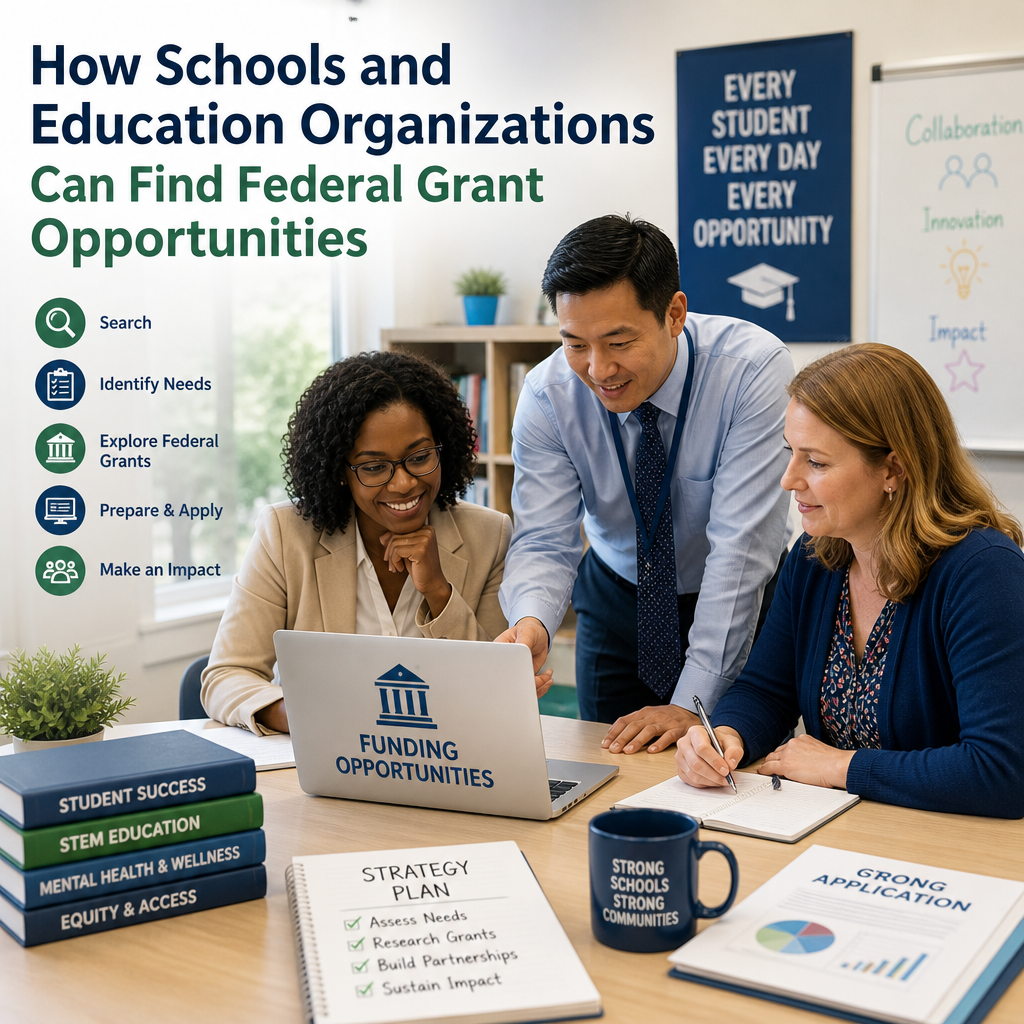
How Schools and Education Organizations Can Find Federal Grant Opportunities
Finding the right funding can be daunting, but federal grant opportunities become much easier to navigate when you know where to look and what to prioritize. This guide shows schools and education organizations how to spot relevant grants faster and focus on the ones that best support their mission.
By: Jennifer Collins on August 3, 2026
Anúncios
Finding federal grant opportunities can feel overwhelming for schools, districts, nonprofits, and education organizations that are already juggling limited staff time and tight budgets. The good news is that the process becomes much more manageable once you understand where grants are posted, how federal funding works, and what steps help you quickly identify opportunities that fit your mission.
Whether you are looking for support for literacy, mental health, STEM programming, professional development, after-school services, or school modernization, federal grants can be a powerful source of funding. The key is not just knowing that grants exist, but knowing how to find the right ones early and evaluate them efficiently.
Anúncios
This guide walks through the most reliable ways to find federal grant opportunities, along with practical tips to help schools and education organizations stay organized, competitive, and informed.
What Federal Grant Opportunities Are and Why They Matter
Federal grants are funds awarded by government agencies to support public purposes, including education. Unlike loans, grants usually do not need to be repaid, but they often come with specific requirements, reporting obligations, and deadlines.
Anúncios
For schools and education organizations, federal grants can support:
Academic intervention and tutoring
Special education services
Workforce and career readiness
Teacher recruitment and training
Technology and digital learning
Student wellness and mental health
Early childhood and family engagement
Research, evaluation, and program development
Because federal grants are competitive and often tied to policy priorities, organizations need a focused strategy to identify the right opportunities and prepare strong applications.
Where to Find Federal Grant Opportunities
The best place to start is with official federal sources. These are the most reliable places to search for active funding announcements, notices of intent, and program guidance.
Grants.gov is the main federal website for finding and applying for grant opportunities. It consolidates listings from many federal agencies, including the U.S. Department of Education, Department of Health and Human Services, Department of Labor, and others.
For schools and education organizations, Grants.gov is often the first stop because it centralizes opportunities across multiple agencies.
2. U.S. Department of Education
The U.S. Department of Education publishes grant competitions, program announcements, and resources that are especially relevant to school systems, charter schools, higher education institutions, and education nonprofits.
Look for:
Discretionary grant competitions
Formula grant program details
Priorities and application notices
Grant technical assistance resources
If your work focuses on K–12 education, higher education access, special education, or innovation in instruction, this department should be on your regular monitoring list.
3. Agency-Specific Grant Pages
Many federal agencies post grant opportunities on their own websites before or alongside Grants.gov. These pages can include valuable details, webinars, FAQs, and program contacts.
Examples include:
Institute of Education Sciences
National Science Foundation
Department of Health and Human Services
Department of Agriculture
Department of Labor
This is especially useful for organizations seeking funding for STEM education, school nutrition, behavioral health, rural education, or career pathways.
4. Federal Register
The Federal Register publishes official notices, including funding announcements, proposed rules, and grant-related updates. It can be a useful resource for tracking upcoming competitions and policy changes that may affect future funding.
Search it when you want to:
Find notices before a grant opens
Understand program changes
Monitor priorities and deadlines
Review formal federal announcements
5. State Education Agencies and Intermediaries
Some federal funds flow through states rather than directly from the federal government. State education agencies, regional service centers, and trusted education associations often share updates on how to access those funds.
They may also provide:
Local grant calendars
Matching requirements
Application support
Pre-application webinars
Partnership opportunities
For smaller schools and education organizations, these intermediaries can make federal grant opportunities easier to navigate.
How to Search More Effectively
A broad search can quickly become frustrating. To save time, use a targeted process when looking for federal grant opportunities.
Start with a Clear Need
Before searching, define the problem you want to solve. For example:
Improve reading scores in grades K–3
Expand mental health services
Train teachers in AI literacy and digital tools
Build STEM pathways for middle and high school students
Support English learners
Increase college access and persistence
A specific need helps you filter out programs that sound appealing but do not match your goals.
Use Eligibility Filters
Federal grants have strict eligibility rules. Some are open only to:
School districts
Charter schools
Local education agencies
State agencies
Institutions of higher education
Nonprofits
Tribal organizations
Partnerships or consortia
Always check whether your organization can apply directly or whether you must partner with an eligible lead applicant.
Search by Program Type
When browsing grant databases, use keywords related to the program area, such as:
Literacy
STEM education
Teacher preparation
School mental health
Postsecondary readiness
Rural education
Afterschool programs
Early intervention
Using topic-based searches can reveal relevant opportunities you might miss when searching only by agency name.
Save Search Alerts
Grant opportunities open and close quickly. Setting up alerts helps your team stay ahead of deadlines.
Not all federal funding works the same way. Schools and education organizations should know the basic categories so they can focus on the right opportunities.
Discretionary Grants
These are competitive grants awarded based on application quality. They usually require a detailed proposal, budget, and evidence of need.
Discretionary grants are common for:
Innovation projects
Research and evaluation
Demonstration programs
Capacity building
Pilot initiatives
Formula Grants
Formula grants are allocated based on a set formula, often tied to population, enrollment, or need. These funds usually pass through a state or another public entity.
Organizations should pay attention to formula grants because they may influence local funding streams, even if they do not apply directly.
Cooperative Agreements
These are similar to grants, but the federal agency may stay more involved after the award is made. They may involve greater collaboration, reporting, or oversight.
Understanding the distinction helps schools estimate the level of administration and compliance required.
Build a Simple Grant Discovery System
A repeatable system can make searching for federal grant opportunities much easier, especially for small teams.
Create a Grant Calendar
Track:
Application open date
Deadline
Internal review deadline
Required attachments
Matching fund requirements
Estimated award date
Reporting expectations
A calendar keeps opportunities from slipping through the cracks.
Assign a Grant Lead
Even in a small organization, one person should own the process of monitoring opportunities, coordinating partners, and maintaining records. That person does not need to do everything, but they should keep the process moving.
Build a Priority List
Not every opportunity is worth chasing. Use a simple scoring method to assess fit:
Alignment with mission
Likelihood of eligibility
Staff capacity
Funding amount
Timeline
Sustainability
Reporting burden
This helps your organization focus on grants with the best return on effort.
Maintain a Proposal Library
Keep reusable materials in one place:
Organizational mission statement
Staff bios
Logic models
Budget templates
Letters of support
Past performance summaries
Needs assessment data
A proposal library reduces duplication and helps you respond quickly to new opportunities.
What to Review Before Applying
Before committing to an application, take time to read the full notice carefully. Federal grant announcements often contain details that determine whether your proposal is competitive or even eligible.
Key Items to Check
Eligibility requirements
Application deadline and time zone
Required forms and attachments
Page limits
Formatting rules
Match or cost-share requirements
Allowed uses of funds
Priority areas or selection criteria
Review process
Reporting expectations
Missing one detail can disqualify an otherwise strong application.
Ask Practical Questions
Does this support a current strategic goal?
Can we deliver the project as described?
Do we have staff time to manage the grant?
Are partners committed?
Can we measure outcomes realistically?
What happens after the grant ends?
These questions help ensure the funding opportunity fits your organization’s capacity.
How to Strengthen Your Grant Search Strategy
Finding federal grants is only part of the process. The organizations that succeed usually build habits that make future searches faster and more effective.
Track Past Opportunities
Review grants you applied for before, even if you did not win. Note:
Which programs matched your mission
Where your application was weak
What reviewers emphasized
Which opportunities are likely to return
This creates institutional memory and improves future searches.
Follow Federal Agencies Regularly
Subscribe to newsletters, RSS feeds, or email updates from relevant agencies. Federal priorities shift over time, and staying informed helps you spot opportunities early.
Attend Webinars and TA Sessions
Many agencies offer pre-application webinars or technical assistance sessions. These can clarify eligibility, explain evaluation criteria, and highlight common mistakes.
They are valuable for:
Understanding the agency’s priorities
Asking questions before applying
Learning how reviewers think
Identifying partnership opportunities
Network with Similar Organizations
Other schools and education organizations can be excellent sources of information. Professional associations, consortia, and regional collaboratives often share leads, tips, and application strategies.
Common Mistakes to Avoid
Even experienced teams can miss opportunities due to small but costly errors.
Searching Too Broadly
If you search for “education grants” without a focus, you may get too many irrelevant results. Narrow your search by audience, issue, and award type.
Ignoring Eligibility Language
If the notice says only a state agency or district can apply, a nonprofit partner cannot submit directly unless the program allows it.
Waiting Too Long
Federal grant applications often require board approval, partner letters, budget review, and internal sign-off. Start early.
Overlooking Indirect Costs and Compliance
Award management matters. Make sure your budget and administrative systems can handle reporting, recordkeeping, and procurement rules.
Chasing Every Opportunity
A selective approach usually works better than a high-volume one. Focus on grants that truly match your goals and capacity.
Practical Example: A School District Looking for STEM Funding
Imagine a mid-sized school district wants to expand middle school STEM enrichment. The district might:
Identify the specific need: more hands-on STEM learning and career awareness
Search Grants.gov using terms like “STEM,” “middle school,” and “career pathways”
Check the Department of Education and NSF websites for related opportunities
Review eligibility to confirm whether the district can apply directly
Build a team including curriculum staff, finance staff, and a local industry partner
Prepare a proposal that includes measurable outcomes and a clear budget
This kind of structured process makes the search more manageable and improves the odds of finding a strong fit.
Frequently Asked Questions
1. Where is the best place to start looking for federal grant opportunities?
The best place to start is Grants.gov, because it centralizes many federal grant listings in one searchable database. From there, check the websites of agencies relevant to your work, such as the U.S. Department of Education, NSF, or HHS. These sites often provide additional guidance, webinars, and program-specific resources that can help you understand the opportunity better.
2. Can nonprofits apply for federal education grants?
Yes, many federal education grants are open to nonprofits, but eligibility varies by program. Some grants are available only to school districts, states, or higher education institutions. Always read the eligibility section carefully and confirm whether your nonprofit can apply directly or should partner with an eligible lead organization.
3. How can small schools or organizations keep up with new grant announcements?
Set up a simple system with email alerts, a shared grant calendar, and weekly checks on major grant portals. It also helps to subscribe to agency newsletters and follow education associations that share funding updates. Even a small organization can stay current with a consistent routine.
4. What should we review before starting a grant application?
Read the full grant notice, including eligibility rules, deadlines, page limits, required attachments, and selection criteria. Then assess your staff capacity, partner commitments, and ability to manage the grant after award. A strong fit matters as much as the funding amount.
5. How do we know if a grant is worth pursuing?
Look at mission alignment, eligibility, timeline, staff workload, reporting requirements, and the likelihood of building a strong proposal. If the project does not solve a real need or your team cannot support the work, it may be better to wait for a stronger opportunity.
Finding federal grant opportunities does not have to be a guessing game. With a clear search strategy, reliable sources, and a simple internal system, schools and education organizations can identify funding that supports real student needs and long-term goals. The most successful teams are usually not the ones that search the widest; they are the ones that search the smartest. They know where to look, how to evaluate fit, and when to invest time in a proposal.
Start with official sources like Grants.gov and agency websites, then narrow your search based on your mission, eligibility, and capacity. Keep a calendar, save reusable application materials, and review each opportunity carefully before you commit. Over time, this process becomes faster and far less stressful.
Federal grants can help expand programs, strengthen services, and create better outcomes for learners. The next step is to build a consistent routine so your organization is ready when the right opportunity appears.
Jennifer, M.Ed., holds a degree in Higher Education Administration, with
a focus on U.S. college financial aid, admissions policy, and student
support systems. She researches and writes about scholarships, federal
aid programs, and the college planning process to help students and
families make informed, well-supported decisions.