Children Are Adopting Artificial Intelligence Faster Than Adults
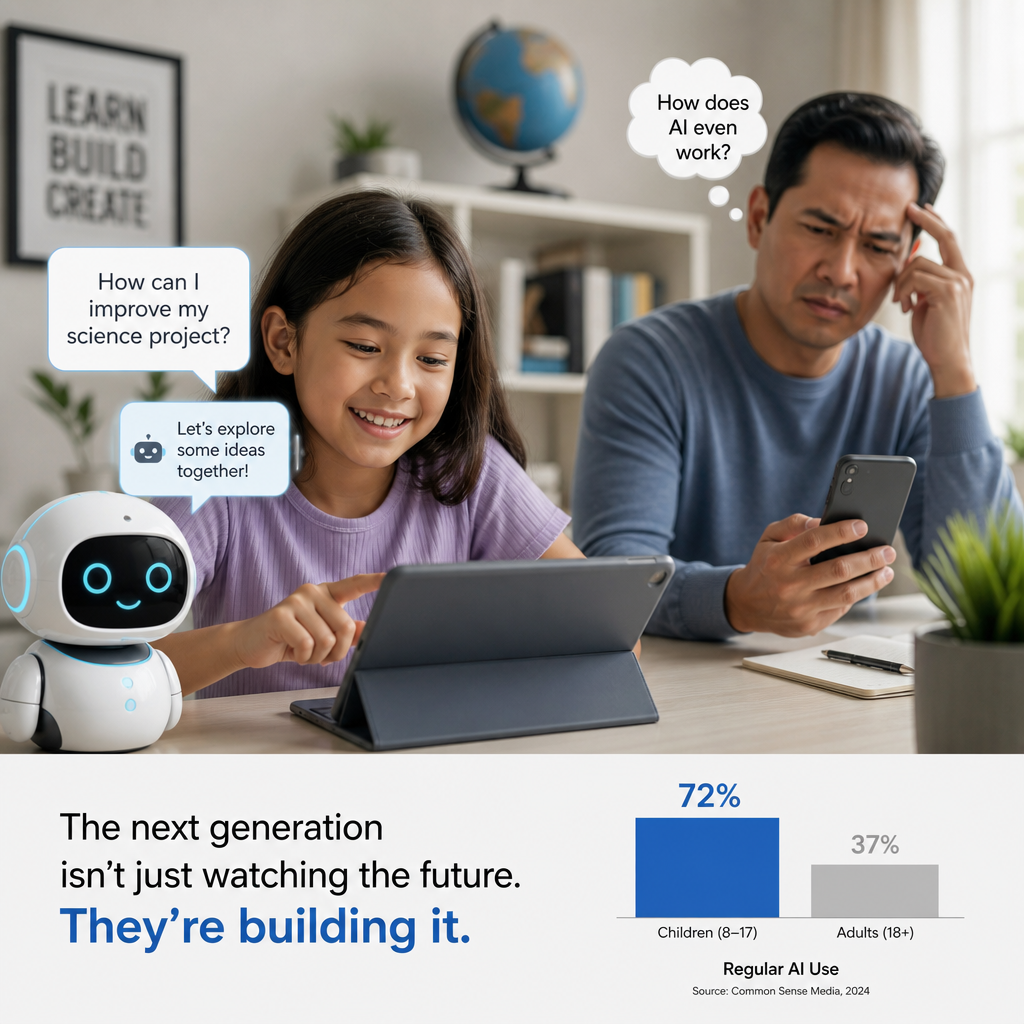
Children are adopting artificial intelligence faster than adults, often because AI already feels like a natural part of the apps, games, and school tools they use every day. That rapid shift brings big opportunities for learning and creativity, but it also means adults need to keep up on privacy, bias, and safety.
By: Peter on August 3, 2026
Anúncios
Children are adopting artificial intelligence faster than adults, and that shift is already shaping how they learn, play, create, and communicate. From AI-powered tutoring apps to voice assistants, image generators, and chatbots, kids are encountering artificial intelligence in ways that feel normal, useful, and often invisible. Adults, meanwhile, are still catching up on what these tools do, how they work, and where the risks begin.
Anúncios
That gap matters. When children are adopting artificial intelligence faster than adults, they may use tools without fully understanding privacy issues, misinformation, bias, or the difference between human judgment and machine output. At the same time, AI can support learning, creativity, accessibility, and confidence when used thoughtfully.
The challenge is not to block AI entirely. The real task is helping children use it wisely while adults build the knowledge to guide them.
Why Children Are Adopting Artificial Intelligence Faster Than Adults
Children and teens often pick up new technology quickly because they are already growing up in digital environments. Many of them do not see AI as a separate “new trend.” They see it as part of everyday apps, games, school platforms, and devices.
Anúncios
AI feels natural to digital natives
Kids who have grown up using tablets, streaming platforms, and recommendation algorithms are more comfortable experimenting with new tools. If an app offers homework help, drawing support, or a fun chatbot, they will often try it immediately.
Peer influence speeds up adoption
Children rarely adopt technology in isolation. They learn about AI from:
Friends sharing prompts or outputs
Social media videos and tutorials
Classroom use of AI-based tools
Gaming communities and creative apps
When a peer says, “This chatbot can write your story,” curiosity spreads quickly.
Adults often move more cautiously
Many adults are still evaluating AI tools, especially when they are concerned about:
Data privacy
Accuracy and hallucinations
Screen time
Academic integrity
Security risks
That caution is understandable, but it also means children may begin using AI before adults have established clear guidance.
How Kids Are Using AI in Daily Life
Children are adopting artificial intelligence faster than adults in a wide range of everyday activities. Some uses are educational, while others are more recreational or social.
School and homework support
Students may use AI to:
Brainstorm essay ideas
Explain math steps
Summarize reading material
Practice vocabulary
Generate study flashcards
Used responsibly, these tools can support learning. But they can also become shortcuts if students rely on them to do the thinking for them.
Creative projects
AI tools help kids create:
Artwork and digital illustrations
Music ideas or lyrics
Story prompts
Videos and animations
Game concepts
For many young users, AI feels like a creative partner. It can remove barriers and help children express ideas they might not otherwise be able to produce.
Communication and entertainment
Children also encounter AI in:
Voice assistants
Recommendation engines
Chat-based companions
Smart toys
Video filters and editing apps
These tools often feel playful and harmless, which is exactly why adults need to stay aware of how often children use them.
The Benefits of Early AI Exposure
There are real advantages when children learn how to use AI with support. The goal is not to panic; it is to guide.
Better access to learning support
AI can offer immediate explanations, examples, and practice opportunities. For students who need extra help, this can build confidence and reduce frustration.
More creativity and experimentation
Children may feel freer to explore ideas when AI helps with a first draft, outline, or visual concept. That can encourage storytelling, design thinking, and problem-solving.
Digital literacy development
Learning how to question AI output, verify facts, and compare sources is an important modern skill. Children who develop these habits early may become more critical and responsible digital users.
Accessibility benefits
AI can support children with different learning needs through:
Speech-to-text tools
Text-to-speech tools
Translation features
Reading support
Organization and planning aids
For some students, AI makes learning more accessible in meaningful ways.
The Risks Adults Should Not Ignore
When children are adopting artificial intelligence faster than adults, the biggest concern is not just access. It is unmonitored or misunderstood use.
Misinformation and overtrust
AI can sound confident even when it is wrong. Children may not know how to spot inaccurate or incomplete answers, especially if the output looks polished.
Privacy concerns
Many AI tools collect data, prompts, voice input, or usage patterns. Children may not understand what they are sharing when they type personal details into a chatbot or grant permissions to an app.
Bias and harmful content
AI systems can reflect bias found in their training data. They may also generate unsafe, age-inappropriate, or stereotypical content if not carefully designed or supervised.
Academic shortcuts
If students use AI to write assignments without understanding the material, they can miss out on real learning. Teachers are increasingly concerned about work that looks polished but does not reflect a child’s own knowledge.
Emotional reliance
Some children may treat AI like a friend, counselor, or authority figure. That can be risky if they begin to trust the tool more than real people, especially in moments involving emotions, conflict, or mental health.
What Parents Can Do Right Now
Parents do not need to become AI engineers to help their children use these tools safely. A few simple habits can make a big difference.
Start with curiosity, not fear
Ask children what apps or tools they use and what they like about them. When conversations feel collaborative rather than punitive, kids are more likely to be honest.
Try questions like:
“What does this AI tool help you do?”
“How do you know if the answer is correct?”
“Would you feel comfortable sharing that information with a stranger?”
Set clear family rules
Families can create simple AI guidelines such as:
No entering personal information into AI tools.
No using AI for schoolwork unless a teacher allows it.
Always double-check facts with trusted sources.
Ask for help if a response feels scary, confusing, or inappropriate.
Use age-appropriate apps and settings.
Review privacy settings together
Check app permissions, account settings, and data-sharing options. Kids are more likely to respect privacy boundaries when they help establish them.
Model healthy AI use
Children learn from what adults do. If parents use AI to draft an email, plan a trip, or summarize a document, they can explain how they evaluate the output and verify details.
What Educators Should Consider
Schools are under pressure to respond quickly because children are adopting artificial intelligence faster than adults in the classroom, too. The most effective approach combines guidance, transparency, and skill-building.
Teach AI literacy, not just policy
Students need more than a ban or a warning. They need to understand:
How AI generates answers
Why AI can make mistakes
How to check sources
When using AI is appropriate
When original thinking matters most
Design assignments that value process
Teachers can reduce misuse by including:
Drafts and outlines
Oral explanations
In-class writing
Source notes
Reflection questions about the research process
This helps students demonstrate their thinking, not just the final product.
Normalize honest use
If a school allows AI under certain conditions, students should know exactly what that means. Clear expectations prevent confusion and reduce academic dishonesty.
Address equity and access
Not every student has the same home technology, device access, or familiarity with AI. Schools should avoid assuming all children are starting from the same place.
Building Healthy AI Habits Early
The best time to teach responsible use is before habits harden. Children do not need perfect knowledge; they need repeatable routines.
Teach the “pause and check” habit
Encourage children to pause before accepting an AI answer. They should ask:
Does this make sense?
Where else can I verify it?
Is this a fact, opinion, or suggestion?
Does this response seem age-appropriate?
Encourage creativity with boundaries
Let children use AI to inspire ideas, but keep the final work personal. For example:
Use AI for brainstorming, not final essays
Use AI for design ideas, not copied artwork
Use AI for practice questions, not answer keys only
Talk about human judgment
AI can assist, but it cannot replace values, empathy, or context. Children should learn that decisions involving friendships, safety, health, and ethics belong with real people.
A Practical Example: Using AI for Homework the Right Way
Imagine a middle school student struggling with a science report on ecosystems. Instead of asking AI to write the report, the student can use it in more responsible ways:
Ask for a simple explanation of ecosystems
Request a list of key vocabulary words
Get help creating an outline
Find sample questions for review
Use the output as a starting point, then verify information with books or approved sources
This approach supports learning without replacing it. It also teaches the child how to use AI as a tool, not a crutch.
Frequently Asked Questions
Why are children adopting artificial intelligence faster than adults?
Children often adopt AI faster because they are more comfortable trying new digital tools, they hear about them from peers, and many AI features are embedded in apps they already use. Adults may be more cautious because they are thinking about privacy, accuracy, and safety concerns.
Is AI safe for children to use?
AI can be safe when used with supervision, age-appropriate tools, and clear rules. The main risks include privacy issues, inaccurate information, harmful content, and overreliance. Parents and educators should guide children toward responsible use and verify what the AI provides.
Should kids use AI for homework?
That depends on the teacher’s rules and the purpose of the assignment. AI can be helpful for brainstorming, reviewing concepts, and studying. It should not replace the student’s own thinking or be used to submit work that is supposed to be original.
How can parents tell if a child is using AI responsibly?
Responsible use usually looks like this: the child can explain how they used the tool, they do not share personal information, they check answers with trusted sources, and they still complete their own thinking and writing. If the child cannot explain the process, that may be a warning sign.
What is the best way to teach kids about AI?
The best approach is to combine simple explanations with hands-on guidance. Teach children what AI can and cannot do, show them how to fact-check answers, and discuss privacy, bias, and good digital habits. Real examples and open conversations work better than fear-based warnings.
Children are adopting artificial intelligence faster than adults because AI is already built into the tools they use every day. That reality creates both opportunity and responsibility. AI can support learning, creativity, and accessibility, but only when adults help children use it with care, curiosity, and good judgment.
Parents and educators do not need to master every new app to make a difference. They do need to stay engaged, ask better questions, and set thoughtful boundaries. Children should learn that AI is a tool for assistance, not a replacement for thinking, privacy awareness, or human connection.
The smartest next step is to talk openly about the AI tools children already use. Review settings, discuss expectations, and practice checking answers together. With consistent guidance, kids can build the digital literacy they need to use AI confidently and responsibly.
Peter B holds a degree in Journalism and has 5 years of experience covering U.S. economic policy, labor markets, and financial news. He writes data-driven news content on topics like inflation, interest rates, and employment trends.