Food Assistance Programs for Native American Families Explained
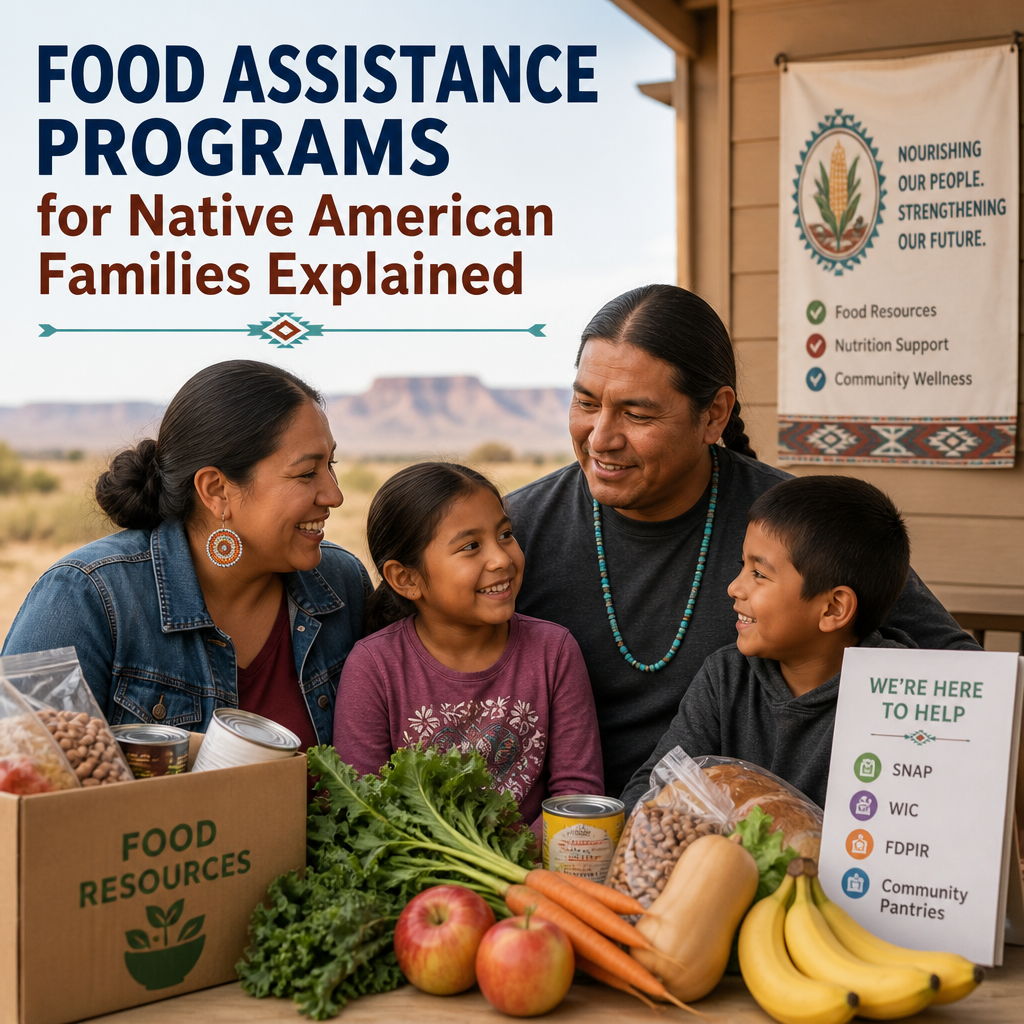
Food insecurity affects many Native communities, but food assistance programs can help families access nutritious meals, support children’s growth, and ease day-to-day stress. This guide explains the most important food assistance programs and how Native American families can use them to find the right support.
By: Emily Adams on August 3, 2026
Anúncios
Food insecurity remains a serious challenge in many Tribal communities, but there are a growing number of food assistance programs for Native American families designed to help households access nutritious meals with dignity. These programs range from federal nutrition benefits and school meal support to Tribal food distribution, community gardens, and culturally relevant nutrition initiatives.
Because Native communities are diverse, there is no one-size-fits-all solution. Some families live in remote areas where grocery stores are hours away. Others may face limited transportation, higher food prices, or eligibility barriers that make standard assistance programs harder to use. The good news is that many resources are available, and understanding how they work can make it easier to find help quickly.
Anúncios
This guide breaks down the most important food assistance programs for Native American families, explains how they differ, and offers practical tips for getting started.
Why Food Assistance Matters in Native Communities
Food access is about more than filling a pantry. In many Native communities, it affects health, school performance, family stability, and cultural wellbeing.
Anúncios
Some common barriers include:
Long distances to full-service grocery stores
Limited public transportation
High food costs in rural or remote areas
Housing instability or low household income
Confusing eligibility rules for federal benefits
Fewer nearby clinics, schools, or food retailers
For many families, food assistance programs provide more than emergency relief. They can support steady access to fruits, vegetables, proteins, infant formula, school meals, and traditional foods. That matters because nutrition programs work best when they reflect the realities of the community they serve.
Main Food Assistance Programs for Native American Families
Several major programs are especially important for Native families. Some are federal, while others are administered by Tribes, states, or local partners.
USDA Food Distribution Program on Indian Reservations (FDPIR)
The Food Distribution Program on Indian Reservations is one of the most important food assistance programs for Native American families living on or near Tribal lands.
Instead of using an Electronic Benefit Transfer card like SNAP, FDPIR provides USDA foods directly to eligible households. These foods often include:
Canned fruits and vegetables
Whole grains and cereals
Beans and lentils
Pasta and rice
Meat, poultry, and fish
Dairy items or shelf-stable alternatives
Who it helps
FDPIR is often a strong option for households that live far from grocery stores or have difficulty using SNAP in their area. Eligibility is based on household income and residency requirements tied to participating Tribes or areas.
Why it matters
For families in remote communities, direct food distribution can be more practical than retail shopping. It also gives communities a way to access food without depending entirely on local store inventory.
SNAP for Native American Families
The Supplemental Nutrition Assistance Program (SNAP) helps eligible low-income households buy food at approved retailers using an EBT card. Native families can qualify for SNAP just like any other household, and in many cases SNAP can work alongside other supports.
What SNAP can be used for
SNAP benefits can buy most food items, including:
Fruits and vegetables
Meat, poultry, and fish
Bread and cereals
Dairy products
Seeds and plants that grow food
Why SNAP is important in Tribal communities
SNAP can be especially useful in areas with access to grocery stores, convenience stores, or farmers markets that accept EBT. Some communities also use SNAP at online retailers and participating market programs, which can help families who cannot travel easily.
Tip for Native families
If your household is eligible for FDPIR, you typically cannot receive SNAP at the same time. It is worth comparing both options to see which better fits your location, food access, and household needs.
WIC for Pregnant Women, Infants, and Young Children
The Special Supplemental Nutrition Program for Women, Infants, and Children (WIC) supports pregnant women, new mothers, infants, and children up to age five who are at nutritional risk.
WIC can help pay for:
Infant formula
Breastfeeding support
Milk, eggs, whole grains, fruits, and vegetables
Cereal and peanut butter
Nutrition education and referrals to health services
Why WIC is especially helpful
WIC does more than provide food benefits. It also offers breastfeeding counseling, nutrition education, and health screening referrals, which can be valuable in communities with limited access to care.
For Native families
Many Tribal health programs, Indian Health Service clinics, and local public health offices help families apply for WIC or connect them with nearby WIC offices.
School Meals and Summer Meal Programs
Children in Native American families may qualify for free or reduced-price school meals, and many schools in Tribal areas participate in meal programs that offer breakfast, lunch, and sometimes snacks.
Programs to know
National School Lunch Program
School Breakfast Program
Summer Food Service Program
Seamless Summer Option
These programs help fill nutritional gaps during the school year and over the summer when school meals are not available.
Why they matter
For children in households facing tight budgets, school meals can provide consistent nutrition every weekday. Summer meal programs are especially important when children lose access to school breakfast and lunch.
The Emergency Food Assistance Program (TEFAP)
TEFAP provides USDA foods to food banks, pantries, and other local agencies. These foods are then distributed to households in need, including Native families.
How it works
Families usually access TEFAP through:
Food pantries
Tribal community centers
Regional food banks
Local nonprofit partners
Why it helps
TEFAP can be an important backup when families need immediate help or when other programs do not fully cover household food needs.
Commodity Supplemental Food Program (CSFP)
The Commodity Supplemental Food Program supports low-income seniors with monthly food boxes. In some areas, Native elders may qualify and receive foods through tribal or community-based distribution sites.
Common items may include
Canned fruits and vegetables
Cereal
Grains
Peanut butter
Dairy items
Canned protein foods
Why it matters
Elders are often central to Native families, and nutrition support for older adults can improve household stability and reduce stress for caregivers.
Tribal and Community-Based Food Support
In addition to federal programs, many Tribes and Native-serving organizations run their own food support efforts. These programs often fill gaps left by larger systems and may better reflect local needs.
Tribal food pantries and emergency food boxes
Many Tribes operate food pantries or emergency food delivery systems. These may offer:
Fresh produce
Shelf-stable staples
Baby food and diapers
Traditional foods when available
Holiday or seasonal food boxes
These programs can be faster and more culturally responsive than off-reservation services.
Traditional food programs
Some Native organizations are working to restore access to traditional foods such as:
Wild rice
Corn
Fish
Berries
Game meats
Indigenous crops
These efforts do more than reduce hunger. They help strengthen food sovereignty, cultural identity, and community health.
Community gardens and food sovereignty projects
Across Indian Country, Tribes and Native nonprofits are building gardens, greenhouses, seed-saving initiatives, and youth agriculture programs.
Benefits may include:
Fresh local produce
Hands-on education for children and teens
Elder-youth knowledge sharing
Reduced dependence on outside food systems
For families, these programs can complement food assistance and create long-term resilience.
How Native American Families Can Apply for Food Assistance
Applying for food assistance programs for Native American families may feel overwhelming at first, but the process becomes easier when you break it down.
Step 1: Identify which program fits your household
Start by asking:
Do I need direct food items or grocery benefits?
Are there children under 5 in my household?
Do I live on or near Tribal lands?
Is there a local food pantry or Tribal food program nearby?
Am I eligible for school meal support or elder nutrition assistance?
This helps you focus on the right programs instead of applying everywhere at once.
Step 2: Gather basic documents
Most programs ask for some combination of:
Proof of identity
Household income information
Proof of address or residency
Social Security numbers, if required
Proof of pregnancy, age, or household composition for certain programs
Some Tribal programs may use different documentation rules, especially if they serve specific communities or reservations.
Step 3: Contact the right office
You may need to apply through:
Your Tribal office
A county or state human services agency
A WIC clinic
A school district
A local food bank or pantry
An Indian Health Service or Tribal health clinic
If you are unsure where to start, your Tribal government or community center can often point you in the right direction.
Step 4: Ask about overlapping benefits
Some households qualify for more than one resource, such as WIC plus school meals, or SNAP plus a pantry program. Ask what combinations are allowed and whether one benefit affects another.
Step 5: Reapply or recertify on time
Many programs require periodic renewal. Put renewal dates on a calendar so you do not lose benefits unexpectedly.
Tips for Getting the Most from Food Assistance Programs
Using food assistance effectively is easier when you plan ahead.
Make a simple monthly food plan
A basic meal plan can help you stretch benefits and reduce waste. Focus on flexible ingredients such as:
Rice
Beans
Oats
Frozen vegetables
Eggs
Canned tuna or chicken
Combine benefits with local food access
If your area has farmers markets, mobile markets, or grocery stores that accept SNAP, use those options to increase variety and fresh produce access.
Ask about culturally relevant foods
Some Tribal food programs and pantries offer foods that are more familiar and culturally meaningful. If traditional foods are important to your household, ask whether they are available.
Use school and summer meal programs
If you have children, school meals can make a big difference. Summer meal sites can help reduce pressure on household budgets during school breaks.
Stay connected with Tribal health and social services
Local Tribal staff may know about food drives, holiday distribution events, commodity updates, or emergency resources that are not widely advertised.
Challenges Families May Face
Even when programs exist, access can still be difficult. Common issues include:
Limited application support
Transportation barriers
Long travel distances to distribution sites
Internet access problems
Language barriers or paperwork confusion
Inconsistent food supply in remote regions
These challenges are real, and they are one reason local Tribal leadership and Native-led organizations play such a critical role. They often understand the community context better than outside agencies and can advocate for better services.
Why Cultural Relevance Matters in Food Assistance
Food assistance works best when it respects culture, tradition, and community values. For Native families, that can mean more than calories and nutrition labels. It can mean food that supports identity, ceremony, and family traditions.
Programs that include traditional foods, elder knowledge, gardening, and local food systems can strengthen both health and community connection. That is one reason food sovereignty has become such an important part of the conversation around food assistance programs for Native American families.
Frequently Asked Questions
1. Can Native American families receive more than one food assistance benefit?
Yes, in many cases families can receive multiple types of support. For example, a household may qualify for WIC, school meals, and a local food pantry. However, some programs like SNAP and FDPIR generally cannot be used at the same time by the same household. Always check the rules for each program.
2. What is the difference between SNAP and FDPIR?
SNAP gives eligible households an EBT card to buy food at approved stores, while FDPIR provides USDA foods directly to participating households. FDPIR is often designed for Native families living on or near Tribal lands, especially in areas with limited grocery access.
3. How do I find food assistance near my reservation or Tribal community?
Start with your Tribal government, community center, or health clinic. You can also contact local schools, food banks, WIC offices, or county human services agencies. Many Tribal organizations maintain lists of pantry days, meal sites, and emergency food resources.
4. Are traditional foods covered under food assistance programs?
Some programs allow families to access traditional foods through Tribal food initiatives, food sovereignty projects, or community distributions. SNAP can also be used to buy eligible foods at participating stores and farmers markets. The availability of traditional foods depends on the specific program and local partners.
5. What if I do not have easy transportation to food distribution sites?
If transportation is a barrier, ask whether the Tribal program, food pantry, or community organization offers delivery, mobile distribution, or alternate pickup sites. Some programs also work with local volunteers, home-delivery services, or school-based distribution points.
Access to healthy food should never depend on geography, income, or how far a family lives from the nearest grocery store. For many households, food assistance programs for Native American families provide a crucial lifeline, but they also do more than fight hunger. They support child nutrition, elder wellbeing, family stability, and in many cases, cultural connection.
The most effective approach is to learn which programs fit your household, understand how eligibility works, and connect with Tribal and community resources that can guide you through the process. Whether you rely on FDPIR, SNAP, WIC, school meals, or a local Tribal pantry, these supports can make daily life more manageable and help build a stronger foundation for the future.
If you are exploring food assistance right now, start with one local contact point today—your Tribal office, health clinic, or school—and ask what resources are available. Small steps can lead to meaningful support, and every family deserves reliable access to nourishing food.
Emily A, holds a Master's degree in Public Administration (MPA) and has over 7 years of experience researching federal and state assistance programs. She writes educational content focused on government benefits, public policy, and community resources, using information from official agencies to help readers understand available programs and eligibility requirements.