Social Security Family Benefits for Spouses, Children, and Grandchildren
Anúncios
Social Security family benefits can provide meaningful financial support when a worker retires, becomes disabled, or dies. Many people know about retirement checks, but fewer understand how Social Security family benefits for spouses, children, and grandchildren work. These benefits can help replace lost income and give families more stability during a major life change.
If you care for a spouse, child, or grandchild, it is worth learning how dependent benefits work, who may qualify, and what rules apply. In some cases, a family member may be able to receive monthly payments based on another person’s work record. The key is knowing where the limits are and how to apply correctly.
Anúncios
What Are Social Security Family Benefits?
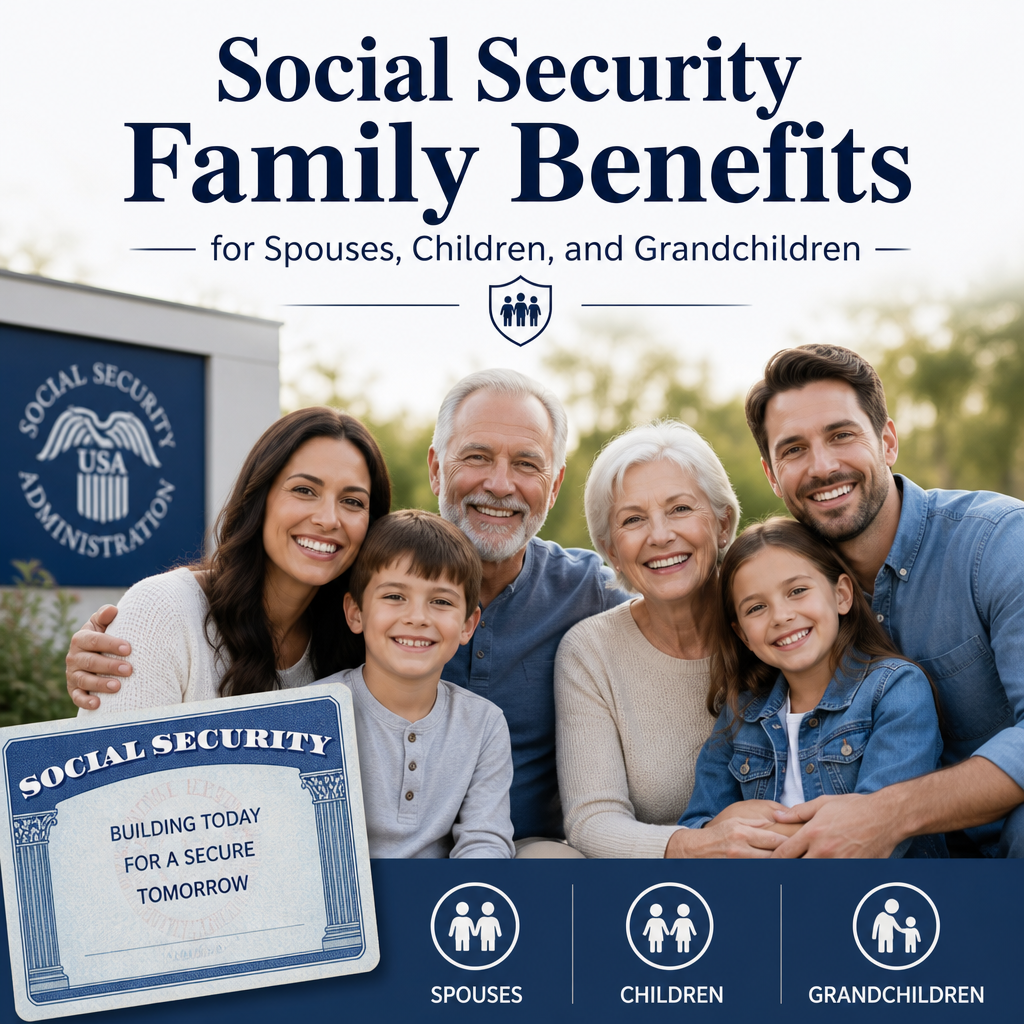
Social Security family benefits are monthly payments paid to eligible dependents of a worker who has earned enough Social Security credits. These benefits may be available when the worker:
- Retires
- Becomes disabled
- Dies
The benefit amount depends on the worker’s earnings history and the type of benefit involved. Family members do not receive separate benefits from their own contributions in these cases. Instead, their payments are based on the eligible worker’s record.
Anúncios
These benefits can help a family cover:
- Housing costs
- Food and basic living expenses
- School-related needs for children
- Ongoing care for dependents
Social Security Family Benefits for Spouses, Children, and Grandchildren
Understanding Social Security family benefits for spouses, children, and grandchildren starts with the idea that Social Security supports more than just the worker. In many households, one person’s earnings record can help protect the family if that person can no longer work or has passed away.
Benefits for a Spouse
A spouse may qualify for benefits based on the worker’s earnings record in several situations.
Retirement Benefits for a Spouse
A spouse may be eligible to receive spousal benefits once the worker begins collecting retirement benefits. In general, the spouse must be at least 62 to claim reduced benefits, unless they are caring for a qualifying child.
Benefits for a Surviving Spouse
If the worker dies, the surviving spouse may qualify for survivor benefits. These benefits can begin as early as age 60, or age 50 if the surviving spouse has a disability. A surviving spouse who is caring for the worker’s child and the child is under 16 or disabled may qualify at any age.
Important Factors for Spouses
Spousal and survivor benefits can depend on:
- The worker’s benefit status
- The spouse’s age
- Whether the spouse is caring for a child
- The spouse’s marital history in some situations
If you are remarried, divorced, or widowed, the rules may differ. It is often helpful to review your specific situation before filing.
Benefits for Children
Children can also qualify for Social Security family benefits if a parent is retired, disabled, or deceased.
Who Counts as a Child?
Social Security may recognize:
- Biological children
- Adopted children
- In some cases, stepchildren
- Dependent grandchildren in limited situations
Age Limits for Children
A child typically can receive benefits until age 18, or until age 19 if still attending elementary or secondary school full time. A child who becomes disabled before age 22 may also qualify as an adult disabled child.
When a Child May Qualify
A child may receive benefits if the parent:
- Retires
- Becomes disabled
- Dies
The child usually must be unmarried and dependent on the worker. Special rules can apply for adopted children or stepchildren, so documentation matters.
Benefits for Grandchildren
Grandchildren do not automatically qualify for Social Security benefits, but they may be eligible in certain circumstances. This is one of the least understood parts of Social Security family benefits for spouses, children, and grandchildren.
When a Grandchild May Qualify
A grandchild may qualify if:
- The child’s parent is deceased or disabled
- The grandparent is the legal guardian or the child lives with the grandparent and depends on them
- The grandchild meets Social Security dependency rules
Survivor Benefits for Grandchildren
In some cases, a grandchild may be eligible for survivor benefits on a grandparent’s work record if the grandchild was legally adopted by the grandparent or was dependent on them in a qualifying way.
Because grandchild eligibility can be complicated, families should verify the rules with Social Security before assuming a child is covered.

How Social Security Determines Eligibility
Eligibility depends on the type of benefit, the family relationship, and the worker’s record. Social Security looks at both legal and financial dependency.
Common Eligibility Requirements
To qualify, a family member usually must:
- Be related to the worker in a qualifying way
- Meet age, disability, or care requirements
- Be unmarried in some cases
- Show dependency when required
- File an application and provide proof documents
Work Credits and Earnings Records
The worker must have earned enough Social Security credits through work. The number of credits needed depends on the worker’s age and whether the benefit is retirement, disability, or survivor-based.
Family Maximum Benefit
There is a cap on the total amount that can be paid on one worker’s record. This is called the family maximum. If multiple family members qualify, their payments may be adjusted so the total does not exceed the limit.
Spousal Benefits: What You Should Know
Spousal benefits are often misunderstood. A spouse does not receive a full separate retirement benefit just by being married. Instead, the amount is generally based on the worker’s benefit record.
Can a Spouse Get More Than Half?
The maximum spousal benefit is generally up to half of the worker’s full retirement benefit if claimed at full retirement age. Claiming early can reduce the amount.
Divorced Spouses
A divorced spouse may qualify if:
- The marriage lasted at least 10 years
- The spouse is currently unmarried
- The ex-spouse is eligible for Social Security retirement or disability benefits
- The divorced spouse is at least 62
Importantly, one person claiming benefits usually does not reduce what the other spouse can receive if the rules are met.
Survivor Benefits for Widows and Widowers
Survivor benefits differ from spousal retirement benefits. A surviving spouse may receive a higher amount based on the deceased worker’s record, depending on timing and the worker’s benefit history. This can be an important income source for older adults after the loss of a partner.
Children’s Benefits: Practical Examples
Children’s benefits can be especially valuable when a parent can no longer provide income.
Example 1: Retired Parent
A retired worker begins receiving Social Security at age 67. Their 14-year-old child may also qualify for monthly benefits until the child turns 18, or 19 if still in school.
Example 2: Disabled Parent
A parent becomes disabled and receives Social Security Disability Insurance. Their dependent child may qualify as well, helping pay for school, clothing, and daily necessities.
Example 3: Deceased Parent
If a parent dies, an eligible child may receive survivor benefits. These payments can help the child’s guardian maintain financial stability.
These benefits do not replace parental income entirely, but they can make a major difference.
Grandchildren’s Benefits: When They Apply
Grandchildren’s benefits require closer review because the rules are not as straightforward as they are for spouses or children.
When a Grandchild May Be Considered a Dependent
A grandchild may qualify if the grandparent adopted the child or if the child became dependent on the grandparent before the grandparent became entitled to retirement or disability benefits or died.
Guardian and Custody Issues
If you are raising a grandchild, you may need to prove:
- Legal custody
- Residence in your home
- Financial support
- Parent-child relationship details
What Families Should Do
Because these claims can involve court records, birth certificates, and custody documents, it helps to gather paperwork early. Small documentation gaps can delay approval.
How to Apply for Social Security Family Benefits
Applying correctly can save time and reduce delays.
Steps to Apply
- Confirm which benefit applies: retirement, disability, or survivor
- Gather documents for each family member
- Contact Social Security to start the application
- Submit proof of age, identity, and relationship
- Follow up if additional evidence is requested
Common Documents You May Need
- Birth certificates
- Marriage certificate
- Divorce decree
- Death certificate
- Proof of school attendance
- Adoption records
- Custody or guardianship papers
- Social Security numbers
Where to Apply
You can apply online for some benefits, by phone, or in person at a Social Security office. Survivor benefits and certain dependent claims may require direct contact with the agency.
Common Mistakes to Avoid
Families often run into avoidable problems when applying for Social Security family benefits for spouses, children, and grandchildren.
Mistake 1: Assuming a Relationship Automatically Qualifies
Not every spouse, child, or grandchild is eligible. Social Security has specific definitions and dependency rules.
Mistake 2: Waiting Too Long to File
Some benefits are not paid retroactively for unlimited periods. Delays can reduce the amount a family receives.
Mistake 3: Missing Documentation
Incomplete records can slow approval. Always provide accurate paperwork and keep copies for your files.
Mistake 4: Confusing Different Benefit Types
Retirement, disability, and survivor benefits have different eligibility rules. A spouse who qualifies for one type may not qualify for another in the same way.
Mistake 5: Overlooking Child or Grandchild Eligibility
Families sometimes assume only a spouse can receive benefits. Children and grandchildren may also qualify if the rules are met.
Tips for Families Planning Ahead
A little planning can make the process much easier later.
Keep Records Organized
Store copies of:
- Vital records
- Marriage and divorce documents
- School enrollment letters
- Adoption or guardianship papers
- Medical records if disability is involved
Review Family Status After Major Life Events
Marriage, divorce, adoption, a new child, disability, or the death of a family member can all affect benefit rights.
Ask Questions Before You File
A Social Security representative can explain which benefits may apply and what documents are needed. This is especially important for blended families, stepchildren, and grandchildren.
Frequently Asked Questions
1. Can a spouse receive Social Security benefits even if they never worked?
Yes. A spouse may qualify for spousal or survivor benefits based on the worker’s record, even without enough work history of their own. The amount and eligibility depend on age, marital status, and whether the worker has filed for benefits or has died.
2. Do children automatically get benefits if a parent receives Social Security?
No. A child must meet Social Security’s rules for age, relationship, and dependency. If the parent is retired, disabled, or deceased, a qualifying child may be able to receive monthly benefits, but an application and proof documents are usually required.
3. Can a grandchild receive Social Security benefits from a grandparent?
In some cases, yes. A grandchild may qualify if they were dependent on the grandparent or were legally adopted by them, but the rules are strict. Custody, residence, and family relationship details can affect eligibility.
4. What happens if multiple family members qualify on one record?
Social Security applies a family maximum to the worker’s record. That means the total amount paid to all eligible family members may be limited, and individual benefits can be reduced if necessary to stay within that cap.
5. Does remarrying affect survivor benefits?
It can. For surviving spouses, remarriage before a certain age may affect eligibility. The rules can vary depending on age, disability status, and the type of benefit. It is best to review the timing of remarriage before filing a claim.
Official Resources
- Social Security Administration – Retirement Benefits
- Social Security Administration – Family Benefits
- Social Security Administration – Survivors Benefits
- Social Security Administration – Disability Benefits
- Medicare.gov – Social Security and Medicare
Conclusion
Social Security family benefits for spouses, children, and grandchildren can provide critical financial support when a household faces retirement, disability, or loss. These benefits are not automatic, and the rules can be complex, but understanding the basics gives families a better chance of getting the help they deserve. Spouses may qualify through retirement or survivor benefits, children may receive dependent benefits in qualifying situations, and grandchildren may be eligible in specific cases involving dependency, custody, or adoption.
The most important step is to confirm eligibility early and gather the right documents before filing. A careful application can reduce delays and prevent avoidable mistakes. If your family has experienced a major life change, now is a good time to review your Social Security options, check for possible dependent benefits, and make sure no one is left out of the process. Learning the rules today can help protect your family’s financial security tomorrow.