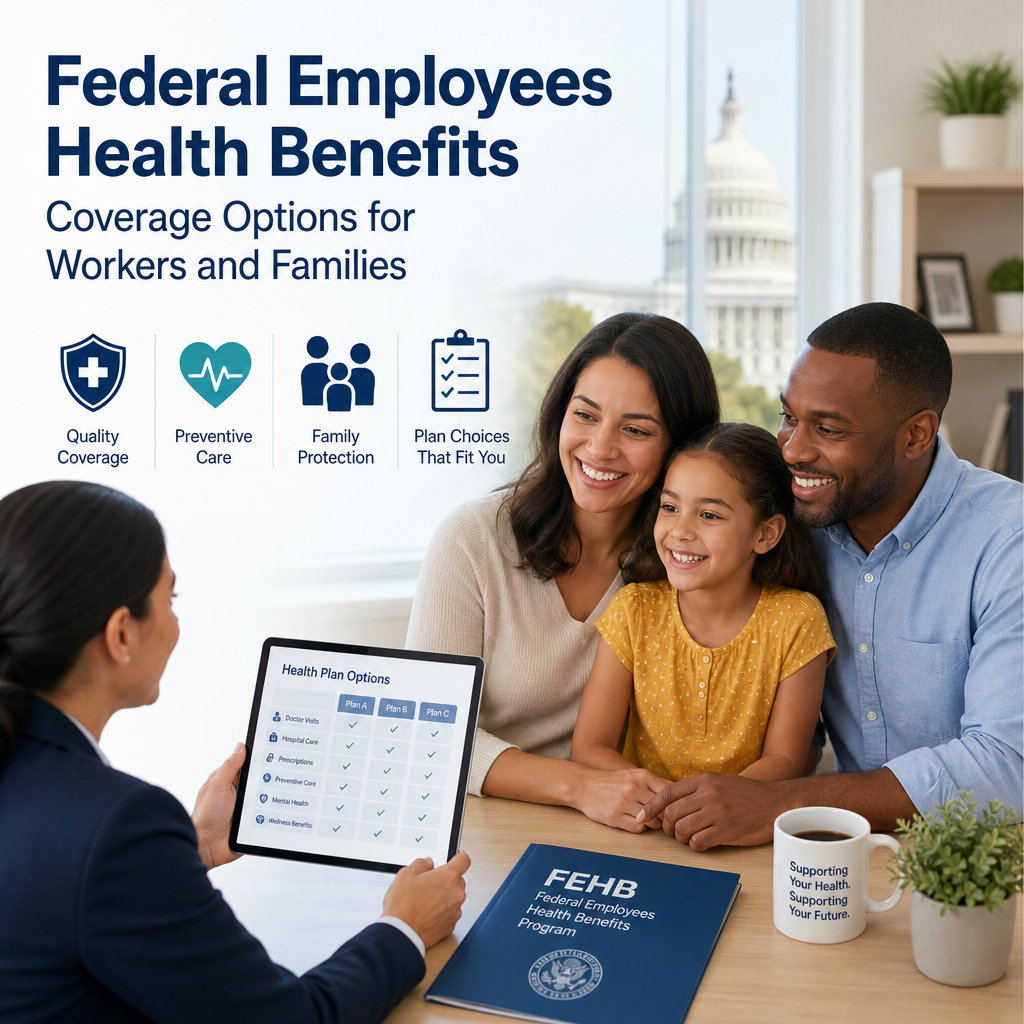
Federal Employees Health Benefits Coverage Options for Workers and Families
Federal Employees Health Benefits offers eligible federal workers, retirees, and families a wide range of health insurance options, making it easier to find coverage that fits both your needs and your budget. With choices for individuals, couples, and families, FEHB can provide dependable protection now and into retirement.
By: Emily Adams on August 3, 2026
Anúncios
Choosing a health plan is one of the most important benefits decisions federal workers make each year. The Federal Employees Health Benefits program, often called FEHB, gives eligible employees, retirees, and family members access to a wide range of health insurance options. If you understand how the program works, you can choose coverage that fits your budget, your medical needs, and your family’s situation.
This guide explains the basics of Federal Employees Health Benefits, the types of plans available, who can enroll, how family coverage works, and what to consider before you select a plan. Whether you are newly eligible or reviewing your options during Open Season, the goal is the same: make an informed decision with confidence.
Anúncios
What Is the Federal Employees Health Benefits Program?
The Federal Employees Health Benefits program is the federal government’s health insurance program for eligible civilian workers, annuitants, and their families. It offers a large selection of plans from private insurers, but the government helps pay a portion of the premium for many enrollees.
That contribution is one of the biggest advantages of the FEHB program. Instead of facing the full cost of a health insurance policy on your own, eligible federal employees typically share the premium with the government. That structure can make employer-sponsored coverage more affordable and predictable.
Anúncios
Why FEHB matters
FEHB stands out because it offers:
A broad choice of plan types
Nationwide and regional coverage options
Coverage that can continue into retirement for eligible employees
Access to individual, self plus one, and family enrollment
Dental and vision add-on options through separate programs
For many federal families, FEHB serves as the backbone of their health coverage strategy.
Who Is Eligible for Federal Employees Health Benefits?
Eligibility depends on employment status and, in some cases, retirement status. In general, most permanent federal employees can enroll in Federal Employees Health Benefits after meeting the program’s requirements.
Common eligible groups
You may be eligible if you are:
A full-time federal employee
A part-time employee with coverage eligibility
A temporary employee who meets the required service rules
A federal retiree who met coverage requirements before retirement
Certain surviving family members
Eligibility rules can vary depending on your agency, appointment type, and length of service. If you are unsure, check with your human resources office or the Office of Personnel Management (OPM).
Family members who may be covered
FEHB family coverage can include:
A spouse
Eligible children under program rules
In some cases, children over age 22 who are incapable of self-support due to a disability
Because family definitions can be specific, it is important to confirm eligibility before enrolling. A child who qualifies under one federal benefit program may not automatically qualify under another.
Federal Employees Health Benefits Coverage Options
One of the biggest strengths of the Federal Employees Health Benefits program is choice. Employees can compare multiple carriers and plan designs, which helps them choose a balance between monthly premiums and out-of-pocket costs.
Health Maintenance Organization (HMO) plans
HMO plans usually require members to use in-network providers, except in emergencies. They often work best for people who want:
Lower out-of-pocket costs
Coordinated care through a primary care provider
Predictable coverage for routine visits and preventive care
HMO plans can be a strong option for families who live in a service area with a broad provider network.
Preferred Provider Organization (PPO) plans
PPO plans generally offer more flexibility. You can see in-network or out-of-network providers, although you usually pay less when you stay in network. PPO plans may be a better fit if you:
Want more provider choice
Travel frequently
Already have doctors you want to keep
Prefer flexibility over the lowest possible premium
Fee-for-Service plans
Fee-for-Service plans, sometimes called indemnity plans, give members the ability to receive care from a wide range of providers. These plans can be appealing if you want less network restriction, though costs may differ depending on the plan’s structure.
High Deductible Health Plans (HDHPs)
A High Deductible Health Plan can be attractive for federal employees who want lower premiums and are comfortable paying more out of pocket before coverage fully kicks in. Many HDHPs also pair with a Health Savings Account (HSA), which can provide tax advantages.
HDHPs may work well for people who:
Have relatively low medical usage
Want to save for future health expenses
Value lower monthly premium costs
Consumer-driven health options
Some Federal Employees Health Benefits plans are designed around consumer-driven structures, such as Health Reimbursement Arrangements (HRAs) or HSAs. These plans encourage enrollees to take a more active role in managing health spending.
How Family Coverage Works Under FEHB
Family coverage is a major reason many workers enroll in FEHB. The program offers enrollment options that can cover just the employee, the employee plus one eligible family member, or the full family.
Enrollment types
Common enrollment types include:
Self Only
Covers only the enrolled employee or retiree.
Self Plus One
Covers the enrollee and one eligible family member.
Self and Family
Covers the enrollee and all eligible family members.
Choosing the right enrollment type matters. For example, if you have a spouse and two children, self plus one will not be enough. On the other hand, if you and one eligible dependent are the only people who need coverage, self plus one may be more cost-effective than full family enrollment.
What family members should consider
When evaluating family coverage, think about:
Pediatric care needs
Specialist visits
Prescription drug usage
Mental health services
Annual deductibles and copays
Whether your preferred doctors are in network
A family with ongoing medical needs may benefit more from a plan with a higher premium but lower out-of-pocket costs. A healthier family may prefer a lower premium and accept a higher deductible.
Comparing FEHB Plans: What to Look For
The best Federal Employees Health Benefits plan is not always the cheapest one. The right choice depends on how you use health care and what risks you want to manage.
Key factors to compare
1. Premiums
Monthly premium costs affect your take-home pay. Lower premiums can be appealing, but they do not tell the full story.
2. Deductibles
A deductible is the amount you pay before the plan begins covering many services. Higher deductibles usually come with lower monthly premiums.
3. Copayments and coinsurance
These are your share of the costs when you get care. Look closely at office visits, specialist care, urgent care, hospital services, and prescriptions.
4. Provider networks
Make sure your doctors, hospitals, and pharmacies are included in the plan’s network. If you have a preferred pediatrician or specialist, this can be a deciding factor.
5. Prescription drug coverage
Drug coverage can vary substantially across FEHB plans. Review formularies, tiers, prior authorization requirements, and mail-order options.
6. Out-of-pocket maximums
The out-of-pocket maximum is the most you will pay for covered services in a plan year. This is especially important for families with chronic conditions or major health events.
Practical example
Suppose you are comparing two plans:
Plan A has a lower premium but a higher deductible and higher copays.
Plan B has a higher premium but lower costs when you visit doctors or fill prescriptions.
If your family visits doctors often, Plan B may save you money overall. If you rarely use care, Plan A might make more sense. The “best” plan depends on expected usage, not just the monthly price tag.
FEHB and Retirement: Why It’s Important to Plan Ahead
For eligible employees, one of the most valuable features of Federal Employees Health Benefits is the possibility of continuing coverage into retirement. That continuity can provide peace of mind, especially when medical needs tend to increase later in life.
Why retirement planning matters
FEHB can be a crucial part of your retirement strategy because it may allow you to keep group health coverage after you stop working. However, retirement continuation is not automatic for every worker. You generally need to meet specific service and enrollment requirements.
That is why it makes sense to:
Review your eligibility well before retirement
Keep your enrollment records current
Understand how premiums will be paid in retirement
Compare FEHB with other coverage options you may have
If you are approaching retirement, consider speaking with a benefits specialist to confirm your long-term coverage path.
How to Enroll or Make Changes
Most federal employees enroll during their initial eligibility period or during Open Season, the annual time when workers can change coverage.
Common enrollment windows
You may be able to change your coverage when:
You first become eligible
During the annual Open Season
After a qualifying life event, such as marriage or birth of a child
When changing employment status in ways that affect benefits
Tips for making a good choice
Before enrolling or changing plans:
Review your current medical usage.
List your regular prescriptions.
Confirm provider network participation.
Compare premium and out-of-pocket costs.
Check family eligibility carefully.
Look at how the plan handles out-of-area care.
A little preparation can prevent expensive surprises later.
Common Mistakes Federal Employees Make
Even experienced employees sometimes rush through benefits decisions. Avoid these common errors when reviewing Federal Employees Health Benefits options:
Choosing a plan based only on the premium
Forgetting to check whether doctors are in network
Overlooking prescription formulary differences
Assuming family members are automatically eligible
Missing enrollment deadlines
Failing to compare annual out-of-pocket exposure
A plan that looks inexpensive upfront can become costly if it does not match your actual health care use.
Tips for Choosing the Right FEHB Plan
Here are a few practical strategies that can help you narrow the field:
Start with your care pattern. Do you go to the doctor often, or only for preventive visits?
Check the network first. Keeping your preferred providers can save time and money.
Review prescription needs. Especially important if anyone in your household takes maintenance medications.
Think ahead. A pregnancy, surgery, or new diagnosis can change what “best” coverage means.
Use official plan comparison tools. These tools help you evaluate benefits side by side.
When you focus on how your family actually uses health care, the decision becomes much easier.
Frequently Asked Questions
1. What is the Federal Employees Health Benefits program?
The Federal Employees Health Benefits program is the federal health insurance system for eligible employees, retirees, and family members. It offers a variety of private insurance plans with government contributions toward premiums for many enrollees.
2. Can my spouse and children be covered under FEHB?
Yes, eligible family members may include a spouse and qualifying children. In some cases, disabled adult children may also remain eligible. You should always verify dependent eligibility rules before enrolling.
3. What is the difference between self only, self plus one, and self and family?
Self only covers one person. Self plus one covers the enrollee and one eligible family member. Self and family covers the enrollee and all eligible dependents. The right option depends on how many people need coverage.
4. Are FEHB plans available after retirement?
For many federal employees who meet the service and enrollment requirements, FEHB coverage can continue into retirement. This is one reason the program is especially valuable for long-term planning.
5. How do I compare FEHB plans effectively?
Compare premiums, deductibles, copays, out-of-pocket maximums, provider networks, and prescription coverage. The best plan is usually the one that matches your family’s actual medical needs, not just the lowest monthly premium.
The Federal Employees Health Benefits program gives eligible workers and families a strong range of coverage choices, but the best option depends on your health needs, provider preferences, and budget. By comparing plan types, reviewing networks, checking prescription coverage, and thinking ahead to retirement, you can choose benefits that support both your daily life and your long-term financial health.
For many federal employees, FEHB is more than just insurance. It is a flexible system that can protect your family, support preventive care, and provide a valuable bridge into retirement. The key is to approach the decision with a clear understanding of what each plan offers and how your household actually uses medical care.
Take time to review your options during Open Season, ask questions when something is unclear, and use official resources to confirm details. A thoughtful choice today can help you avoid unnecessary costs and gain more confidence in your coverage tomorrow.
Emily A, holds a Master's degree in Public Administration (MPA) and has over 7 years of experience researching federal and state assistance programs. She writes educational content focused on government benefits, public policy, and community resources, using information from official agencies to help readers understand available programs and eligibility requirements.