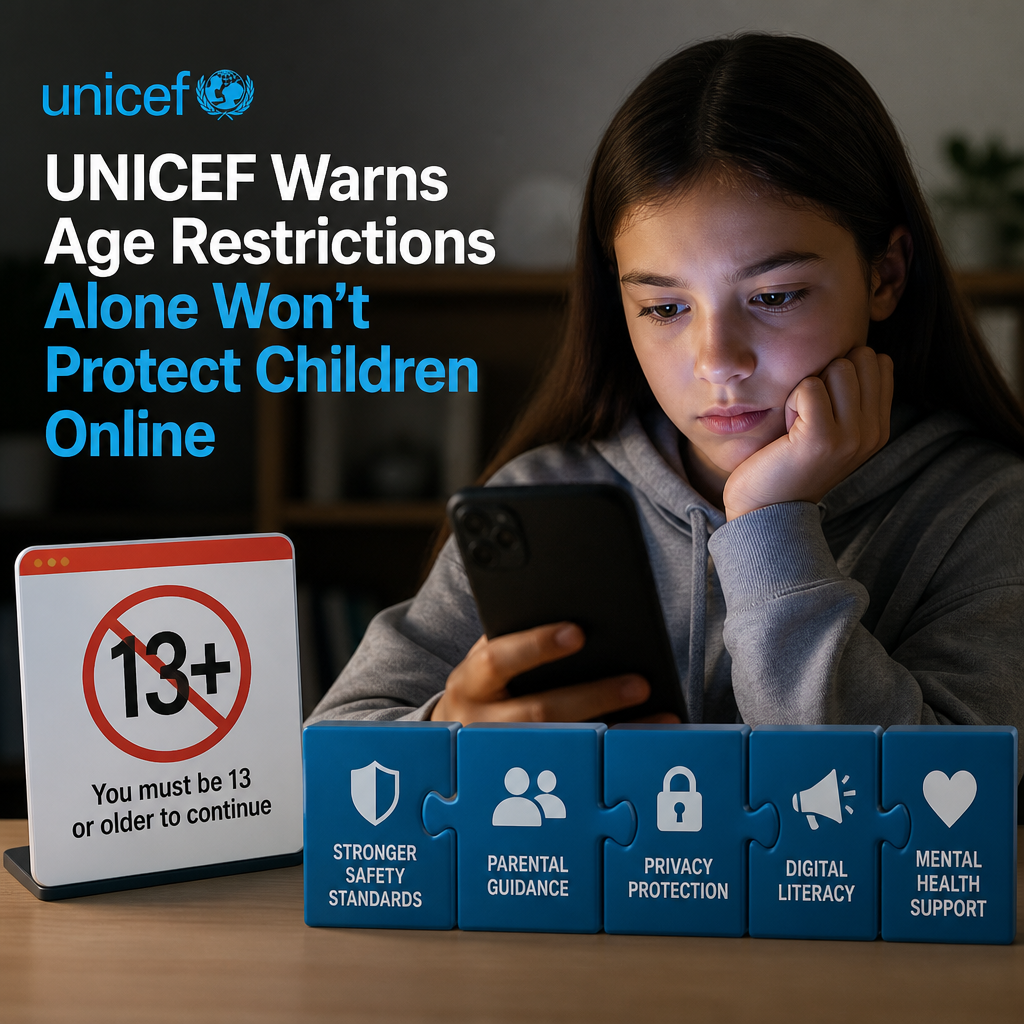
UNICEF Warns Age Restrictions Alone Won’t Protect Children Online
UNICEF says online child safety cannot depend on age checks alone, because kids can bypass them and still face harm from bullying, grooming, and harmful content. Real protection means safer platform design, stronger safeguards, and shared responsibility from tech companies, parents, and policymakers.
By: Peter on August 3, 2026
Anúncios
UNICEF’s warning about online child safety cuts through a lot of the noise around digital regulation: age restrictions alone will not keep children safe online. That message matters because many parents, educators, and policymakers look for a simple fix—an age gate, a birthdate check, a “kids under 13 not allowed” rule. But the internet is more complicated than that. Children can lie about their age, platforms can struggle to verify identity, and harmful content does not always wait behind a formal age threshold.
The reality is that children need layered protection. Strong safety settings, better platform design, parental guidance, digital literacy, and meaningful accountability from tech companies all play a role. UNICEF’s position reflects a broader truth: online child safety requires more than blocking access. It requires building safer spaces from the start.
Anúncios
Why UNICEF Says Age Restrictions Alone Are Not Enough
At first glance, age limits seem logical. If a platform says children must be 13 or older, then younger children should not be there. In practice, that approach leaves major gaps.
Children can easily bypass age checks
Most online age screens rely on self-reported birthdays. That means a child can often enter any date and move on. Even stricter systems can be imperfect if they focus only on verifying age at signup instead of reducing risk across the whole platform.
Anúncios
Harm is not limited to younger children
A 13-year-old may still be vulnerable to:
grooming and predatory contact
cyberbullying
self-harm or eating-disorder content
manipulative advertising
privacy exploitation
addictive design and excessive screen time
So the issue is not just whether a child is “old enough” to join. It is whether the online environment is safe, age-appropriate, and designed with children’s development in mind.
Age gates can create a false sense of security
When adults assume a platform is “safe because it has an age limit,” they may stop paying attention to other risks. That can be dangerous. A child who technically meets the minimum age can still be exposed to harmful content, strangers, or manipulative features.
The Real Problem: Online Safety Needs a Layered Approach
UNICEF’s warning points to a more effective model: child online safety must be layered. No single measure works on its own. Protection should combine technology, policy, family support, and education.
1. Safer platform design
Companies should reduce risk by design, not just react after harm occurs. That can include:
private-by-default settings for younger users
limits on direct messaging from strangers
stronger moderation of harmful content
easier reporting tools
controls on recommendations and autoplay
clear age-appropriate experiences
2. Better age assurance, not just age gates
Age assurance is broader than asking for a birthday. It can include methods to estimate or verify age more responsibly, while still protecting privacy. The goal should be to avoid unnecessary data collection and reduce exposure to inappropriate features.
3. Parent and caregiver involvement
Parents do not need to be tech experts, but they do need practical tools. That includes:
family safety settings
screen time management
content filters
device supervision options
conversation starters about online behavior
4. Digital literacy for children
Children need age-appropriate guidance on how to navigate the internet safely. That means teaching them to:
recognize scams and grooming
protect personal information
report uncomfortable interactions
think critically about content
understand that not everything online is trustworthy
5. Strong accountability and regulation
Platforms should be expected to meet clear safety standards. Voluntary promises are not enough if harmful content continues to spread. Regulation can help set baseline expectations for privacy, design, and child protection.
What Makes Children Vulnerable Online?
Children are not just smaller adults. Their judgment, impulse control, and social awareness are still developing. Online environments can take advantage of that.
Design features can encourage risky behavior
Many apps and games are built to maximize time on platform. Features like endless scrolling, streaks, push notifications, and algorithmic recommendations can keep children engaged longer than intended. That may increase exposure to content or contact that is not age-appropriate.
Children may not recognize manipulation
A child may not realize when:
a “friend” is actually a stranger
a product recommendation is influenced by advertising
a challenge trend is dangerous
a message is meant to pressure or isolate them
Privacy risks are often invisible
Children may share photos, school names, locations, or routines without understanding the consequences. Age restrictions do nothing to prevent a platform from collecting too much data or showing that data in risky ways.
Why Parents Should Not Rely on Age Restrictions Alone
Many families assume that if their child is under a certain age, the platform will simply keep them out. That assumption is risky. Even if a platform has age rules, children may still encounter it through friends, shared devices, or unofficial accounts.
Practical steps parents can take
Parents can create a much safer environment by combining rules with active support:
Set device and app controls
Use built-in parental controls.
Restrict app downloads and in-app purchases.
Turn on content filters where appropriate.
Review privacy settings together
Make profiles private when possible.
Limit who can message or comment.
Disable location sharing unless needed.
Talk often, not just once
Ask what apps they use and why.
Discuss what to do if someone makes them uncomfortable.
Keep the tone calm and open so they will come forward.
Check for age-appropriate features
Not all “kids” features are equally safe.
Review whether games, chats, or recommendations are truly suitable.
Model healthy digital habits
Children notice how adults use screens, respond to notifications, and talk about online life.
What Schools and Educators Can Do
Schools are often where children first learn structured digital behavior. They can reinforce safe habits that age restrictions cannot provide.
Teach media and digital literacy
Students should learn how online platforms work, including:
why algorithms recommend certain content
how ads follow users around
why privacy settings matter
how to identify misinformation
how to seek help when something feels wrong
Create clear reporting pathways
Children need to know whom to tell if they encounter:
bullying
harassment
sexualized messages
impersonation
disturbing content
A school policy only works if students trust the adults enforcing it.
Include families in the conversation
Workshops, newsletters, or family nights can help caregivers understand current risks and available tools. When schools and homes reinforce the same safety messages, children are more likely to remember and use them.
What Platforms Should Do Instead of Just Setting Age Limits
If UNICEF’s warning is taken seriously, online platforms must move beyond compliance theater. A birthdate field is not a child safety strategy.
Build age-appropriate experiences
This means designing different levels of access based on developmental needs. A younger user should not see the same default features as an older teen or adult.
Limit harmful recommendations
Recommendation systems can amplify content that is sensational, extreme, or emotionally intense. For children, that can be especially harmful. Platforms should tune algorithms to reduce the risk of pushing harmful material into feeds.
Improve moderation and response
Children should be able to report problems easily and get timely help. Moderation teams need training on child safety issues, including grooming patterns and exploitative behavior.
Reduce data collection
The less personal data collected from children, the lower the risk of misuse. Privacy by design is a child safety measure, not just a compliance issue.
A Better Definition of Online Safety
Too often, people define safety as “keeping children out.” UNICEF’s warning encourages a better definition: keeping children safe while they are online.
That distinction matters.
A child may need to use the internet for school, communication, creativity, and entertainment. Safety should not mean locking them away from the digital world. It should mean helping them use it with confidence and protection.
The best outcomes come from shared responsibility
Governments set standards and enforce them.
Companies design safer systems.
Parents and caregivers guide and supervise.
Schools build literacy and awareness.
Children learn how to protect themselves with support.
This shared model is much stronger than relying on age restrictions alone.
Practical Examples of What Works
Here are a few realistic scenarios that show why layered protection matters.
Example 1: A messaging app
An app may require users to be 13+, but a younger child can still join with a fake birthdate. What helps more?
limiting messages from strangers
defaulting to private accounts
flagging suspicious contact patterns
giving parents supervision tools
Example 2: A video platform
A platform may block underage sign-ups, but a teen can still get recommendations for harmful content. Better safeguards include:
stricter recommendation controls
content labeling
stronger moderation of borderline material
easy ways to reset or adjust a feed
Example 3: An online game
A game may be “for teens,” but it can still expose children to chat harassment or in-app purchases. Safer design would include:
chat restrictions
spending limits
reporting tools
clearer age-appropriate defaults
How Families Can Start Today
If you are a parent or caregiver, you do not need to fix everything at once. Start with a few practical steps:
review the apps your child uses most
check privacy and messaging settings
talk about who they can trust online
make a plan for what to do if something upsetting happens
revisit the conversation regularly
Small, steady conversations are often more effective than a single big lecture.
Frequently Asked Questions
1. Why does UNICEF say age restrictions alone are not enough?
Because children can often bypass age checks, and harmful content, contact, and design features can still affect users who meet the minimum age. Safety requires more than a signup rule.
2. What is the difference between age verification and age assurance?
Age verification tries to confirm a person’s age more directly, while age assurance is a broader approach that may use different methods to estimate or confirm age while balancing privacy and safety.
3. How can parents protect children online without banning the internet?
Use parental controls, review privacy settings, limit stranger contact, talk openly about risks, and teach children how to report uncomfortable situations. The goal is guided use, not total restriction.
4. What features make online platforms safer for children?
Helpful features include private-by-default accounts, strong moderation, limited direct messaging, age-appropriate recommendations, simple reporting tools, and reduced data collection.
5. Should schools teach online safety even if parents manage device settings?
Yes. Schools can teach digital literacy, critical thinking, and safe online behavior. Children need consistent messages from both home and school to build healthy habits.
UNICEF’s warning is an important reminder that online child safety cannot depend on age restrictions alone. A date of birth box, a minimum age rule, or a platform label may help at the margins, but none of those measures can fully protect children from harmful content, manipulative design, predatory contact, or privacy risks.
Real protection takes a layered approach. Platforms must design safer experiences, reduce risky recommendations, and limit unnecessary data collection. Parents and caregivers need practical tools and honest conversations. Schools can strengthen digital literacy and help children recognize danger. Policymakers can set standards that require meaningful accountability instead of symbolic compliance.
The key takeaway is simple: children do not just need to be kept out of unsafe digital spaces—they need safer digital spaces in the first place. If we treat online safety as a shared responsibility, we can do far more than enforce age limits. We can build an internet where children are better protected, better supported, and better prepared to navigate the world online.
Peter B holds a degree in Journalism and has 5 years of experience covering U.S. economic policy, labor markets, and financial news. He writes data-driven news content on topics like inflation, interest rates, and employment trends.