Government Benefit Finder: Discover Programs You May Qualify For
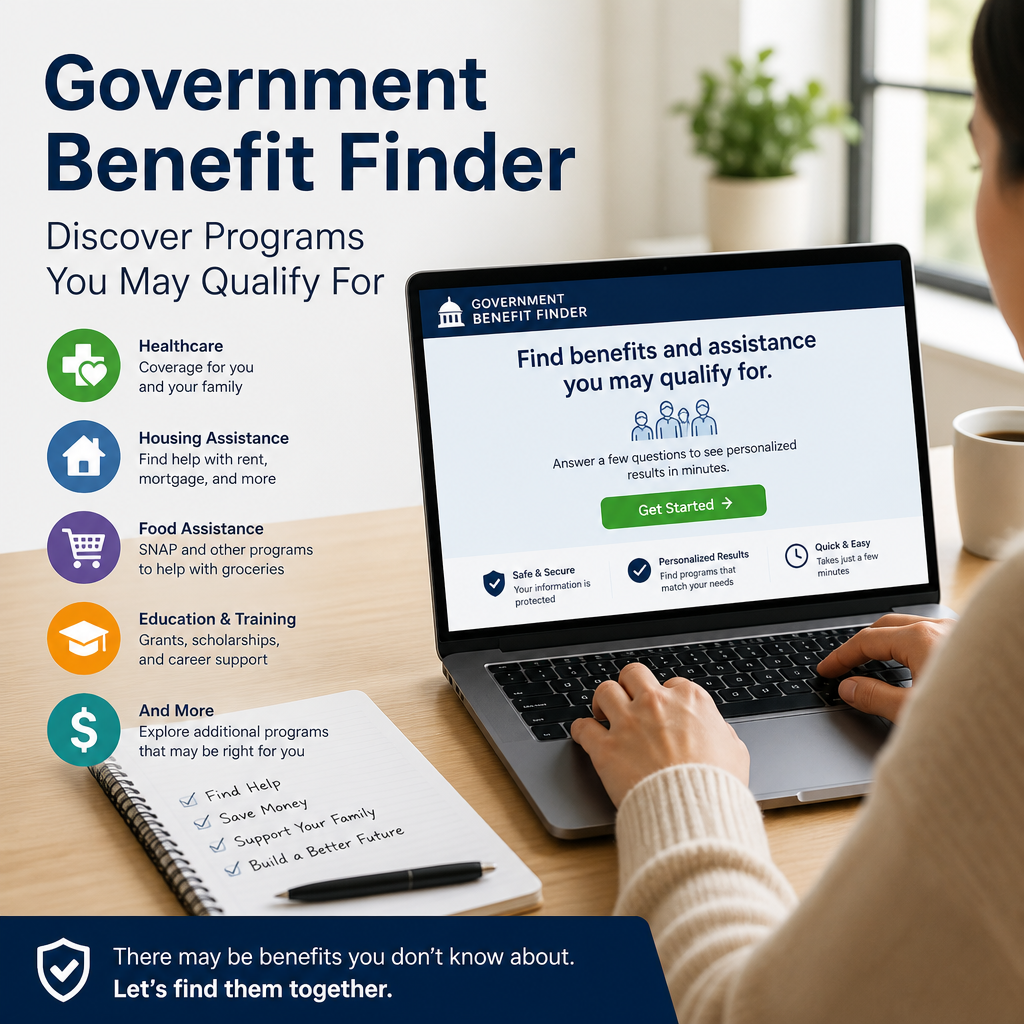
A government benefit finder can quickly match your situation with programs you may qualify for, helping you uncover support for food, health care, housing, taxes, and more. By answering a few simple questions, you can save time and avoid missing benefits that could make a real difference.
By: Emily Adams on August 3, 2026
Anúncios
Many people miss out on helpful support simply because they do not know where to look. A government benefit finder can simplify that search by matching your situation with programs you may qualify for, from food assistance and health coverage to housing help, tax credits, and energy savings programs. If you have ever wondered whether you are leaving money or services on the table, you are not alone.
The good news is that benefit finders are designed to make the process easier. Instead of digging through dozens of government websites, you answer a few questions about your household, income, age, location, or military status, and the tool points you toward likely options. Used well, a government benefit finder can save time, reduce confusion, and help you identify support you might otherwise overlook.
Anúncios
What Is a Government Benefit Finder?
A government benefit finder is an online screening tool that helps people discover public assistance programs they may be eligible for. These tools are often run by federal, state, or local agencies, as well as trusted nonprofit organizations.
They typically ask for basic information such as:
Anúncios
Household size
Income
Zip code or state
Age
Disability status
Veteran status
Employment situation
Family composition
After you enter the information, the tool generates a list of potential programs, eligibility guidelines, and next steps for applying.
Why benefit finders matter
Government programs are often spread across multiple agencies and departments. One tool may help you find:
SNAP food assistance
Medicaid or CHIP health coverage
Housing vouchers or rental aid
Utility bill assistance
Child care support
Unemployment benefits
Tax credits like the Earned Income Tax Credit
Education grants or student aid
For many households, even one program can make a meaningful difference. A benefit finder helps you identify those opportunities faster.
How a Government Benefit Finder Works
Most government benefit finders follow the same basic process, even if the layout differs.
1. You enter personal and household details
The tool may ask for non-sensitive information first, such as your state, number of people in your home, and general income range. Some tools also ask about age, pregnancy, disability, or whether you serve in the military.
2. It compares your answers with program rules
Each benefit program has its own eligibility requirements. A benefit finder uses your responses to screen for programs that may fit your situation.
3. It gives you a personalized list
You may receive a list of programs with:
A brief description
Eligibility notes
Application links
Contact information
Documents you may need
4. You decide what to apply for
A benefit finder is not the final decision-maker. It is a starting point. The official agency reviews your application and determines whether you qualify.
Why You Should Use a Government Benefit Finder
A benefit finder can be especially helpful if your finances or family situation have changed. For example:
You lost a job
Your income dropped
You had a baby
You moved to a new state
You care for an older adult or child with special needs
You are paying higher utility or housing costs
Common benefits people overlook
Many people think government support only applies to extreme hardship, but that is not always true. You may qualify for programs even if you work, own a home, or have some savings.
Some commonly overlooked options include:
Child tax credits
Energy assistance
School meal programs
Prescription assistance
Transportation support
Veteran and caregiver benefits
A government benefit finder helps reveal these less obvious programs.
Best Ways to Search for Benefits
If you want accurate results, use trusted tools and official sources. Not all websites are equal, and some third-party sites may try to collect your information for marketing purposes.
Start with official government websites
Official federal, state, and local websites are usually the most reliable. They are updated more often and provide application links directly from the agency that runs the program.
Use multiple tools if needed
One benefit finder may not include every local program. If you live in a large city or a state with many agencies, consider using:
A federal benefits screening tool
Your state’s benefits portal
A local 211 directory
County or city human services websites
Review eligibility carefully
A program may appear in your results, but you still need to confirm the rules. Check details like:
Income limits
Residency requirements
Age restrictions
Citizenship or immigration status rules
Work or school requirements
Deadlines and recertification rules
What Information You Should Gather Before Using a Benefit Finder
Having your information ready makes the screening process faster and more accurate. Before you start, gather:
Approximate monthly or yearly household income
Number of people in your household
Dates of birth for household members
Your zip code or address
Information about rent, mortgage, or utility costs
Any current benefits you receive
Disability, veteran, or student status, if applicable
Keep documents nearby
You may not need to upload documents during the first screening, but it helps to have them ready for applications later. Common documents include:
Photo ID
Social Security numbers, if required
Pay stubs or tax returns
Lease or mortgage statements
Utility bills
Proof of residency
Birth certificates for children
Medical records for certain programs
Types of Programs a Government Benefit Finder Can Help You Discover
A government benefit finder is useful because it can uncover several categories of assistance at once.
Food and nutrition support
These programs help households buy groceries or feed children. Examples include SNAP, WIC, and school meal programs.
Health coverage
Depending on your location and situation, you may qualify for Medicaid, CHIP, Medicare Savings Programs, or other health-related assistance.
Housing help
Housing programs may include emergency shelter referrals, rental assistance, housing vouchers, or home repair support.
Utility and energy assistance
These programs can help with heating, cooling, and electricity bills. Some states also offer weatherization services to improve home efficiency.
Tax credits and financial support
Benefit finders may point you toward tax credits that lower what you owe or increase your refund, such as the Earned Income Tax Credit.
Child care and family services
Parents may find help with child care subsidies, early learning programs, or family support services.
Education and training
Students and workers may qualify for grants, tuition assistance, job training, or apprenticeship support.
Disability, aging, and caregiver programs
Some programs help with in-home care, transportation, assistive devices, and support for older adults or people with disabilities.
How to Use a Benefit Finder Effectively
The more accurate your answers, the better your results. A rushed screening can miss programs you qualify for.
Be honest and specific
Do not round income down or leave out household members to improve your odds. The tool works best when your information is accurate.
Try different household scenarios
If you are unsure how to define your household for a program, try reviewing the official guidance. Rules can differ between tax benefits, health coverage, and housing assistance.
Look beyond federal programs
Some of the best support comes from state or local sources. Your city or county may offer:
Emergency rent help
Food pantries
Transportation passes
School-related support
Small utility grants
Recheck after major life changes
Eligibility can change if:
Your income changes
Someone moves in or out
You have a child
You retire
You become disabled
You lose employer health coverage
A benefit finder is worth using again after a major life event.
Common Mistakes to Avoid
Even a helpful tool can lead to confusion if you use it carelessly.
Ignoring local programs
Some people search only federal sites and miss city or county resources. Local agencies often administer fast, practical aid.
Assuming you earn too much
Program thresholds vary. A household that does not qualify for one benefit may still qualify for another.
Not reading the fine print
A result list is not an approval notice. You still need to check official requirements and deadlines.
Applying too late
Some assistance programs fill quickly or have seasonal windows. If you think you may qualify, apply sooner rather than later.
Using untrusted websites
If a website asks for too much personal information before showing results, be cautious. Stick to recognized government or nonprofit sources.
Tips for a Better Benefit Search
Here are a few practical ways to improve your results:
Use your current income, not last year’s, if the tool asks for monthly income.
Search by state and zip code to find local programs.
Check more than one benefit finder if your situation is complex.
Save screenshots or notes of possible programs.
Follow up directly with the agency if eligibility is unclear.
If you are helping someone else, such as a parent or client, make sure you have permission before entering private information.
When to Ask for Help
A government benefit finder is a strong first step, but some situations require extra guidance.
You may want help if:
Your household includes mixed immigration statuses
You care for a disabled adult or child
You are unhoused or at risk of eviction
You recently experienced domestic violence
You are applying for multiple benefits at once
You have trouble understanding program rules
In these cases, a local social worker, case manager, legal aid office, or community organization can help interpret requirements and complete applications.
Frequently Asked Questions
1. What is the purpose of a government benefit finder?
A government benefit finder helps people identify public assistance programs they may qualify for based on their personal and household information. It acts as a screening tool, not a final decision-maker. The main purpose is to make the search process faster and easier so you can find benefits such as food aid, health coverage, housing support, and tax credits.
2. Is a government benefit finder free to use?
Yes, official government benefit finders are typically free. Many nonprofit screening tools are also free. Be cautious with commercial websites that may ask for payment, collect your data for marketing, or redirect you to unrelated offers. If a site feels suspicious, use a trusted government source instead.
3. Will using a benefit finder affect my eligibility or application?
No, simply using a benefit finder does not affect your eligibility. It is only a screening tool. Your actual eligibility is determined when you apply through the official agency and submit required documents. Be sure to provide accurate information during the screening process so the results are useful.
4. What if the benefit finder says I may not qualify?
If a tool says you may not qualify, do not stop your search immediately. Benefit rules can be complicated, and some tools use broad estimates. You may still qualify for local programs, emergency assistance, or a different benefit category. You can also check official program pages or contact an agency directly to confirm.
5. How often should I check a government benefit finder?
Check again whenever your situation changes. A new job, income drop, move, pregnancy, retirement, disability, or household change can affect eligibility. It is also smart to recheck periodically, since program rules and funding can change over time.
Official Resources
Benefits.gov — Official federal benefit screening tool for many U.S. government programs.
USA.gov Benefits — General federal benefits information and links to official resources.
Healthcare.gov — Official source for health insurance options and coverage information.
211.org — National directory connecting people to local assistance and community services.
A government benefit finder can be one of the most practical tools available when money is tight, your household has changed, or you simply want to make sure you are not missing out on support. Instead of searching program by program, a benefit finder helps narrow the list and points you toward assistance that may fit your situation.
The key is to use trusted sources, answer questions honestly, and follow up with the official agency for final eligibility. Even if you think you may not qualify, it is worth checking again after a life change, since many programs are based on household size, income, location, and specific needs. The right benefit can ease pressure on your budget, improve access to essentials, and connect you with services that make daily life more manageable.
Take a few minutes to explore a reliable benefit finder and review both federal and local options. A short search today could uncover support that makes a real difference tomorrow.
Emily A, holds a Master's degree in Public Administration (MPA) and has over 7 years of experience researching federal and state assistance programs. She writes educational content focused on government benefits, public policy, and community resources, using information from official agencies to help readers understand available programs and eligibility requirements.