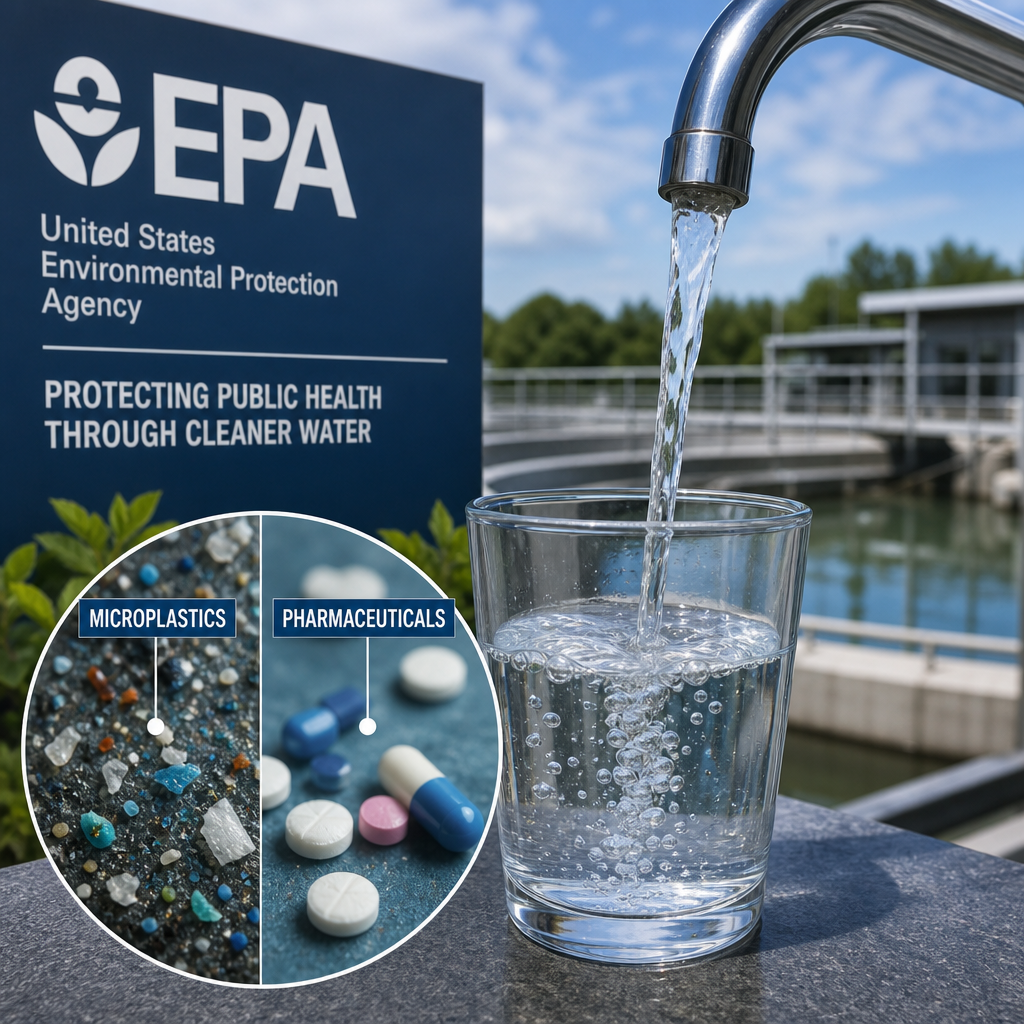
EPA Targets Microplastics and Pharmaceuticals in Drinking Water
Microplastics in drinking water are drawing new attention as the EPA pushes to better understand and manage these tiny contaminants alongside trace pharmaceuticals. For homeowners and utilities alike, the bigger story is how water quality standards and treatment methods may need to evolve to keep pace.
By: Peter on August 3, 2026
Anúncios
Microplastics and pharmaceuticals in drinking water have moved from a niche environmental concern to a mainstream public health and infrastructure issue. The EPA targets microplastics and pharmaceuticals in drinking water because these contaminants are showing up more often in source water, treatment systems, and public conversations about what “safe” water really means. For homeowners, utilities, and businesses, the issue is no longer just about what comes out of the tap today—it’s also about how water quality standards, treatment technology, and testing practices may evolve in the years ahead.
While the science is still developing, one thing is clear: water systems are under growing pressure to address a wider range of contaminants than ever before. That includes tiny plastic particles, hormone-disrupting compounds, pain relievers, antibiotics, and other trace chemicals that can enter waterways through everyday human activity. Understanding what the EPA is doing, why it matters, and how communities can respond helps separate real risk from hype.
Anúncios
Why the EPA Targets Microplastics and Pharmaceuticals in Drinking Water
The EPA targets microplastics and pharmaceuticals in drinking water because both categories raise questions about long-term exposure, environmental persistence, and treatment effectiveness. These contaminants can enter water supplies through wastewater, industrial discharge, landfill runoff, stormwater, agricultural activity, and household waste.
Microplastics are widespread and difficult to remove
Microplastics are extremely small plastic particles, often less than 5 millimeters in size. They can come from:
Anúncios
Breakdown of larger plastic products
Synthetic fibers shed from clothing
Tire wear particles washed into storm drains
Microbeads from some personal care products
Industrial plastic pellets
Because they are so small, microplastics can pass through many conventional filtration barriers and travel far through rivers, lakes, and drinking water systems. That does not automatically mean they pose an immediate health crisis, but it does make them difficult to monitor and control.
Pharmaceuticals can enter water through normal use
Pharmaceuticals show up in water when people take medications and excrete unused compounds, when unused medicines are flushed or thrown away improperly, and when wastewater treatment systems receive trace residues they were not originally designed to fully remove. Common categories include:
Antibiotics
Pain relievers
Antidepressants
Hormones
Anticonvulsants
Blood pressure medications
The concern is not that drinking water contains a full dose of these drugs. Rather, the issue is chronic low-level exposure, combined effects, and the challenge of understanding how mixtures behave over time.
What the EPA Is Actually Doing
The EPA targets microplastics and pharmaceuticals in drinking water through research, monitoring, risk assessment, and the development of treatment and regulatory frameworks. This work is often less visible than a headline-making rule, but it is essential to building a science-based response.
Monitoring and research
Before the EPA can regulate a contaminant, it needs reliable methods to detect it. That means developing standardized ways to identify microplastics in water and evaluate the presence of pharmaceuticals at very low concentrations.
The agency and its partners study:
How microplastics move through treatment plants
Which treatment methods reduce particle counts most effectively
How pharmaceuticals behave in source water and finished drinking water
Human exposure pathways
Potential ecological impacts
This research helps determine whether future regulation is warranted and what form it might take.
Risk assessment and method development
A major challenge is that “microplastics” is a broad category. Particles vary in size, shape, polymer type, and chemical additives. Pharmaceuticals also vary widely in potency, persistence, and health impact. The EPA must account for those differences before setting meaningful policy.
That often involves:
Defining what is being measured
Choosing reliable laboratory methods
Determining exposure routes
Comparing exposure to known health endpoints
Deciding whether regulatory action is appropriate
Supporting treatment innovation
Even when no final drinking water standard exists yet, the EPA can help guide utilities toward better treatment approaches. That includes advanced filtration, membrane systems, activated carbon, ozonation, and optimized wastewater practices that reduce the amount of contaminants reaching drinking water sources in the first place.
How Drinking Water Systems Address These Contaminants
The EPA targets microplastics and pharmaceuticals in drinking water partly because many utilities need practical tools now, not just future regulations. Water systems vary widely in size, budget, and treatment capacity, so solutions must fit local conditions.
Conventional treatment can help, but not always enough
Many water treatment plants use:
Coagulation and flocculation
Sedimentation
Sand or media filtration
Disinfection
These steps can reduce some suspended particles and organic compounds. However, the smallest microplastics and many dissolved pharmaceuticals may not be fully removed.
Advanced treatment options
Some systems use more advanced methods that can improve removal:
Activated carbon: Helps adsorb certain pharmaceuticals and organic contaminants
Membrane filtration: Can physically remove very small particles
Advanced oxidation: Breaks down some organic compounds
Granular media optimization: Can improve capture of fine particles
Reverse osmosis: Highly effective for many dissolved contaminants, though costly and energy-intensive
No single method solves everything. Utilities often combine multiple approaches based on source water quality, customer demand, and operating budgets.
Source water protection matters
Preventing contamination upstream is often more cost-effective than treating it later. Water suppliers and municipalities may focus on:
Better wastewater treatment
Industrial discharge controls
Stormwater management
Public medicine take-back programs
Reduced plastic waste entering waterways
This broader approach is especially important because microplastics and pharmaceuticals are usually part of a larger pollution problem, not isolated one-off contaminants.
What This Means for Consumers
When people hear that the EPA targets microplastics and pharmaceuticals in drinking water, they often wonder whether their tap water is unsafe. The answer depends on the system, the source water, and the treatment process.
Should you panic?
No. Panic is not useful, and it does not reflect the current state of the science. Public water systems in the United States are still among the most closely monitored in the world. At the same time, emerging contaminants deserve attention because they can reveal gaps in current treatment and testing.
What you can do at home
If you want to reduce your exposure while the science and policy catch up, consider these practical steps:
Check your local water utility’s consumer confidence report
Use certified home filtration if it addresses your specific concern
Dispose of medications through take-back programs
Avoid flushing unused prescriptions
Reduce single-use plastics when possible
Wash synthetic clothing less aggressively to reduce fiber shedding
Choosing a home water filter wisely
Not every filter removes microplastics or pharmaceuticals. Before buying one, look for:
NSF/ANSI certification for the contaminant you care about
Evidence the system has been tested for particle reduction or trace organics
Maintenance requirements, replacement schedules, and cost
Whether the filter is appropriate for your water source
A pitcher filter may help with taste and some contaminants, but it may not be the best option for microplastics or pharmaceuticals. Whole-house or under-sink systems can offer stronger performance, depending on design.
Why Pharmaceuticals in Water Are a Special Policy Challenge
The EPA targets microplastics and pharmaceuticals in drinking water because pharmaceuticals are not just another pollutant. They are biologically active by design, which makes even tiny amounts more complicated to evaluate.
Mixtures matter
People and ecosystems are rarely exposed to one compound at a time. Instead, trace pharmaceuticals may appear in combinations with:
Personal care product residues
Industrial chemicals
Pesticide remnants
Natural organic matter
Microplastics and their chemical additives
This mixture problem makes regulation harder. Researchers must ask not only whether a single substance is harmful, but also how it behaves alongside others.
Some compounds are harder to remove
Certain pharmaceuticals are resistant to conventional treatment because they are stable, water-soluble, or present in forms that do not easily bind to filtration media. This is one reason utilities may need advanced treatment and careful source water management.
Prevention is part of the solution
Medication disposal matters more than many people realize. Public education campaigns can reduce the amount of unused medicine entering wastewater and landfills. Pharmacies, hospitals, and local governments all play a role in keeping pharmaceuticals out of the water cycle.
What the Science Still Needs to Answer
It is important to be honest about uncertainty. The EPA targets microplastics and pharmaceuticals in drinking water in part because the science is still evolving.
Open questions about microplastics
Researchers are still working to understand:
Which particle sizes matter most for human health
Whether shape or polymer type changes risk
How ingestion compares to other exposure routes
Whether particles can carry other chemicals into the body
What level of exposure, if any, creates concern
Open questions about pharmaceuticals
For pharmaceuticals, scientists continue to study:
Long-term effects of low-dose exposure
Vulnerable populations, such as children or people with health conditions
Combined effects of multiple compounds
Environmental impacts on aquatic life
Which treatment methods are most practical at scale
A careful, evidence-based policy approach is appropriate here. Overstating the danger can undermine trust, but ignoring emerging evidence can leave communities unprepared.
How Utilities and Communities Can Prepare
The EPA targets microplastics and pharmaceuticals in drinking water, but local action is what turns policy into results. Utilities and communities that prepare early may be better positioned for future rules and public expectations.
Best practices for water systems
Water utilities can:
Improve monitoring and lab capabilities
Review source water vulnerability
Test advanced treatment pilots
Prioritize maintenance of existing systems
Communicate clearly with the public
Coordinate with wastewater and stormwater agencies
Community actions that help
Local governments and residents can support:
Prescription take-back events
Plastic reduction initiatives
Public education on proper disposal
Upgrades to wastewater infrastructure
Watershed protection programs
These actions don’t eliminate the problem overnight, but they reduce the load entering drinking water systems and make treatment more manageable.
Why This Topic Matters for the Future of Water Policy
The push to address microplastics and pharmaceuticals in drinking water reflects a broader shift in environmental policy. Clean water protection is no longer just about bacteria, lead, or visible pollution. It now includes tiny, complex contaminants that require better measurement, smarter treatment, and coordinated prevention.
The EPA’s work may eventually influence:
New monitoring standards
More detailed utility reporting
Product stewardship programs
Wastewater treatment investment
Home filtration guidance
Public health communication strategies
That makes this issue relevant not only to scientists and regulators, but also to homeowners, builders, healthcare providers, and local officials.
Frequently Asked Questions
1. Does the EPA currently regulate microplastics in drinking water?
The EPA is actively researching microplastics and building the scientific foundation needed for future action. Regulation depends on method development, exposure data, and risk assessment. At present, the focus is on monitoring, research, and evaluating treatment approaches rather than a simple one-size-fits-all rule.
2. Are pharmaceuticals in drinking water dangerous?
The presence of pharmaceuticals in drinking water does not automatically mean immediate danger. These compounds usually appear at trace levels, often far below therapeutic doses. However, scientists and regulators still study long-term exposure, mixture effects, and sensitive populations because the full health implications are not completely understood.
3. Can regular water filters remove microplastics?
Some filters can reduce microplastics, but performance varies widely. Look for products with third-party certification and clear claims about particle removal. Not every pitcher filter is designed for this job, so check the manufacturer’s testing data and certification standards before buying.
4. How do pharmaceuticals get into water supplies?
They can enter water through normal human use, improper disposal of unused medications, hospital and industrial wastewater, and runoff from areas served by aging infrastructure. Even well-run treatment plants may not remove all trace compounds because many systems were designed before these contaminants became a major concern.
5. What is the best way to reduce exposure at home?
Start by reviewing your local water quality report and choosing a certified filter if needed. Also, dispose of medications properly, reduce plastic waste, and stay informed about local water system updates. If you have specific health concerns, consult your healthcare provider and local water utility for guidance.
The EPA targets microplastics and pharmaceuticals in drinking water because these contaminants represent the next wave of water-quality challenges: small, complex, and often difficult to detect with older methods. While the science is still developing, the policy direction is clear. Regulators want better data, better treatment tools, and stronger prevention strategies to keep these substances out of source water and, ultimately, out of the tap.
For consumers, the best response is informed action, not fear. Check your local water reports, understand what your filtration system can and cannot do, and support medication disposal and pollution prevention efforts in your community. For utilities and policymakers, the priority is to invest in monitoring, treatment optimization, and public communication before the problem becomes harder and more expensive to manage.
This issue will likely shape water policy for years to come. Staying informed now helps households, utilities, and communities make smarter choices as the standards around drinking water continue to evolve.
Peter B holds a degree in Journalism and has 5 years of experience covering U.S. economic policy, labor markets, and financial news. He writes data-driven news content on topics like inflation, interest rates, and employment trends.