ABLE Accounts: Tax-Advantaged Savings for People With Disabilities
Anúncios
For individuals with disabilities and their families, saving money can be complicated by rules that limit access to means-tested benefits. That’s where ABLE accounts come in. These tax-advantaged savings accounts were created to help eligible people with disabilities save for qualified expenses without risking important benefits such as Supplemental Security Income (SSI) or Medicaid, as long as the account is used properly.
If you’re looking for a practical way to build financial stability, an ABLE account can be a powerful tool. It can help cover everyday disability-related costs, support long-term goals, and give people more control over their finances. In this guide, you’ll learn how ABLE accounts work, who qualifies, what they can be used for, and how to decide whether one is right for your situation.
Anúncios
What Is an ABLE Account?
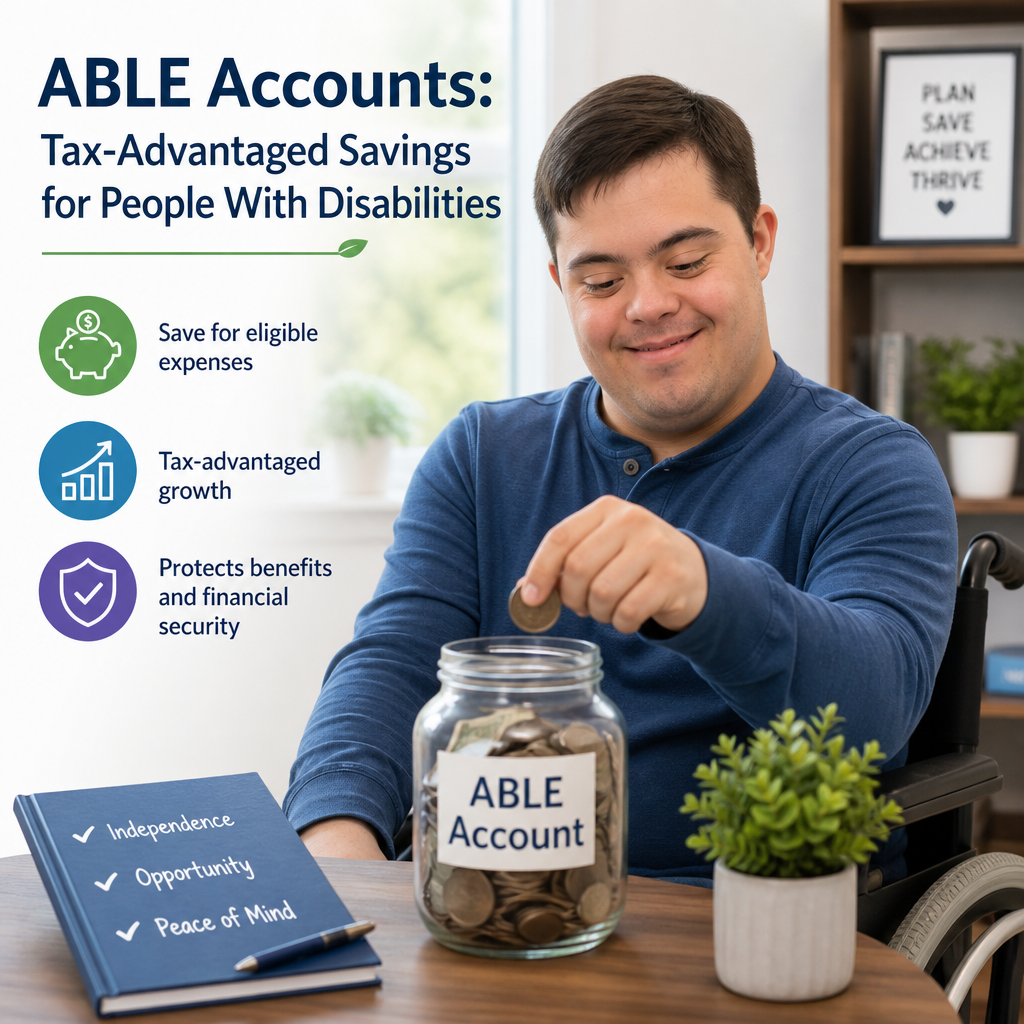
An ABLE account is a tax-advantaged savings account for people with disabilities. “ABLE” stands for Achieving a Better Life Experience. These accounts were created under federal law to help eligible individuals save money without automatically losing access to certain public benefits.
The key idea is simple: people with disabilities should be able to save and spend for necessary expenses without being penalized for having modest assets. ABLE accounts were designed to fill that gap.
Anúncios
Why ABLE Accounts Matter
Traditional savings can create problems for people who receive needs-based benefits. Many public assistance programs have asset limits, and saving too much in a regular bank account can put eligibility at risk. ABLE accounts help solve that problem by allowing qualified savings to grow in a protected way.
These accounts can be especially useful for:
- Daily living expenses
- Transportation
- Education and job training
- Assistive technology
- Medical and therapeutic costs
- Housing-related needs
How ABLE Accounts Work
ABLE accounts function a lot like 529 education savings plans, but they are designed for disability-related needs. Contributions go into the account, funds can be invested, and the money can later be used for qualified disability expenses.
The tax benefits depend on how the account is used and how your state’s ABLE program is structured. In general, the earnings in the account grow tax-deferred, and withdrawals for qualified expenses are tax-free at the federal level.
Basic Features
Most ABLE programs allow account owners to:
- Open an account through a state-sponsored program
- Contribute funds from many sources, including the account owner, family, and friends
- Invest funds in available portfolio options
- Spend money on qualified disability expenses
- Keep the account separate from regular checking or savings
Contribution Limits
Federal law sets annual contribution limits, and those limits may change over time. There is also a higher total account balance limit in many states, though rules vary by state program.
It’s important to check current rules before contributing, since the limits can affect how much you are allowed to save each year and how much can remain in the account overall.
Who Is Eligible for an ABLE Account?
Eligibility usually depends on age at onset of disability and the severity of the condition under federal criteria.
Common Eligibility Rules
In general, a person may qualify if:
- The disability began before age 26 under current rules
- The individual meets the Social Security Administration’s disability criteria, or
- They receive a disability-related certification from a qualified professional, depending on program rules
A major legislative change expanded eligibility so that more people can qualify than before. Because state programs may update their enrollment processes, it’s wise to review the specific requirements before applying.
Can Parents or Guardians Open One?
Yes. A parent, guardian, conservator, or someone with power of attorney may be able to help open and manage the account, depending on the individual’s age and legal status. Once the beneficiary becomes an adult and is able to manage their own finances, they may take control of the account.
Qualified Disability Expenses: What Can You Pay For?
One of the most flexible parts of an ABLE account is that it can be used for a wide range of qualified disability expenses. These are expenses related to the disability that help improve health, independence, and quality of life.
Examples of Qualified Expenses
Qualified disability expenses may include:
- Housing and rent
- Food and groceries
- Education and tutoring
- Transportation and rideshare costs
- Health care and therapy
- Personal support services
- Assistive technology and devices
- Employment training and job coaching
- Legal fees related to disability benefits or planning
- Financial management and administrative expenses
The list is intentionally broad because disability-related needs vary from person to person. Still, the expense should be linked to the person’s disability or help improve their independence and well-being.
Practical Example
Suppose a person with cerebral palsy uses an ABLE account to pay for a wheelchair repair, transportation to medical appointments, and a specialized computer for remote work. Those costs may qualify if they are connected to the disability and documented appropriately.
How ABLE Accounts Affect Benefits
This is one of the biggest reasons people consider ABLE accounts. For many families, the main fear is losing benefits by saving too much money.
SSI and ABLE Accounts
Funds in an ABLE account are generally not counted as resources for SSI purposes up to the applicable program rules. However, certain withdrawals and balances can affect monthly SSI payments, especially if funds are used for housing-related expenses.
If you receive SSI, it’s important to understand how withdrawals are treated. Paying for rent or other shelter expenses from an ABLE account may reduce your SSI payment for that month.
Medicaid and ABLE Accounts
ABLE accounts are also designed to protect Medicaid eligibility. In many cases, account balances do not count against Medicaid resource limits. That makes them especially valuable for people who rely on Medicaid for long-term services, therapies, and health coverage.
Other Benefits
ABLE accounts may also interact with other public benefits, depending on the program and the benefits involved. Since rules can vary, it’s smart to speak with a benefits specialist, disability advocate, or financial professional who understands public benefit planning.
Tax Advantages of ABLE Accounts
ABLE accounts are tax-advantaged, which means they can provide meaningful tax benefits when used correctly.
Federal Tax Benefits
In most cases:
- Contributions are not federally tax-deductible
- Earnings in the account grow tax-deferred
- Qualified withdrawals are generally tax-free
That tax treatment can help savings grow over time, especially if the account is invested for future needs.
State Tax Benefits
Some states offer additional tax incentives, such as deductions or credits for contributions to that state’s ABLE plan. These benefits vary widely, so it’s worth checking the rules where you live.
Saving and Investing
Many ABLE programs offer investment options, similar to a 529 plan. Depending on your time horizon and risk tolerance, you may choose to keep money in a cash option or invest part of it for potential growth.
How to Open an ABLE Account
Opening an ABLE account is usually straightforward, but the exact process depends on the state program you choose.
Steps to Get Started
- Confirm eligibility
Review the age-of-onset and disability criteria. - Choose a state ABLE program
You do not always need to use your home state’s program. - Gather documents
You may need identification, Social Security number, proof of disability, and banking information. - Set up the account online
Most programs let you apply through a secure web portal. - Choose contribution and investment settings
Decide how much to contribute and whether to invest some of the funds. - Track spending carefully
Keep records showing that withdrawals are used for qualified disability expenses.
Tips for Choosing a Plan
When comparing ABLE programs, look at:
- Monthly maintenance fees
- Investment options
- Debit card or payment features
- State tax benefits
- Customer service and account access
- Ease of managing records and expenses
A good plan is not always the one with the largest investment menu. For many users, convenience and low fees matter more.
Best Practices for Managing an ABLE Account
An ABLE account works best when you use it intentionally. Good organization can help you stay within the rules and make the most of the benefits.
Keep Good Records
Save receipts, invoices, and notes explaining how each expense supports the beneficiary’s needs. Clear records are especially useful if questions come up about a withdrawal.
Separate Different Types of Spending
It helps to use the ABLE account for disability-related expenses rather than mixing it with everyday spending you could easily pay from another source. This makes tracking much easier.
Review Your Balance Regularly
Check your balance so you do not accidentally exceed program limits. Also watch how withdrawals may affect SSI, especially if you are using funds for housing.
Coordinate With Other Savings Tools
ABLE accounts can work alongside other planning tools, such as:
- Special needs trusts
- Retirement accounts
- Emergency savings
- Insurance benefits
The right combination depends on the person’s age, assets, benefits, and long-term goals.
ABLE Accounts vs. Special Needs Trusts
People often compare ABLE accounts with special needs trusts, and for good reason. Both tools can help preserve benefits while supporting quality of life.
ABLE Accounts
Best for:
- Relatively simple saving and spending
- Faster access to funds
- Everyday and mid-term expenses
- Small to moderate balances
Special Needs Trusts
Best for:
- Larger inheritances or settlements
- More customized long-term planning
- Situations involving a trustee to manage funds
- Asset protection beyond ABLE account limits
Using Both Together
In many cases, the best solution is not choosing one or the other. Families may use a special needs trust for larger assets and an ABLE account for routine expenses and day-to-day flexibility.
Common Mistakes to Avoid
Even though ABLE accounts are user-friendly, mistakes can happen. Avoiding these issues can save time, stress, and possibly benefits.
1. Using Funds for Non-Qualified Expenses
If withdrawals are used for expenses that are not related to the disability or are not allowed under the program, tax consequences may apply.
2. Forgetting About SSI Housing Rules
Some account holders use ABLE funds for rent or utilities without realizing that this can affect their SSI payment for that month.
3. Not Saving Receipts
Without records, it can be hard to show that a withdrawal was used properly.
4. Exceeding Contribution or Balance Limits
Annual and total account limits matter. Track contributions from all sources, including gifts from relatives.
5. Waiting Too Long to Open an Account
An ABLE account can help now and in the future. The sooner you start, the sooner you can build a cushion for unexpected disability-related costs.
Frequently Asked Questions
1. Can anyone with a disability open an ABLE account?
Not everyone qualifies. Eligibility usually depends on when the disability began and whether the person meets the program’s disability criteria. Since rules have expanded over time, more people qualify than before, but you should verify the current requirements for the state program you want to use.
2. Do ABLE account savings count against SSI or Medicaid?
In most cases, ABLE account balances do not count as resources for SSI or Medicaid up to the program’s rules. However, certain withdrawals—especially for housing-related expenses—can affect SSI payments. Medicaid treatment is generally favorable, but you should still review your specific situation.
3. Can friends and family contribute to an ABLE account?
Yes. Contributions can often come from the account owner, family members, friends, and sometimes employers. Annual contribution limits still apply, so all deposits need to be tracked carefully.
4. What happens to the money in an ABLE account if it is not used?
The account remains available for future qualified disability expenses, subject to program limits. Funds can often stay in the account and continue to grow tax-deferred. If the account owner passes away, some states may have rules that allow reimbursement for Medicaid expenses from the remaining balance.
5. Is an ABLE account better than a special needs trust?
Neither is universally better. ABLE accounts are usually easier to use and better for everyday spending, while special needs trusts are often better for larger or more complex assets. Many families use both tools together as part of a broader plan.
Official Resources
- IRS: ABLE Accounts
- Social Security Administration: ABLE Accounts
- U.S. Department of the Treasury: ABLE Savings Plans
- National Disability Institute: ABLE National Resource Center
- Benefits.gov: Disability Benefits Information
Conclusion
ABLE accounts give people with disabilities a practical, tax-advantaged way to save money without sacrificing the benefits they depend on. For many families, that flexibility can make a real difference. Whether the goal is covering transportation, paying for therapy, building an emergency cushion, or planning for future independence, an ABLE account can help turn financial uncertainty into something more manageable.
The biggest strengths of these accounts are their simplicity and purpose. They allow eligible individuals to save for disability-related needs, keep better control over their money, and reduce the pressure that comes with strict asset limits. When used carefully and documented well, an ABLE account can work alongside benefits, special needs trusts, and other planning tools to support a more stable future.
If you think an ABLE account may fit your situation, the next step is to review current eligibility rules, compare state programs, and think about how the account would fit into your overall benefits and savings plan. A little planning now can lead to more freedom and security later.