2026 Social Security Retirement Earnings Test and Income Limits
Anúncios
If you’re planning to work while collecting benefits, understanding the 2026 Social Security retirement earnings test and income limits is essential. The rules can affect how much of your Social Security retirement benefit you receive before full retirement age, and they can change the timing and size of your payments. For many retirees, this topic matters most when balancing part-time work, consulting, self-employment, or a phased transition out of the workforce.
The good news is that the earnings test is not a penalty in the way many people fear. It does not take away benefits forever. Instead, Social Security may temporarily withhold some payments if your earnings go over a set limit before you reach full retirement age. Once you hit full retirement age, the earnings test no longer applies, and you can earn any amount without affecting your monthly benefit.
Anúncios
Below, we’ll break down how the earnings test works in 2026, who it applies to, how income limits are measured, and what strategies may help you avoid surprises.
What Is the Social Security Retirement Earnings Test?
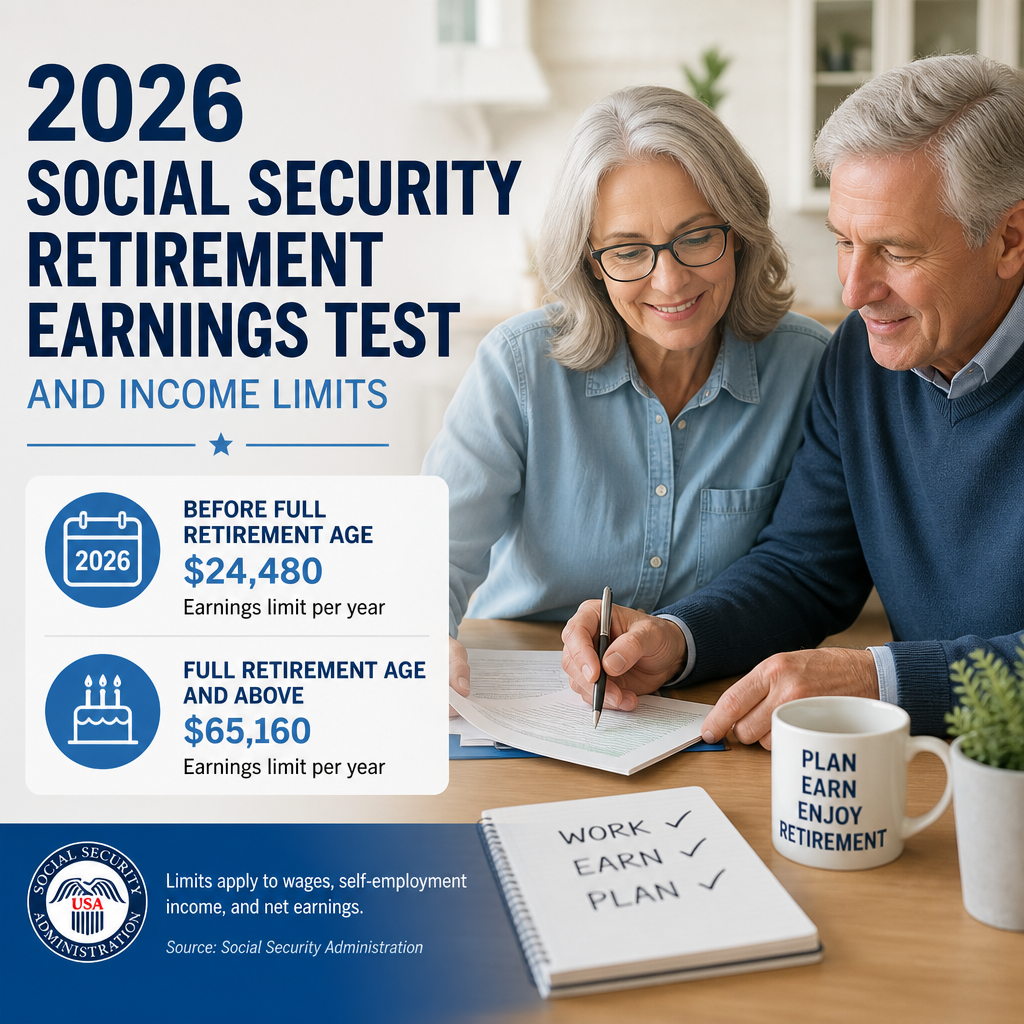
The Social Security retirement earnings test is a rule that limits how much you can earn from work while collecting benefits before full retirement age. If your earnings are above the annual limit, Social Security may withhold part of your benefit.
Anúncios
This rule applies only to certain beneficiaries, mainly people who:
- Have claimed retirement benefits before full retirement age
- Continue working and earning wages or self-employment income
- Have not yet reached the age where the earnings test ends
It’s important to note that the test applies to earned income, not all income. For example, wages from a job and net self-employment income count. Income from pensions, IRAs, dividends, interest, and most investment income generally does not count toward the test.
Why the 2026 Social Security Retirement Earnings Test and Income Limits Matter
The 2026 Social Security retirement earnings test and income limits matter because they can affect:
- The amount of your monthly benefit payments
- How much is temporarily withheld during the year
- Whether your benefit check is delayed until later in the year
- Your short-term retirement cash flow
Many retirees assume they can simply work part-time and still receive the full benefit amount. Sometimes that’s true. Other times, earnings can trigger withholding, especially if you claim benefits early and keep working.
Understanding the rules ahead of time helps you plan with confidence. It can also help you decide whether to delay claiming, reduce hours, or structure your retirement income more strategically.
How the Social Security Earnings Test Works
The earnings test uses two different income thresholds depending on your age during the year.
If You Are Under Full Retirement Age for All of 2026
If you are below full retirement age for the entire year, Social Security withholds benefits when your earnings exceed the annual limit.
In general, the formula works like this:
- Social Security subtracts a set amount of benefits for every dollar earned above the limit
- The withholding rate and earnings limit are adjusted periodically
- You do not lose the benefits permanently; they may be credited back later through a higher monthly payment when you reach full retirement age
If You Reach Full Retirement Age During 2026
If you reach full retirement age during the year, a different earnings limit applies for the months before your birthday month. After that, the earnings test no longer applies.
For the months before full retirement age, Social Security withholds benefits under a more lenient formula than the one used for people who are under full retirement age for the entire year.
After Full Retirement Age
Once you reach full retirement age, you can earn any amount from work without reducing your Social Security retirement benefit.
That’s one of the simplest and most important rules to remember.
Understanding Income Limits in 2026
The specific 2026 Social Security retirement earnings test and income limits are announced by Social Security closer to the year in question and may change based on cost-of-living adjustments and statutory updates. Because of that, it’s best to verify the exact figures with the Social Security Administration.
Still, the structure of the limits typically follows a familiar pattern:
- A lower annual limit for people under full retirement age all year
- A higher temporary limit for those who reach full retirement age during the year
- No earnings limit after full retirement age
What Counts as Earnings?
The earnings test generally counts:
- Wages from an employer
- Salary, bonuses, and commissions
- Net income from self-employment
The following usually do not count as earnings for this test:
- Pension income
- IRA or 401(k) withdrawals
- Social Security benefits themselves
- Interest income
- Dividends
- Capital gains
- Rental income, unless you materially participate in a trade or business
This distinction matters because many retirees have mixed income sources. You may think your total income is high, but if most of it comes from investments rather than work, the earnings test may not apply.
Common Situations That Trigger the Earnings Test
Working Part-Time While Collecting Benefits
A part-time job can still count toward the earnings limit if wages exceed the threshold. Even a modest schedule can push earnings above the limit depending on pay rate.
Self-Employment and Freelance Work
Self-employment income can be tricky because the test looks at net earnings from self-employment, not gross receipts. That means business expenses matter.
For example:
- A freelance consultant bills $30,000
- Business expenses total $8,000
- Net earnings are $22,000
- The earnings test is based on the $22,000, not the gross $30,000
Seasonal or Irregular Income
If you work only part of the year, Social Security still looks at your annual earnings. A seasonal job can create a surprise withholding if the total exceeds the limit.
Early Claiming and Continued Work
People who claim benefits at 62 or soon after often face the earnings test if they continue earning wages. This is one of the most common planning mistakes.
How Benefits Are Withheld
If you go over the limit, Social Security does not usually “bill” you later. Instead, it withholds future benefit checks until the required amount is recovered.
This can feel confusing, but the process is usually straightforward:
- You report your expected earnings to Social Security.
- Social Security estimates whether you will exceed the limit.
- If needed, they withhold one or more monthly checks.
- If your actual earnings are lower than expected, your withheld benefits may be adjusted.
Important Note on Repayment
Withholding is not the same as losing benefits permanently. In many cases, Social Security gives you credit for the months in which benefits were withheld once you reach full retirement age. That can slightly increase your monthly payment later.
Practical Examples of the Earnings Test
Example 1: Early Retiree Working Part-Time
Maria claims Social Security at 63 and works part-time at a local nonprofit. She expects to earn wages during the year. Because she is under full retirement age, her income is measured against the annual earnings test limit.
If her earnings stay below the limit, her benefits continue uninterrupted. If she exceeds the limit, Social Security may withhold some of her payments.
Example 2: Consultant Near Full Retirement Age
James turns full retirement age in October 2026. He works as an independent consultant from January through September, then stops working.
For the months before his birthday month, a special earnings limit applies. After reaching full retirement age, he can earn freely without affecting benefits.
Example 3: Retiree With Investment Income
Linda is 64 and collects benefits, but her main income comes from dividends and retirement account withdrawals. Because those sources do not count as earnings for the test, her Social Security benefit is not reduced by the earnings limit.
Ways to Plan Around the 2026 Social Security Retirement Earnings Test
You don’t need to avoid work entirely to manage this rule well. A few smart planning steps can make a big difference.
1. Estimate Your Annual Earnings Early
Before the year begins, estimate your likely:
- Wages
- Bonuses
- Self-employment profit
- Side-hustle income
Then compare that amount to the expected 2026 limit.
2. Watch the Timing of Claiming
If you plan to keep working, delaying benefits until full retirement age may be the simplest way to avoid the earnings test.
3. Track Self-Employment Carefully
Freelancers and business owners should keep good records of expenses so they can calculate net earnings accurately.
4. Review Your Pay Structure
If you have flexibility, you may be able to:
- Reduce hours
- Delay a bonus
- Shift some work into a later year
- Adjust consulting contracts
These choices may help you stay under the limit or manage withholding.
5. Talk to Social Security Before You Retire
Social Security representatives can help you understand how the rules apply to your situation. If your income changes during the year, reporting updates promptly can reduce surprises.
Myths About the Earnings Test
“I’ll lose my benefits forever.”
Not true. Benefits are generally withheld temporarily, not permanently lost.
“All income counts.”
Not true. The test focuses on work-related earnings, not most retirement or investment income.
“The earnings test goes away only at age 70.”
Not true. It ends at full retirement age, which is usually earlier than 70, depending on your birth year.
“It’s better to hide income and hope Social Security doesn’t notice.”
That’s a bad idea. Social Security and the IRS use reporting systems that can identify mismatches. Accurate reporting is always the safest option.
How to Prepare for 2026
If you’re approaching retirement or already collecting benefits, use this checklist:
- Confirm your full retirement age.
- Estimate your earned income for the year.
- Identify whether you are claiming before or after full retirement age.
- Separate earned income from investment income.
- Review any planned consulting, seasonal, or part-time work.
- Check the latest Social Security Administration guidance for the 2026 earnings limits.
- Adjust your retirement budget if withholding is likely.
A little planning now can help protect your monthly cash flow and reduce stress later.
Frequently Asked Questions
1. Does the Social Security earnings test apply to everyone who works?
No. It applies mainly to people who collect Social Security retirement benefits before full retirement age and continue earning wages or self-employment income. Once you reach full retirement age, the earnings test no longer applies.
2. What kind of income counts toward the earnings limit?
Wages, salaries, commissions, bonuses, and net self-employment income count. Most investment income, pension payments, and retirement account withdrawals do not count.
3. Will I lose benefits forever if I earn too much?
No. Social Security may withhold benefits temporarily if you go over the limit, but those benefits are generally not lost forever. In many cases, your monthly benefit may be adjusted later to reflect the months withheld.
4. What happens if I reach full retirement age in the middle of the year?
A different, more flexible earnings limit may apply to the months before your full retirement age month. After you reach full retirement age, you can earn any amount without affecting your benefits.
5. How do I know the exact 2026 income limit?
The Social Security Administration publishes the official earnings test limits. Check the SSA website or contact Social Security directly for the most current 2026 figures and rules.
Official Resources
- Social Security Administration: Retirement Benefits
- Social Security Administration: Benefits Planner – Retirement
- Social Security Administration: Full Retirement Age
- IRS: Retirement Plans and Retirement Income
- National Institute on Aging: Social Security Benefits
Conclusion
The 2026 Social Security retirement earnings test and income limits are important for anyone planning to work while receiving retirement benefits before full retirement age. The key takeaway is simple: earned income can affect your monthly Social Security payments, but only under specific conditions, and only until you reach full retirement age. After that, the earnings test no longer applies.
By understanding what counts as earnings, how withholding works, and which income sources are excluded, you can make better decisions about when to claim benefits and how to structure your work. That’s especially valuable if you’re balancing part-time employment, freelance work, or a gradual retirement transition.
The best next step is to review your own income picture, confirm your full retirement age, and verify the latest Social Security guidance for 2026. A little preparation now can help you avoid surprises and keep your retirement plan on track.