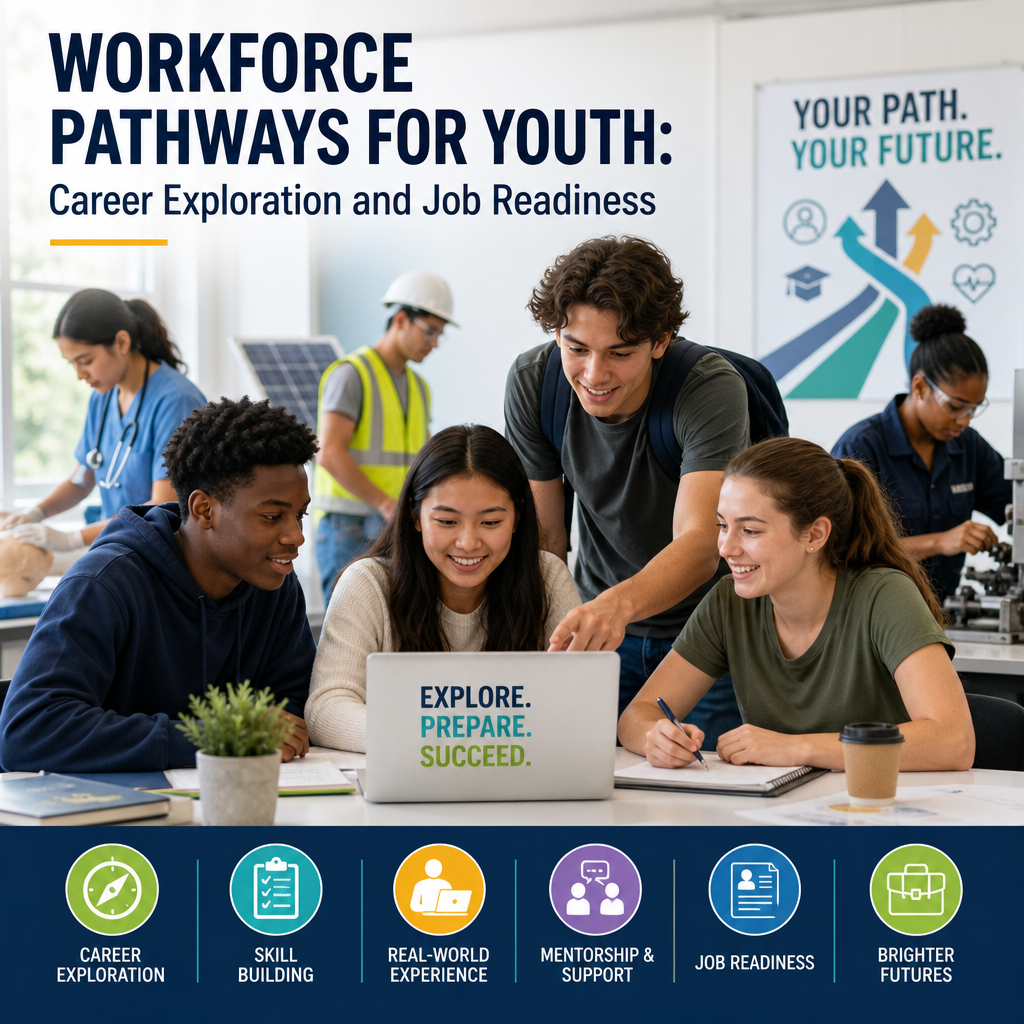
Workforce Pathways for Youth: Career Exploration and Job Readiness
Workforce pathways for youth help young people connect their interests and strengths to real career options, making the transition from school to work feel clearer and more achievable. With the right mix of exploration, mentoring, and skill-building, teens and young adults can gain the confidence and job readiness they need to take their next step.
By: Jennifer Collins on August 3, 2026
Anúncios
Helping young people prepare for the world of work takes more than a resume template or a summer job. It requires a thoughtful approach to workforce pathways for youth, one that combines career exploration, skill-building, mentoring, and real-world practice. When teens and young adults understand their options early, they are better prepared to choose careers that match their interests, strengths, and goals.
Anúncios
Today’s labor market changes quickly. That makes job readiness just as important as academic learning. Young people need opportunities to explore careers, build confidence, and learn how to communicate, solve problems, and adapt. Strong workforce pathways for youth create that bridge between school and employment.
This article explains how career exploration and job readiness work together, what skills matter most, and how families, educators, employers, and community organizations can support the process.
Why Workforce Pathways for Youth Matter
Workforce pathways for youth give young people a clearer route from education to employment. They help students see how school connects to real careers and allow them to make informed choices before they invest time and money into a specific path.
Anúncios
These pathways matter because they can:
Increase motivation by showing the real-world value of learning
Help youth identify interests before committing to a career track
Build practical soft skills that employers expect
Reduce confusion about postsecondary options
Support smoother transitions into internships, apprenticeships, and first jobs
For many young people, the first barrier is not a lack of talent. It is a lack of exposure. A student may never consider healthcare, advanced manufacturing, information technology, or skilled trades simply because they have not seen what those jobs look like. Workforce pathways expand those possibilities.
Career Exploration: The First Step Toward a Strong Future
Career exploration helps youth learn about industries, job roles, work environments, wages, education requirements, and long-term growth potential. It is not about forcing an early decision. It is about helping young people gather enough information to make smart choices.
What Career Exploration Includes
A strong career exploration program may include:
Career interest inventories and personality assessments
Job shadowing experiences
Career fairs and employer panels
Workplace tours
Guest speakers from different industries
Informational interviews
Project-based learning tied to real occupations
These experiences help youth connect abstract ideas to real jobs. For example, a student interested in technology may discover that cybersecurity, network administration, and software support offer different paths with different educational requirements.
How Youth Benefit from Exploration
Career exploration supports both self-awareness and decision-making. Young people begin to ask important questions:
What am I good at?
What kind of work environment fits me?
Do I prefer hands-on work, office work, or a mix?
How much education do I need for this career?
What does growth look like in this field?
These questions help students move from vague interests to informed goals. That shift is a major part of workforce readiness.
Job Readiness Skills Employers Want
Job readiness is more than knowing how to fill out an application. It includes the habits, behaviors, and communication skills that help young people succeed at work.
Core Job Readiness Skills
Employers commonly look for these foundational skills:
Communication: Speaking clearly, listening carefully, and writing professionally
Reliability: Showing up on time and following through on responsibilities
Teamwork: Working well with others and respecting different viewpoints
Problem-solving: Thinking through issues and asking for help when needed
Adaptability: Responding well to change and feedback
Professionalism: Dressing appropriately, using respectful language, and managing behavior
Time management: Prioritizing tasks and meeting deadlines
Digital literacy: Using email, documents, online forms, and workplace technology
These skills apply across industries. Whether a young person works in retail, healthcare, construction, or an office setting, employers expect a baseline of professionalism and dependability.
Why Soft Skills Matter So Much
Technical skills can often be taught on the job. Soft skills are harder to teach quickly, and they often determine whether someone keeps a position and grows in it. A student may have strong academic ability but still struggle with punctuality, communication, or workplace expectations.
That is why job readiness programs should not focus only on resumes and interviews. They should also teach everyday workplace habits, such as:
Checking email regularly
Asking clarifying questions
Accepting feedback without defensiveness
Managing distractions
Resolving conflict respectfully
Building Effective Workforce Pathways for Youth
The best workforce pathways for youth combine learning, exposure, and hands-on experience. When these pieces work together, young people gain both direction and confidence.
1. Start Early
Career awareness should begin well before high school graduation. Middle school students can explore different occupations through classroom activities, workplace visits, and discussions about interests and strengths.
Early exposure helps youth avoid limiting beliefs such as “that job is not for people like me” or “I’m not smart enough for that field.” When they see a wider range of roles and role models, they can imagine more possibilities.
2. Connect Learning to Real Careers
Students are more engaged when they understand why they are learning something. Teachers and program leaders can strengthen workforce pathways by linking lessons to occupations.
Examples include:
Math lessons tied to construction, budgeting, or logistics
Science lessons connected to environmental careers or healthcare
Writing assignments based on resumes, cover letters, or workplace communication
Team projects that mirror collaborative job settings
This approach helps youth understand that school is not separate from work. It is preparation for it.
3. Offer Hands-On Experiences
Real-world practice builds confidence. Programs that include internships, apprenticeships, service learning, volunteer work, or paid work experiences give youth a chance to apply skills in professional settings.
Hands-on learning teaches things that classroom instruction alone cannot fully capture, such as:
How to navigate a supervisor relationship
How a team functions under deadlines
How work expectations differ from school expectations
How to respond to mistakes and recover professionally
4. Include Mentorship and Guidance
Mentors can make a powerful difference in youth career development. A mentor may help a student explore options, prepare for interviews, or understand what a particular job involves day to day.
Mentorship is especially valuable when it provides:
Encouragement during setbacks
Honest advice about career paths
Industry insight and practical tips
Expanded networks and opportunities
A young person who knows someone working in a field often gains more confidence about pursuing it.
Practical Ways to Support Youth Job Readiness
Job readiness does not happen by accident. It improves when adults intentionally teach and reinforce workplace behaviors.
For Parents and Caregivers
Parents and caregivers can help by:
Encouraging responsibility at home, such as chores and schedules
Talking about work experiences and career interests
Practicing interview questions together
Reviewing resumes and applications
Emphasizing punctuality, respect, and follow-through
Everyday responsibilities at home can build the habits that transfer to work.
For Educators
Schools can support job readiness by:
Integrating career exploration into the curriculum
Partnering with local employers
Offering mock interviews and resume workshops
Teaching financial literacy and workplace communication
Creating career and technical education pathways
Educators often have one of the best opportunities to connect academic learning with workplace expectations.
For Employers
Employers can strengthen youth pathways by:
Offering internships, job shadowing, and entry-level positions
Creating youth-friendly onboarding and training
Providing clear expectations and feedback
Assigning mentors or supervisors who coach, not just direct
Recognizing growth and progress
Employers who invest in young workers often build a stronger future talent pipeline.
For Community Organizations
Nonprofits, libraries, workforce centers, and after-school programs can also play a key role. They can host:
Career panels
Job search workshops
Digital skills training
Leadership development programs
Transportation or childcare support resources for older youth
These supports can help remove barriers that might otherwise limit opportunity.
Common Barriers Youth Face
Even motivated young people may face obstacles on the path to employment. Recognizing those barriers is the first step toward solving them.
Lack of Exposure
Many youth simply do not know what careers exist or how to access them. This is especially common in communities with limited local industry variety. Career exploration helps fill that gap.
Limited Access to Networks
Jobs often come through referrals, family connections, or community ties. Youth without those networks may struggle to find openings. Mentorship and school-business partnerships can help widen access.
Transportation and Scheduling Challenges
Getting to work, internships, or training programs can be difficult without reliable transportation. Flexible scheduling and community support services can make a big difference.
Confidence Gaps
Some youth doubt their ability to succeed because they have not received enough encouragement or experience. Small wins, practice, and positive feedback build confidence over time.
Real-World Example of a Youth Pathway
Consider a high school student who enjoys repairing devices and solving technical problems. A strong workforce pathway for youth might look like this:
The student takes a digital technology or computer science class.
They attend a career fair and learn about IT support and cybersecurity.
They complete a job shadow with a local technology company.
A mentor helps them practice interview skills and explore certifications.
They apply for a summer internship at a help desk or service center.
After graduation, they enter a community college program or apprenticeship aligned with their goals.
This pathway works because each step builds on the last. The student gains knowledge, confidence, and experience before making a long-term decision.
How to Measure Success in Youth Workforce Pathways
A strong program should do more than count participation. It should measure whether youth are gaining meaningful readiness and direction.
Helpful indicators include:
Increased career awareness
Improved attendance and punctuality
Stronger communication and teamwork skills
Completion of resumes, applications, or mock interviews
Participation in internships or job shadowing
Placement in jobs, training, apprenticeships, or postsecondary education
These outcomes show whether the pathway is actually preparing youth for future success.
Frequently Asked Questions
What are workforce pathways for youth?
Workforce pathways for youth are structured experiences that help young people explore careers, build job readiness skills, and move from school into employment, training, or further education. They may include career exploration, mentoring, internships, apprenticeships, and technical instruction.
Why is career exploration important for young people?
Career exploration helps young people discover their interests, strengths, and options before making major educational or career decisions. It reduces guesswork, builds motivation, and helps students connect school subjects to real jobs.
What job readiness skills should youth learn first?
The most important early job readiness skills include punctuality, communication, teamwork, responsibility, time management, and professionalism. Youth should also learn how to complete applications, write a basic resume, and prepare for interviews.
How can schools support workforce pathways for youth?
Schools can support workforce pathways by connecting lessons to careers, offering career and technical education, bringing in employers, hosting mock interviews, and helping students access internships or job shadowing opportunities.
What if a young person does not know what career they want?
That is completely normal. Career exploration is designed for uncertainty. Youth can start by exploring interests, trying short-term experiences, talking to mentors, and learning about different industries before choosing a path.
Building strong workforce pathways for youth is one of the most effective ways to prepare the next generation for meaningful employment. When young people have access to career exploration, hands-on learning, mentorship, and job readiness support, they are more likely to make informed decisions and enter the workforce with confidence.
The goal is not to push every student toward the same outcome. It is to help each young person discover a path that fits their strengths, interests, and long-term goals. Some will choose college, others will enter apprenticeships, certifications, or direct employment. What matters is that they have the tools to make those choices wisely.
Families, schools, employers, and community partners all have a role to play. By working together, they can create pathways that open doors instead of closing them. The earlier that support begins, the stronger the foundation will be for future success.
Jennifer, M.Ed., holds a degree in Higher Education Administration, with
a focus on U.S. college financial aid, admissions policy, and student
support systems. She researches and writes about scholarships, federal
aid programs, and the college planning process to help students and
families make informed, well-supported decisions.