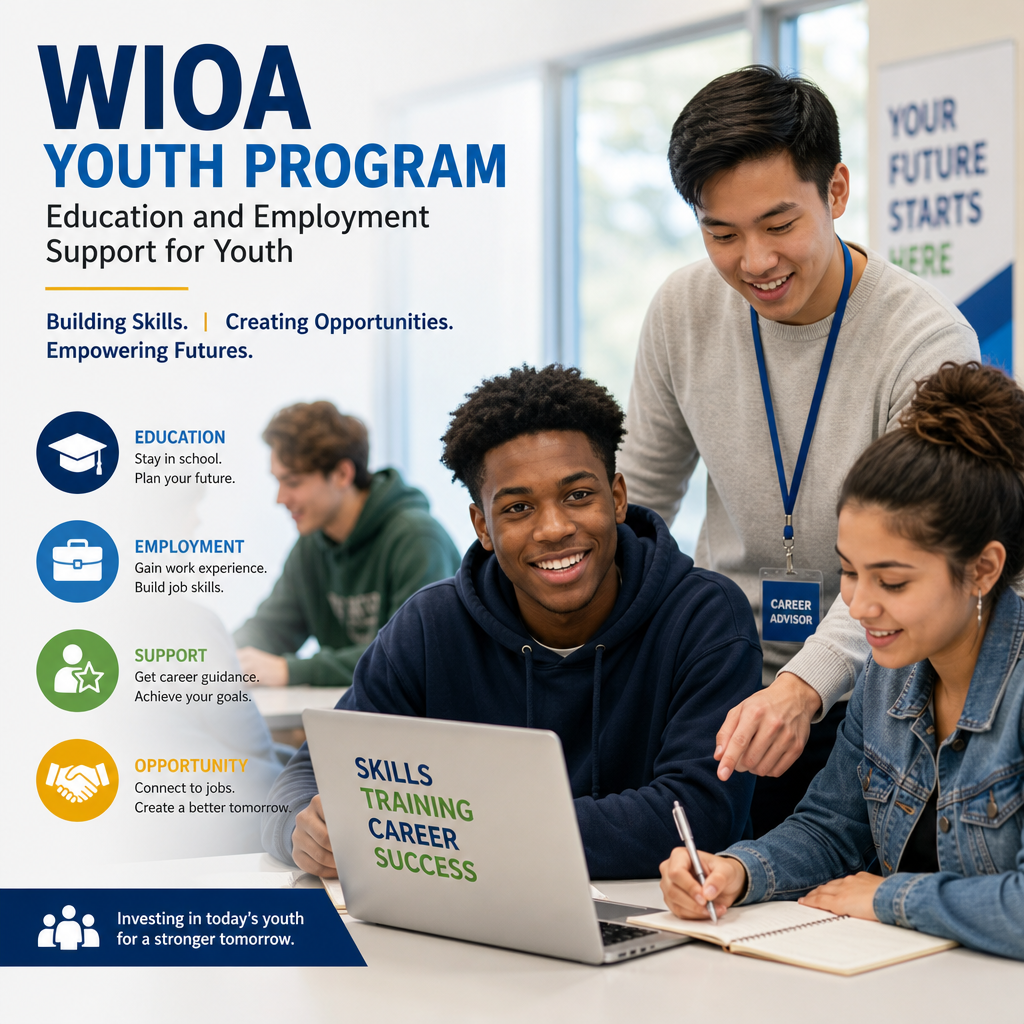
WIOA Youth Program: Education and Employment Support for Youth
The WIOA Youth Program helps young people overcome barriers to school and work with personalized support like training, tutoring, and job readiness services. It’s designed to build confidence, strengthen skills, and create a clearer path toward long-term success.
By: Jennifer Collins on August 3, 2026
Anúncios
For many young people, the path from school to a stable job is not always straightforward. Some face gaps in education, limited work experience, transportation barriers, or other challenges that make it harder to move forward. The WIOA Youth Program was created to help bridge those gaps by offering education, career training, and employment support for eligible youth and young adults.
If you’re a parent, educator, workforce professional, or young person looking for opportunities, understanding how the WIOA Youth Program works can open the door to valuable services. This program is designed to help youth build skills, gain confidence, and prepare for meaningful long-term success in school, work, and life.
Anúncios
What Is the WIOA Youth Program?
The WIOA Youth Program is part of the Workforce Innovation and Opportunity Act (WIOA), a federal law that supports workforce development across the United States. The youth portion of the program focuses on helping eligible young people access education, training, and job readiness services.
The goal is simple: help youth become more prepared for employment, postsecondary education, or both. Unlike one-size-fits-all support, the WIOA Youth Program is built around individual needs. Services may include tutoring, work experience, mentorship, career guidance, and support with barriers that can get in the way of progress.
Anúncios
Local workforce development boards and youth service providers typically administer the program through American Job Centers and partner organizations.
Who Can Qualify for the WIOA Youth Program?
Eligibility is based on age, education status, income, and specific barriers to employment or education. In general, participants must be:
14 to 24 years old
A low-income individual
Someone who meets at least one barrier to employment or education
These barriers may include being out of school, experiencing homelessness, being a foster youth or former foster youth, being a parent, having a disability, or other challenges identified under WIOA guidelines.
School Status Matters
The program serves both in-school and out-of-school youth, but priority often goes to out-of-school youth because they may need more intensive support.
Examples include young people who:
Dropped out of high school
Are behind in credits
Need help earning a diploma or equivalent
Want to connect with training after leaving school
Common Barriers to Participation
A young person may qualify if they face one or more of the following:
Low income
Homelessness
Pregnant or parenting status
Foster care or aging out of foster care
A disability
Involvement with the justice system
English language learning needs
Basic skills deficiency
These factors do not define a person’s future. They simply help determine whether the WIOA Youth Program can provide the right support.
What Services Does the WIOA Youth Program Offer?
One of the strengths of the WIOA Youth Program is its flexibility. Services are designed to support both immediate needs and long-term goals. Depending on the local program, youth may receive a mix of educational, career, and supportive services.
Educational Support
Education support can help youth stay on track or get back on track. Services may include:
Tutoring and study support
Basic skills improvement
GED preparation
Assistance with school completion
Dropout recovery services
English language learning support
For a young person struggling to complete high school, this kind of help can make a real difference. In some cases, local programs also help participants connect with postsecondary education or training after graduation.
Career and Job Readiness Services
The WIOA Youth Program helps young people prepare for work through practical skill-building. Common services include:
Resume writing help
Interview preparation
Career exploration
Job search assistance
Workplace readiness training
Labor market information and career planning
These services are especially useful for youth who have never worked before or need help translating school, volunteer, or life experience into job skills.
Work Experiences
Many local programs include paid or unpaid work experiences that give young people real exposure to the workplace. These may include:
Summer jobs
Internships
Job shadowing
Apprenticeship preparation
On-the-job training
Work-based learning projects
Work experience can be a powerful way to help youth learn responsibility, build soft skills, and understand what different careers are really like.
Supportive Services
For many participants, practical obstacles are just as important as skill gaps. Supportive services may help with:
Transportation
Work clothes or uniforms
Tools or equipment
Childcare assistance
School supplies
Testing or credential fees
These services can remove barriers that otherwise keep young people from attending training or accepting a job.
Mentoring and Adult Support
A trusted adult can make a big impact. The WIOA Youth Program often includes mentoring, coaching, or counseling to help participants stay engaged and accountable.
Mentors and youth workers may help with:
Goal setting
Personal development
Problem solving
Encouragement during setbacks
Planning next steps
For youth who feel disconnected from school or work, consistent support can improve motivation and follow-through.
How the WIOA Youth Program Helps Young People Build a Career Path
The best workforce programs do more than help someone find a job. They help people build a future. That is one reason the WIOA Youth Program matters.
Instead of focusing only on immediate placement, it supports a path that may include:
Completing education
Gaining experience
Earning credentials
Building employability skills
Connecting to long-term opportunities
Example: A Pathway for an Out-of-School Youth
Imagine a 19-year-old who left high school early and has never held a formal job. Through the WIOA Youth Program, they might:
Get help preparing for the GED
Receive career counseling
Join a summer work experience
Learn how to write a resume
Practice interviewing
Connect with a local training program
By the end of the process, that young person may be far more prepared to enter the workforce with confidence and direction.
Example: Support for an In-School Youth
Now imagine a 17-year-old who is still in school but is struggling academically and considering dropping out. Through youth program services, they might:
Receive tutoring and attendance support
Explore career pathways
Learn about college and technical training options
Take part in a work readiness program
Get help planning for life after graduation
That support can help them stay engaged and keep their future options open.
Why the WIOA Youth Program Is Important
Youth and young adults often face major transitions at the same time: finishing school, finding work, and deciding what comes next. Without guidance, these transitions can become overwhelming.
The WIOA Youth Program is important because it addresses several needs at once:
It supports education and employment together
It recognizes that youth develop at different paces
It offers individualized services rather than a rigid track
It helps young people overcome barriers that may be outside their control
It connects participants to community resources and local employers
For many youth, the program offers not just services, but stability and direction.
How to Apply for the WIOA Youth Program
The application process may vary by location, but it usually starts with a local workforce center or youth service provider. If you or someone you know may qualify, the first step is often to contact an American Job Center or local workforce board.
Steps to Get Started
Find your local workforce center or youth provider.
Ask about youth eligibility requirements.
Gather documents such as age verification, proof of income, school records, and any paperwork related to barriers or circumstances.
Complete an intake or assessment.
Work with a case manager to create an individual plan.
Some programs may also ask about goals, interests, and support needs so they can tailor services appropriately.
Documents That May Be Helpful
Depending on the program, youth may need:
A photo ID or birth certificate
Social Security number or documentation
Proof of household income
School transcripts or enrollment records
Foster care, disability, or housing-related documentation if applicable
If paperwork is missing, don’t assume that disqualifies someone immediately. Local staff can often help explain what is needed.
Tips for Getting the Most Out of the Program
The WIOA Youth Program works best when participants stay engaged and communicate openly with their case managers. A few simple habits can help.
Set Clear Goals
Before starting, think about what success looks like. That might mean:
Finishing school
Getting a first job
Learning a trade
Improving attendance
Building confidence in interviews
Clear goals make it easier to choose the right services.
Stay in Contact
If your schedule changes or you run into a problem, communicate early. Youth programs are designed to help, but they work better when staff know what is going on.
Take Advantage of All Available Services
Some participants only focus on job placement, but the program may offer more. Consider using:
Training support
Career counseling
Mentoring
Work experience
Educational assistance
The more fully you use the program, the more value you can gain from it.
Follow Through on Next Steps
When you attend a workshop, complete an assignment, or apply for a job, you build momentum. Small actions often lead to bigger opportunities.
How Employers and Communities Benefit Too
Although the WIOA Youth Program is centered on young people, employers and communities benefit as well. Businesses gain access to motivated workers who are learning job skills and workplace expectations. Communities benefit when more young people complete school, enter the workforce, and contribute economically.
The program can also help local employers:
Build a pipeline of entry-level talent
Support workforce development goals
Connect with young workers early
Participate in internships or work-based learning opportunities
That connection between youth development and local labor needs is one of the program’s most practical strengths.
Frequently Asked Questions
1. Is the WIOA Youth Program free?
Yes, the program is generally free for eligible participants. Services are funded through public workforce programs, so youth do not usually pay to receive support. Some activities may have limits depending on local funding and available resources, but eligibility itself does not typically require a fee.
2. Can a young person in school still participate?
Yes. The WIOA Youth Program serves both in-school and out-of-school youth, though eligibility rules and available services may differ. In-school participants often receive support with career planning, tutoring, and work readiness, while out-of-school youth may receive more intensive education and employment services.
3. What kind of job training is included?
Training varies by local provider and the participant’s goals. It may include job readiness training, internships, occupational skills training, apprenticeships, or industry-specific preparation. The focus is on helping youth gain skills that align with real employment opportunities in the local area.
4. Does the program help with college or GED preparation?
Yes. Many youth programs provide academic support, GED preparation, and help with postsecondary planning. Participants may also get guidance on choosing training programs, applying to college, or connecting education with career goals.
5. How long does someone stay in the program?
Program length depends on the participant’s needs, goals, and local service structure. Some youth may receive short-term support, while others may stay engaged longer to complete education milestones, build job experience, or transition into training or employment. The timeline is usually personalized.
The WIOA Youth Program gives young people a practical path toward education, work, and long-term opportunity. By combining career guidance, academic support, mentoring, and hands-on experience, it helps participants move forward with more confidence and less uncertainty. That matters whether a young person is finishing school, looking for a first job, or trying to recover after setbacks.
What makes the program especially valuable is its flexible, individualized approach. It recognizes that every young person brings different strengths, needs, and goals. With the right support, youth can build skills, overcome barriers, and take meaningful steps toward a more stable future.
If you are a young person, parent, educator, or community partner, learning more about local workforce services can be a strong next step. The sooner support begins, the sooner opportunities can grow. The WIOA Youth Program is not just about immediate placement; it is about helping young people build a foundation for success that can last.
Jennifer, M.Ed., holds a degree in Higher Education Administration, with
a focus on U.S. college financial aid, admissions policy, and student
support systems. She researches and writes about scholarships, federal
aid programs, and the college planning process to help students and
families make informed, well-supported decisions.